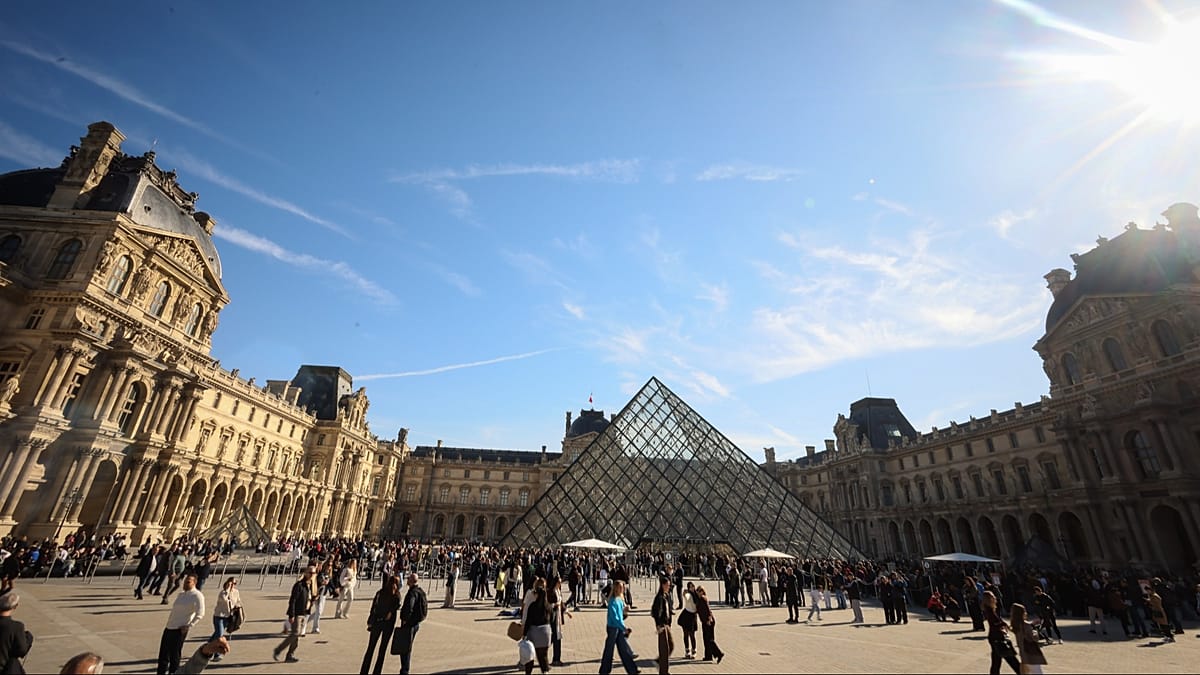
Paris — The Louvre, the world's most-visited museum, could be forced to shut its doors unless France's next government backs a sweeping renovation, its director has warned. Christophe Leribault, who took over in February, told Le Figaro that the museum's aging infrastructure—leaking pipes, poorly insulated galleries, and cramped public areas—requires a comprehensive overhaul, not just security upgrades.
“Whoever forms the next government must keep in mind that if the Louvre is not repaired, updated, and transformed, it will very quickly fall behind and will eventually have to close its doors to the public. That would be a disaster,” Leribault said. He added that while private funding would be sought, a significant injection of public money is essential, with approval needed after France's national elections next year.
The warning comes amid political instability in Paris. Successive minority governments have struggled to pass annual budgets, and Prime Minister Sébastien Lecornu is under pressure to curb public spending to reduce France's large deficit. The Louvre's financial needs add another layer of complexity to an already fraught budget process.
A year after the heist
Leribault, an art historian who previously led the Musée d'Orsay, succeeded Laurence des Cars, who resigned in the fallout from last year's theft. On 19 October 2025, a four-man gang used a lorry-mounted lifting platform to break into the Apollo Gallery and, in broad daylight, stole eight pieces of the French Crown Jewels worth an estimated €88 million. A Senate inquiry later found that only one of two cameras covering the break-in point was working. The jewels have never been recovered.
Speaking to AFP ahead of the anniversary, Leribault said an €83 million security masterplan is “moving forward at speed.” Measures include appointing a new head of security, upgrading the camera network—which was found to have old cameras and major gaps—and improving surveillance around the perimeter and at access points.
But Leribault argued that lasting improvements can only come as part of a wider overhaul of the museum, which welcomed around nine million visitors last year. “The operations needed to secure the museum require work on the historic building and its infrastructure,” he wrote. “There is no easy, miracle ‘surface’ solution. Everything is interconnected, everything is linked.”
The museum first opened to the public in 1793 and celebrated its 233rd birthday this summer. Its problems include old plumbing, badly insulated galleries, and cramped public areas. A leaked memo from des Cars in January 2025 said some areas “are no longer watertight” and that “visiting the Louvre is a physical ordeal.” In February, a burst heating pipe damaged a ceiling painted by Charles Meynier in 1819.
The scale and cost of the work have become highly political. President Emmanuel Macron has championed the “Louvre – New Renaissance” project, which includes a new entrance and has been estimated by the government at €700–800 million over ten years, partly funded by a 45% rise in ticket prices for most non-European visitors. Trade unions have criticised Macron and des Cars for prioritising grandiose plans for an architectural overhaul instead of more modest changes that would improve the visitor experience.
Leribault's warning underscores the fragility of one of Europe's most iconic cultural institutions. As the museum approaches its 234th year, the question is whether France's political class can muster the will and the resources to save it. The alternative, as Leribault puts it, is unthinkable: “That would be a disaster.”