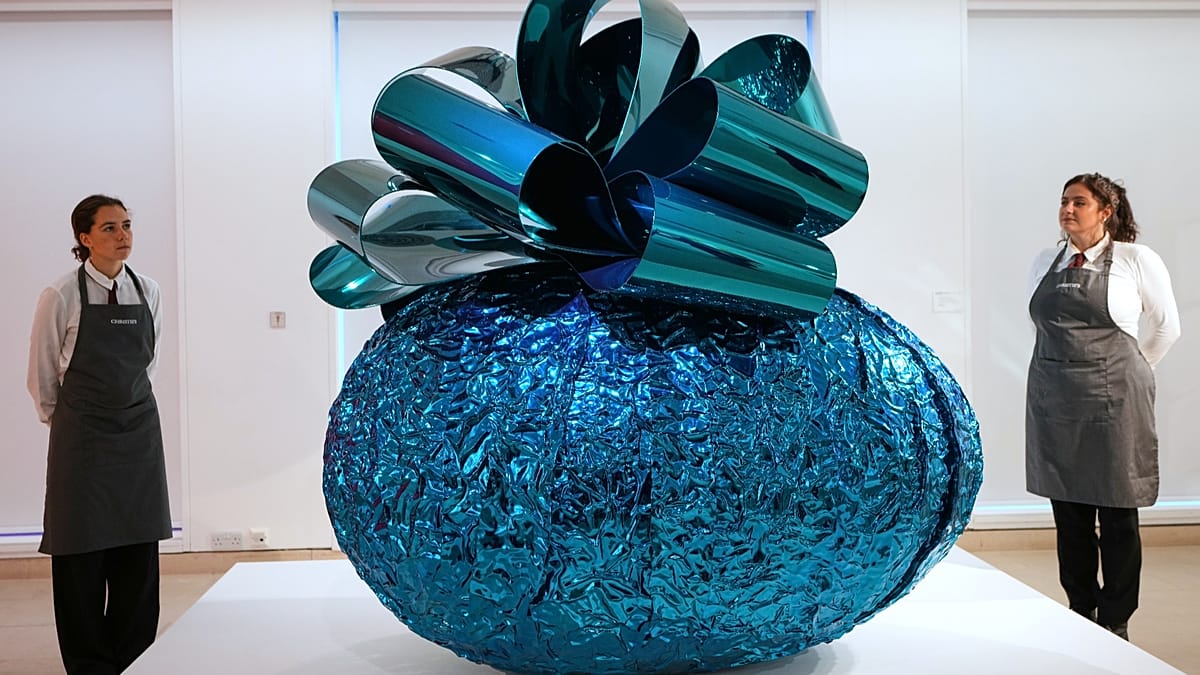
An extensive private collection of modern and contemporary art, assembled over decades by Peter Simon, the British entrepreneur who founded the high-street fashion brand Monsoon, is being offered at Christie's in London this month. The sale comprises roughly 200 works, with a combined estimate of about €130 million, spanning movements from early modernism to pop art.
Among the standout lots is a 1978 painting by Francis Bacon, expected to fetch between €15 million and €19 million, making it the most valuable piece in the auction. The work was created seven years after the death of Bacon's lover, George Dyer, a loss that profoundly shaped the artist's later output. Also expected to draw significant bidding are a 1925 Joan Miró and an untitled canvas by Willem de Kooning, both emblematic of their creators' most inventive periods.
Simon, who built Monsoon into a global retail presence from its first London shop in the 1970s, has long been a discreet but serious collector. The sale offers a rare glimpse into a private trove that includes names like Piet Mondrian and Andy Warhol, reflecting a taste that ranged from geometric abstraction to the bold gestures of postwar American painting.
A collector's eye, a market moment
The auction arrives at a time when the high end of the art market is showing resilience despite broader economic uncertainty. Christie's has positioned the sale as a highlight of its autumn season in London, a city that remains a pivotal hub for international art dealing. The collection's breadth—from early 20th-century European masters to mid-century American icons—underscores the enduring appeal of blue-chip works among wealthy buyers.
For Simon, the decision to part with the collection marks a significant shift. In a statement, he described the works as having "brought immense joy" over the years, but noted that the time had come to "share them with a wider audience." Such sales often attract attention not only for the art itself but for what they reveal about the tastes of a generation of entrepreneurs who profited from the consumer boom of the late 20th century.
The Bacon painting, in particular, is likely to be closely watched. Created in a period when the artist was grappling with grief, it exemplifies the raw emotional intensity that has made his work so coveted. Christie's specialists have highlighted its provenance and condition as key factors in its estimate, which sits comfortably within the range of recent Bacon sales at auction.
Other lots include works by Lucio Fontana, Alberto Giacometti, and Jean-Michel Basquiat, offering something for collectors across a spectrum of styles and periods. The sale is being held as a single-owner auction, a format that often generates competitive bidding as buyers vie for pieces from a cohesive, curated group.
London's autumn auction calendar is traditionally a barometer for the global art market, and this sale adds to a season already packed with major consignments. While some analysts have noted a cooling in certain segments, the demand for top-tier works by established names appears undiminished, particularly among buyers from Europe, Asia, and the Middle East.
For the broader cultural landscape, the dispersal of Simon's collection means that works long held in private hands will now enter the public sphere, whether through museum acquisitions or new private collections. That transition, as much as the prices achieved, will be a measure of the collection's lasting significance.