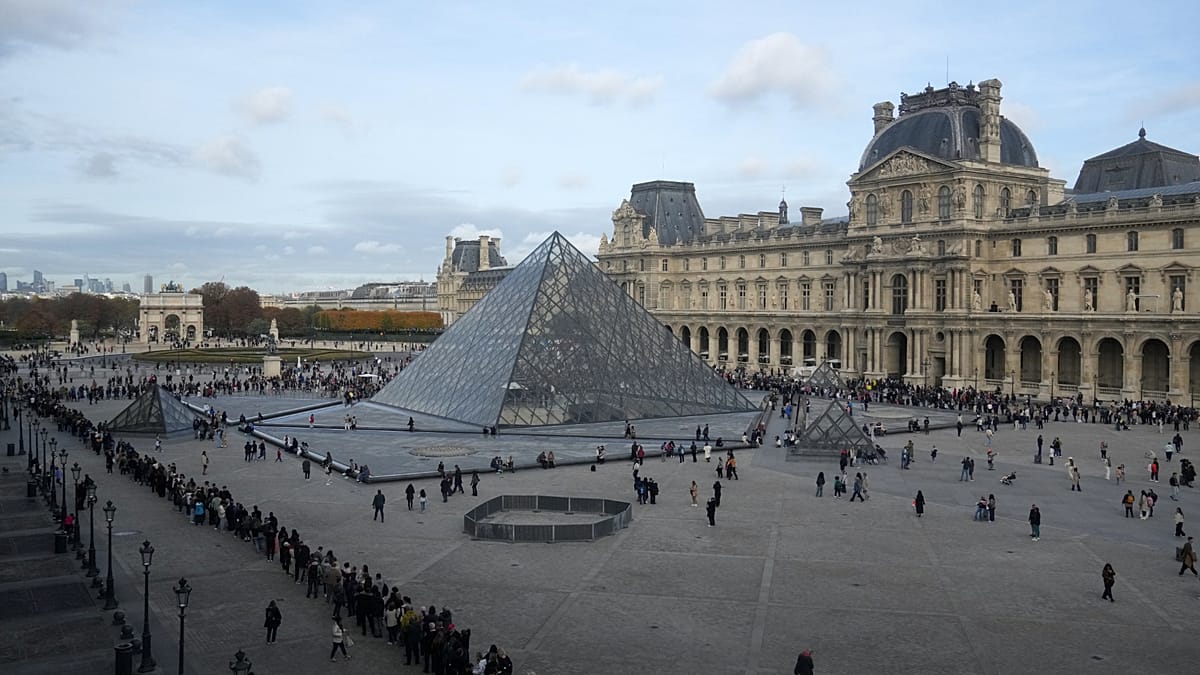
Nearly two months after the brazen theft of France's crown jewels from the Louvre, investigators have shifted their focus to Belgium. Analysis of mobile phones belonging to several Eastern European suspects—individuals already known for handling stolen goods—has revealed a network of calls, stored images, and contacts that point directly to Belgian territory.
According to Le Parisien, the phones contained photographs of the Galerie d'Apollon, the very gallery where the theft occurred on 19 October 2025. The data also shows movements and communications that suggest Belgium served as a logistical hub for the operation. French investigators have now traveled to the country to conduct on-the-ground inquiries, examining potential accomplices and fences who may have helped organize the heist.
The development reinforces the theory that a commando unit acted on behalf of wealthy international backers or highly specialized criminal networks. The stolen haul—valued at €88 million—includes a diamond and emerald necklace gifted by Napoleon to Empress Marie-Louise, jewellery linked to 19th-century queens Marie-Amélie and Hortense, and the pearl and diamond tiara of Empress Eugénie, wife of Napoleon III.
Belgian Connections Under Scrutiny
Belgium has long been a crossroads for cross-border crime in Europe, and this case is no exception. The country's role as a potential base for the network aligns with patterns seen in other high-value art and jewellery thefts. French authorities are now working with Belgian counterparts to trace the suspects' contacts and any assets that may have been moved across the border.
This is not the first time Belgium has featured in a major European criminal investigation. In recent months, Belgian prosecutors have probed Wise Europe over money laundering compliance failures, highlighting the country's ongoing challenges with financial crime. The Louvre case adds another layer to that narrative, as investigators examine whether the stolen items were laundered through Belgian channels.
Meanwhile, French authorities continue their domestic inquiries, aiming to identify all members of the network and understand how the operation was orchestrated. The goal remains unchanged: recover the stolen valuables and dismantle the entire enterprise.
The theft itself was executed with precision. The thieves entered the Galerie d'Apollon at 9 a.m. on a Sunday and, within minutes, made off with items of immense historical and monetary value. The Louvre, one of the world's most visited museums, has since tightened security, but the incident has shaken confidence in the protection of France's cultural heritage.
As the investigation enters this new phase, the focus on Belgium underscores the transnational nature of modern art crime. For now, the crown jewels remain missing, and the hunt continues across European borders.