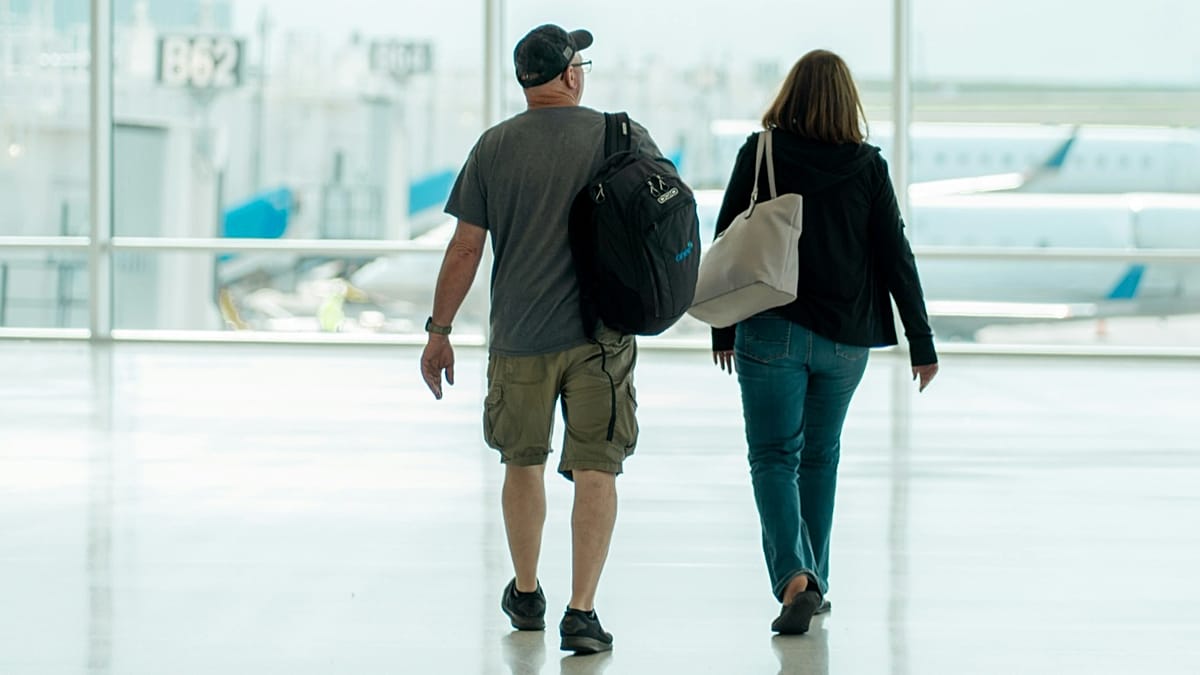
Lufthansa is rolling out a new no-frills economy product that strips air travel to its barest essentials. Starting April 2026, passengers on selected short- and medium-haul routes operated by Lufthansa Group carriers can book an Economy Basic fare, which the airline describes as ideal for day-trippers and business travellers who pack light and need no flexibility.
The catch? The free cabin allowance is the most restrictive of any airline in Europe: a single personal item—a backpack or handbag—limited to 40 x 30 x 15 cm. That is smaller than the standard personal item allowed by Ryanair and Wizz Air (both 40 x 30 x 20 cm) and far below the typical cabin bag dimensions offered by full-service carriers. Checked baggage, seat reservation, and even a larger carry-on bag all come at an extra cost. Tickets are non-refundable and cannot be rebooked.
How Lufthansa's Offer Compares
Lufthansa is not the only legacy carrier to introduce a stripped-down fare. British Airways' Economy Basic on Euro Traveller flights also restricts the free personal item to 40 x 30 x 15 cm, but passengers still receive a standard cabin bag (56 x 45 x 25 cm) included in the fare. EasyJet's standard fare includes a cabin bag of 45 x 36 x 20 cm. Ryanair and Wizz Air, long known for their ultra-low-cost models, include a slightly larger personal item (40 x 30 x 20 cm) in the base price, with all other luggage requiring a fee.
Wizz Air recently piloted a premium service called WIZZ Class on routes to London, Rome, Warsaw, Bucharest, and Budapest, which adds two cabin bags and complimentary snacks. Lufthansa's move, however, signals that even flag carriers are willing to compete on the most basic level—potentially reshaping expectations for what a base fare includes.
Regulatory Pushback
The timing of Lufthansa's announcement is notable. In January 2026, the European Parliament voted overwhelmingly to strengthen passenger rights, including a proposal that would require airlines to allow one personal item and one small piece of hand luggage (combined dimensions up to 100 cm and weight up to 7 kg) free of charge as part of the base fare. The European Parliament Demands €200 Billion Budget Boost, Setting Up Clash with Member States highlights the broader tension between consumer protection and airline economics.
EasyJet CEO Kenton Jarvis dismissed the proposal as “terrible for the consumer,” arguing that cabin space is limited. “There just isn’t the space in the cabin, so that’s another lunatic idea. We would go back to the days of having to offload cabin bags and put them in the hold—it was one of the number one causes of delayed boarding in the old days,” he said.
The European Union currently leaves cabin baggage size limits to individual airlines, but the Parliament's vote signals a potential shift. If the bloc can withstand pressure from carriers, passengers may soon enjoy more generous allowances as a standard right.
For now, travellers booking Lufthansa's Economy Basic should measure their bags carefully. The new fare underscores a broader trend: even Europe's traditional flag carriers are embracing the ultra-low-cost model, blurring the lines between budget and full-service travel. As Ryanair CEO O'Leary Predicts Two or Three European Airlines Could Collapse This Winter, the industry's cost pressures are reshaping what passengers can expect for their money.