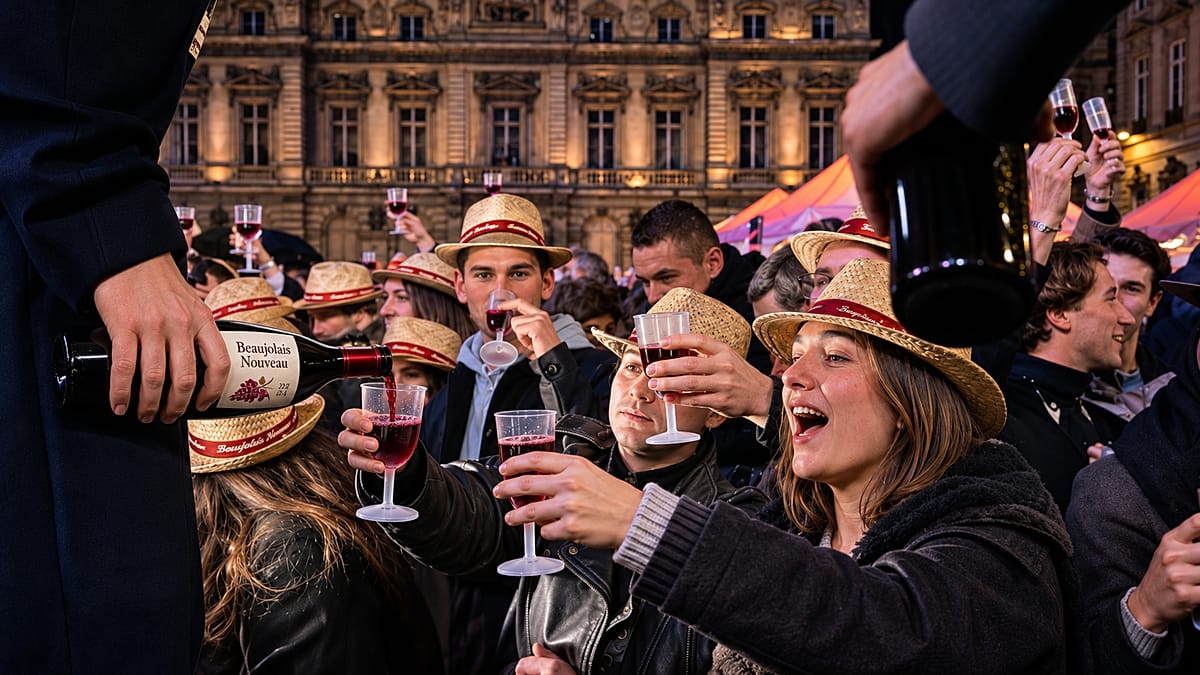
In Lyon, the arrival of Beaujolais Nouveau was marked with a spirited evening procession that weaved through the city's historic streets. Hundreds of locals and visitors turned out on Thursday night to celebrate the official release of the young wine, a ritual that has become a fixture of France's autumn calendar.
The parade featured wine barrels mounted on floats, flaming torches carried by participants, and the brassy sounds of a marching band. The procession wound its way from the Presqu'île toward the Saône river, drawing applause from onlookers who lined the sidewalks despite the chill in the air.
Once the parade reached its endpoint, the crowd gathered for the first tastings of the 2024 vintage. Wine merchants and local producers poured glasses of the fruity, low-tannin red, which is made from Gamay grapes grown in the Beaujolais region just north of Lyon. The event, organized by the city and local wine guilds, is part of a broader effort to promote the region's viticultural heritage.
A tradition with deep roots
Beaujolais Nouveau has been celebrated since the 1950s, when French law set the official release date for the third Thursday of November. The tradition gained international fame in the 1980s with the marketing slogan "Le Beaujolais Nouveau est arrivé!" and has since become a global phenomenon, though its popularity has waned in some markets. In France, however, it remains a beloved cultural event, particularly in Lyon, which is often called the gastronomic capital of the country.
This year's celebration comes at a time when French wine producers are facing challenges, from changing consumer habits to the effects of climate change on harvests. Yet the festive atmosphere in Lyon suggested a resilient industry eager to connect with the public. "It's about more than just wine," said Marie Dupont, a local sommelier who attended the event. "It's a moment when the whole city comes together to celebrate our terroir and our way of life."
The parade also served as a reminder of the economic importance of wine to the region. Beaujolais produces around 100 million bottles a year, with a significant share exported to markets across Europe and beyond. The Nouveau release is a key marketing opportunity for producers, who hope to attract new drinkers with the wine's approachable style.
For many in Lyon, the evening was a chance to enjoy a glass with friends and neighbors, and to mark the transition into the winter season. As the torches flickered and the band played on, the city's streets filled with laughter and the clinking of glasses, a scene repeated in towns and villages across the Beaujolais region.
The event also highlighted the broader cultural ties between France and its European neighbors. Wine remains a cornerstone of European identity, and the Beaujolais Nouveau celebration is one of the continent's most recognizable autumn rituals. In recent years, similar events have sprung up in other countries, but Lyon's parade remains one of the most authentic.
As the night wore on, the crowd slowly dispersed, leaving behind the scent of wine and wood smoke. For those who stayed until the end, the message was clear: Beaujolais Nouveau is not just a drink, but a celebration of community and tradition.