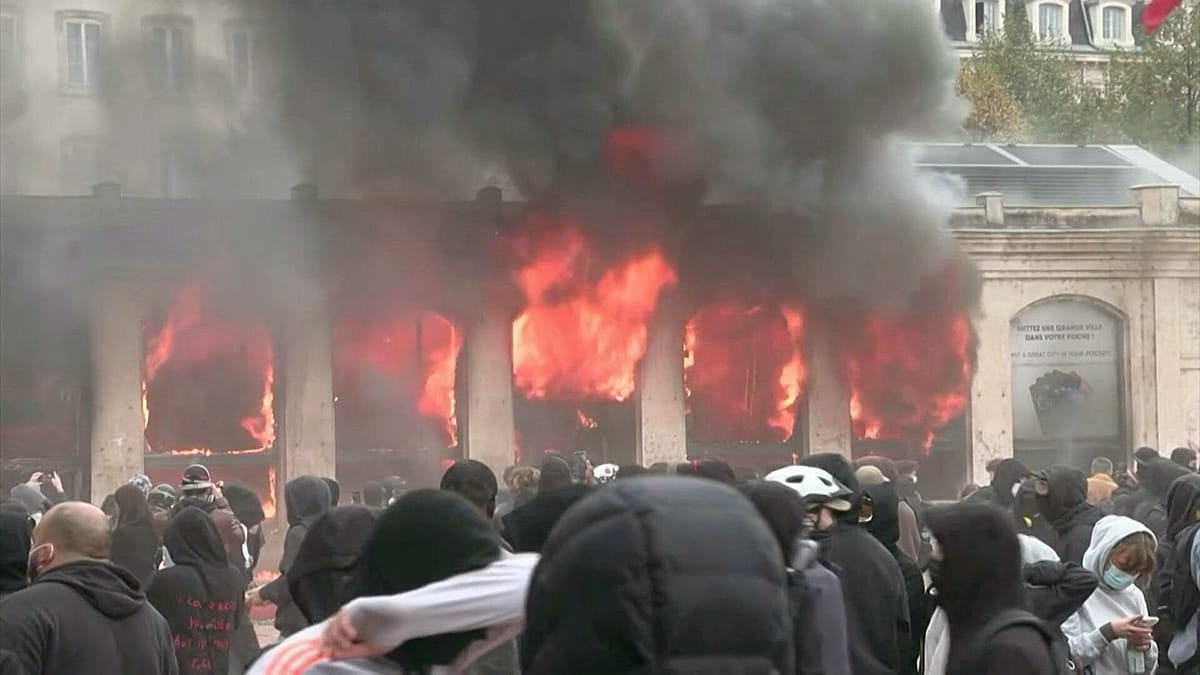
In the heart of Lyon, a branch of the city's tourist office was vandalised and set ablaze on Saturday as nationwide demonstrations over the rising cost of living turned increasingly confrontational. Hooded individuals tore letters from the building's facade and damaged the premises while flames licked up one side of the structure, leaving charred debris scattered across the nearby Place Bellecour.
The attack marks a sharp escalation in a wave of protests that have swept French cities in recent weeks. What began as student-led anger over tuition fees and housing costs has morphed into a broader movement against President Emmanuel Macron's economic policies, with many demonstrators voicing frustration over stagnant wages and soaring prices for basic goods.
A nation on edge
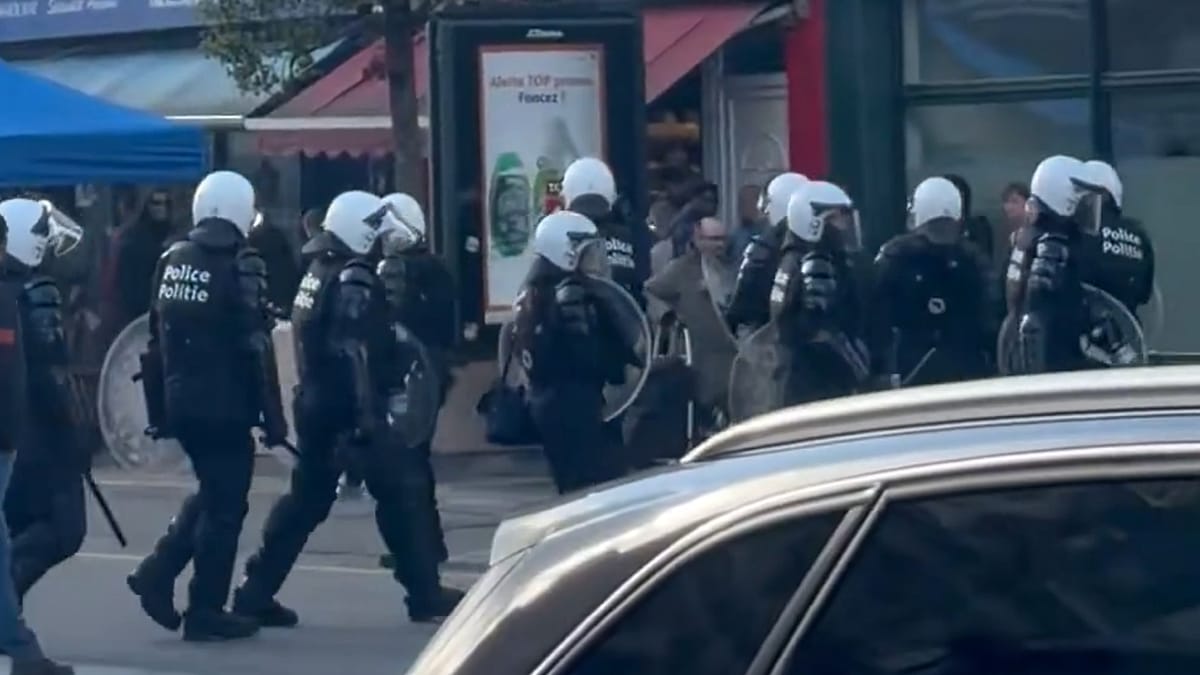
Saturday's violence in Lyon followed a pattern seen in Paris, Nantes, and Bordeaux, where clashes between protesters and police have become almost routine. In the capital, riot officers have repeatedly used tear gas and water cannons to disperse crowds, while shop windows and public buildings have borne the brunt of vandalism. The government has condemned the destruction, with Interior Minister Gérald Darmanin blaming "a minority of radical agitators" for hijacking legitimate grievances.
Macron, speaking earlier this week, accused "extremists" of exploiting student anger for their own ends, a remark that drew sharp criticism from opposition leaders who argue the president is out of touch with the economic realities facing ordinary French families. The Élysée has so far ruled out any reversal of its pension and labour market reforms, insisting that the country's long-term competitiveness depends on fiscal discipline.
The unrest in France is not occurring in isolation. Across the continent, from Lisbon to Tirana, governments are grappling with a similar cocktail of inflation, housing shortages, and public discontent. In Portugal, housing protests have joined a Europe-wide wave over living costs, while in Albania, Prime Minister Edi Rama has accused foreign actors of fuelling demonstrations in Tirana, a claim that has only deepened political polarisation.
Tourism under fire
The targeting of Lyon's tourist office is symbolic, striking at a city that prides itself on its UNESCO-listed heritage and its reputation as France's gastronomic capital. The office, located on Place Bellecour, one of Europe's largest pedestrian squares, is a gateway for millions of visitors each year. Its destruction not only disrupts local services but also sends a troubling signal to the tourism industry, which has been struggling to recover from the pandemic and the recent wave of strikes.
Local officials were quick to condemn the attack. Lyon's mayor, Grégory Doucet, called it "an unacceptable act of violence against a symbol of our city's openness to the world." He added that the perpetrators would be brought to justice, but also urged the national government to address the underlying social tensions. "We cannot simply police our way out of this crisis," he said in a statement.
The tourism sector, a key pillar of the French economy, is watching nervously. With the summer season approaching, hoteliers and restaurateurs fear that images of burning buildings and riot police will deter visitors. Similar concerns have been raised in other European capitals, where protests have occasionally spilled into tourist districts. In Azerbaijan, by contrast, authorities are pushing ahead with an ambitious tourism push, underscoring the divergent fortunes of the continent's travel industries.
Political fallout
The Lyon attack is likely to intensify pressure on Macron, who has already faced weeks of protests over his decision to raise the retirement age from 62 to 64. The president's approval ratings have sunk to their lowest level since the Yellow Vest crisis of 2018, and opposition parties are calling for a vote of no confidence. Marine Le Pen's National Rally has sought to capitalise on the unrest, portraying Macron as an elitist out of touch with provincial France.
Yet the protest movement remains fragmented, with no single leader or set of demands. Student unions, environmental activists, and left-wing parties have all tried to claim ownership, but the anger on the streets appears more diffuse, rooted in a pervasive sense of economic insecurity. As one demonstrator in Lyon put it, "We are not just protesting about one thing; we are protesting about everything."
The government's response has been to promise targeted measures, such as fuel vouchers and rent controls, but critics argue these are too little, too late. Meanwhile, the violence shows no sign of abating. In a sign of the times, even the president's own words have become a flashpoint, with protesters accusing him of dismissing their legitimate grievances.
As France braces for further demonstrations, the question is whether the government can restore order without further alienating a public that feels increasingly left behind. The burning tourist office in Lyon is a stark reminder that the cost-of-living crisis is not just an economic issue, but a political one with the power to reshape the country's future.