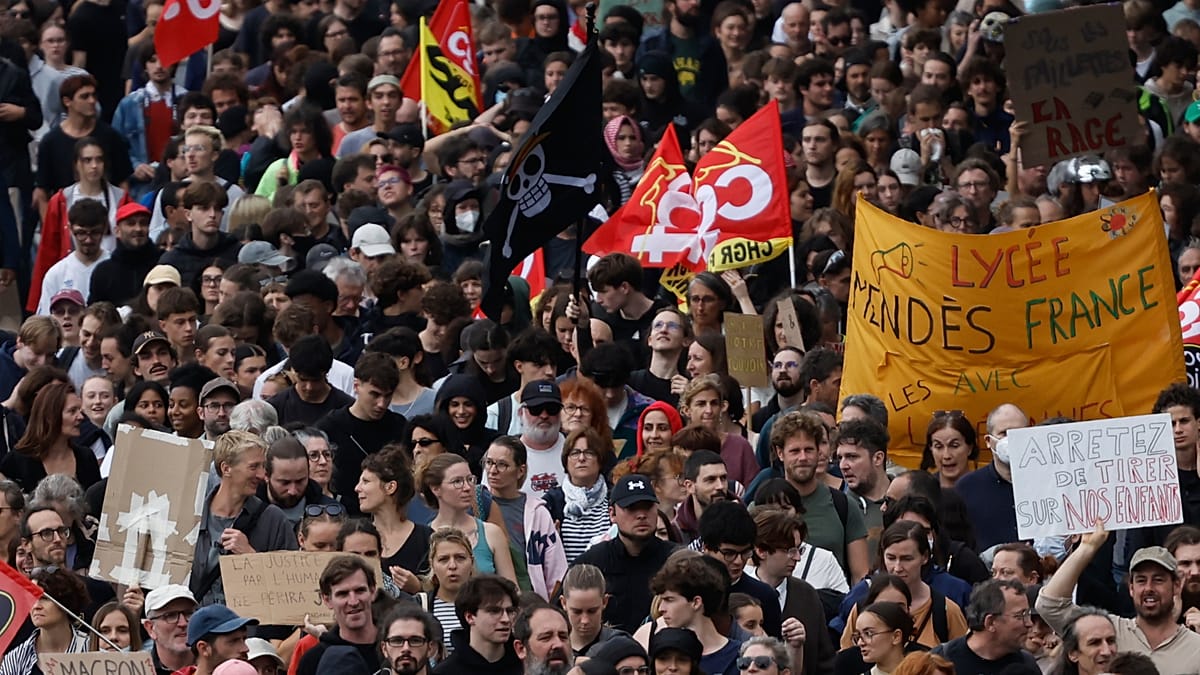
French secondary school pupils have kept up their mobilisation for days, blockading lycées in cities including Paris, Marseille, Lyon and Toulouse. Most of the actions have been peaceful, but the memory of violent episodes in recent weeks continues to shape how the government and security forces are approaching the movement.
With student unions calling for the scattered protests to converge into a fresh nationwide day of action on Saturday 17 October, the authorities are preparing for further disruption. Government spokesperson Maud Bregeon relayed a warning from President Emmanuel Macron after the weekly cabinet meeting at the Élysée.
"The President of the Republic stressed that young people are expressing legitimate anxieties, but that these anxieties are being exploited politically and turned into urban violence, with scenes that are unacceptable," Bregeon said.
The remark captures the delicate line the executive is trying to walk: acknowledging the genuine concerns of teenagers while casting the most disruptive elements as manipulated by outside actors. It also signals that Paris is not preparing to soften its stance ahead of the weekend.
A movement with a rising toll
The scale of the policing response is already substantial. Since the start of the movement, more than 6,800 people have been taken into police custody, 86% of them minors. In the same period, the police regulator, the IGPN, has opened 36 investigations, a figure that will draw scrutiny from civil liberties groups and opposition parties alike.
The unrest has echoes of earlier flashpoints in French education politics, including the confrontations that accompanied previous rounds of school protests. As our reporting on clashes during the Paris student marches showed, the line between peaceful demonstration and street violence has repeatedly proved difficult to hold.
Student unions argue that the blockades reflect a broad and deepening dissatisfaction with conditions in lycées, from staffing shortages to overcrowded classrooms. They want the dispersed actions to merge into a single, coordinated show of force on Saturday, hoping that a larger turnout will force the government to make further concessions.
Concessions and their limits
In an attempt to calm the anger, the government announced several measures a few days ago, including the deployment of 3,000 substitute teachers to certain schools. The move was intended as a tangible response to complaints about absent staff and disrupted lessons, but it has not halted the blockades.
The timing is awkward for the executive, which is simultaneously managing a difficult budget debate and a wider climate of social tension. The broader context of French protest politics is familiar: as we noted in our coverage of the budget debate and the school protests, education disputes in France rarely stay confined to the classroom.
For now, the government's strategy appears to rest on two pillars: offering targeted resources to schools while drawing a hard line against what it describes as political exploitation of adolescent frustration. Whether that combination can drain the momentum from the movement before Saturday will become clearer in the coming days.
What happens on 17 October matters beyond France's borders. A large, disorderly day of action would add to the pressures already weighing on Macron's second term and could embolden other protest movements across the country. A calmer, well-attended demonstration, by contrast, would keep the focus on the substance of student demands and on the government's ability to respond to them.
For the pupils themselves, the immediate stakes are concrete: whether their schools reopen, whether promised staff arrive, and whether their grievances are treated as a policy problem to be solved rather than a security problem to be contained.