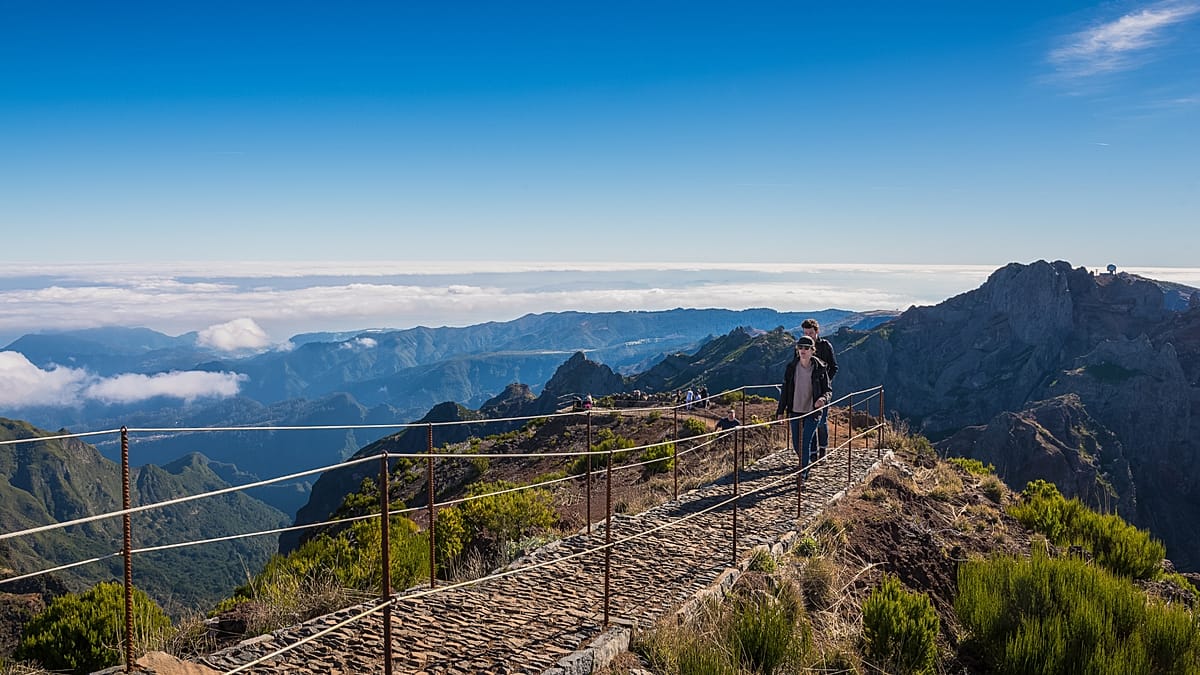
One of Portugal's most celebrated hiking routes, the PR1 Vereda do Areeiro on the island of Madeira, is set to reopen in April following an extensive two-year restoration. The trail was closed in 2024 after a wildfire caused significant damage, necessitating major safety improvements and repairs to the infrastructure along its 7-kilometer length.
The route connects three of the archipelago's highest peaks: Pico do Areeiro (1,818 meters), Pico das Torres (1,851 meters), and Pico Ruivo (1,862 meters). It offers a high-altitude trek through the Central Mountain Massif, a protected area renowned for its unique habitats. Hikers navigate tunnels carved through volcanic rock, traverse steep ridgelines, and experience panoramic viewpoints often situated above the cloud line. The journey typically takes around three and a half hours to complete.
New Fees and Conservation Focus
Access to the newly restored trail will come at a higher cost than other routes on the island. A fee of €10.50 will be charged, compared to the standard €4.50 rate for other classified walking paths. Officials from the regional tourism board, Visit Madeira, have stated that the increased fee reflects the higher maintenance requirements and new infrastructure installed along the challenging route.
Revenue from these fees is earmarked for ongoing trail maintenance, further safety enhancements, and environmental protection initiatives. It also supports efforts to manage visitor numbers, a growing concern for the island's delicate ecosystems. Madeira's residents are exempt from the fees but must still preregister for access.
The reopening is framed within the island's broader Explore. Respect. Preserve. campaign. Visit Madeira has issued guidelines urging visitors to protect the local environment by not uprooting flora, avoiding littering, and respecting wildlife by maintaining a distance. "Animals are not attractions," the board reminds travellers, noting that excessive human contact disrupts natural behaviours.
Island-Wide Regulatory Shift
The return of the PR1 trail coincides with the full implementation of new hiking regulations across Madeira, which came into force on 1 January 2026. These rules are designed to reduce congestion on popular paths and lessen the environmental impact of tourism. Measures include staggering visitor access throughout the day to prevent overcrowding at peak times.
For other major trails, such as the 6km Vereda da Ponta de São Lourenço or the 10.6km Levada do Rei, a standard €4.50 fee applies. A discounted rate of €3 is available for those who book in advance, incentivising pre-planning to help authorities anticipate and manage footfall.
The trail traverses a region of significant biodiversity, home to bird species and subspecies unique to Madeira and the wider Macaronesian archipelagos, such as the canary, Berthelot's pipit, and plain swift. The conservation-focused fee structure directly supports the preservation of these habitats.
The scheduled reopening in April is timed to align with the Madeira Island Ultra Trail running challenge, set for 25-26 April 2026, which will see athletes traverse many of the island's rugged paths. This focus on managed, sustainable tourism reflects a broader European trend of popular destinations grappling with the balance between visitor access and environmental preservation. As seen in the ranking of Europe's scenic rail journeys, natural attractions face increasing pressure, requiring innovative management solutions.
Furthermore, the investment in resilient infrastructure following a climate-linked wildfire event echoes wider European concerns. The need for adaptation and conservation funding is a continent-wide issue, paralleling discussions in other sectors, such as the energy security warnings from EU officials regarding external shocks. Madeira's approach demonstrates a regional model where tourism revenue is directly linked to conservation and community-focused sustainability goals.