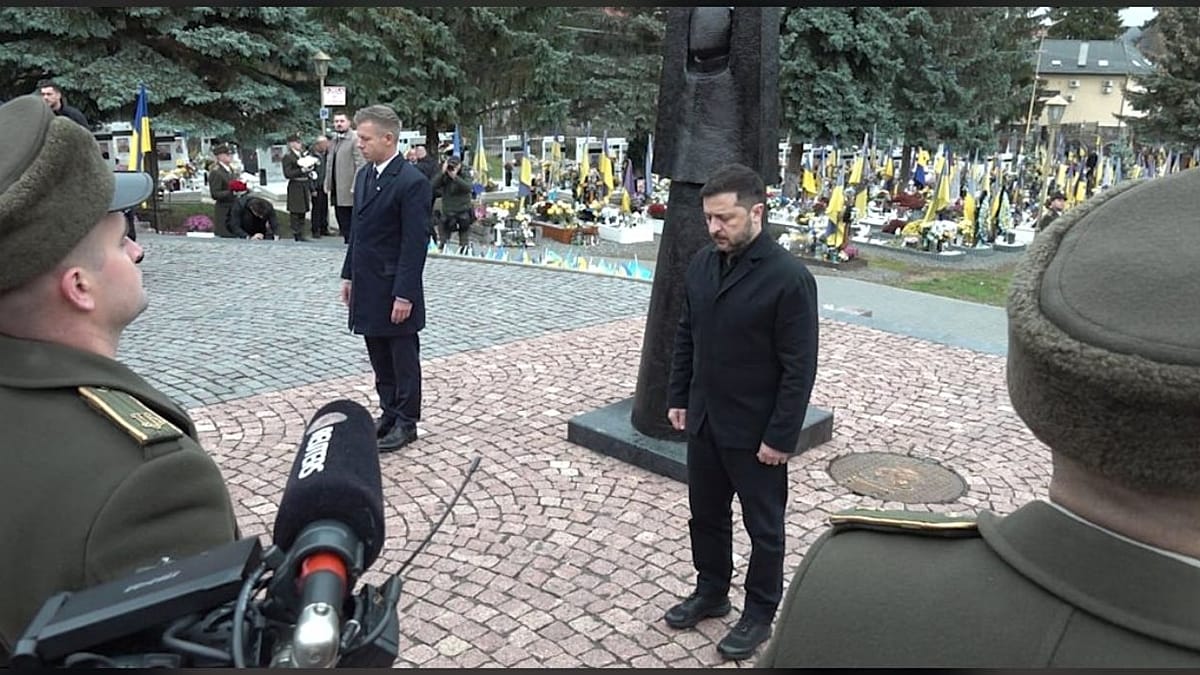
In a symbolic break with more than a decade of frosty relations, Hungarian Prime Minister Péter Magyar met Ukrainian President Volodymyr Zelenskyy on Tuesday in Uzhhorod, the administrative centre of Ukraine's Transcarpathia region. Both leaders described the talks as substantive and said they marked the start of a new chapter between Budapest and Kyiv.
The meeting, held under tight security, began with a wreath-laying ceremony at a military cemetery in Uzhhorod. Zelenskyy noted that 316 Ukrainian soldiers have been buried there since Russia launched its full-scale invasion in February 2022. The gesture carried particular weight given that Hungary's previous government, led by Viktor Orbán, had long been accused of downplaying Russia's aggression and blocking EU support for Ukraine.
Aid and a shift in tone
Magyar said the Hungarian delegation had not arrived empty-handed. Budapest delivered patient-monitoring equipment, medicines, and energy supplies such as generators, worth around 1 billion forints (€2.5 million), which could prove vital during the coming winter months. He stressed that Hungary continues to refrain from supplying weapons to Ukraine, a position that remains unchanged.
Zelenskyy thanked the Hungarian side for the assistance. The two leaders then moved to the Old Continent hotel in Uzhhorod, where officials including Hungarian Foreign Minister Anita Orbán discussed further support for Ukraine and its path towards European integration.
The meeting had been anticipated after Magyar signalled it in a speech to the Hungarian parliament on Monday. In that address, he recalled the hostile election campaign that Viktor Orbán's government had run against Ukraine and Zelenskyy, and contrasted it with his own approach. Magyar told lawmakers that his government stands by the Hungarians of Transcarpathia and the Ukrainian people under attack, even if Moscow objects.
Unblocking EU accession
The change in Hungary's position has already had tangible effects. According to media reports, Budapest withdrew its objections to the last two clusters of negotiating chapters in Ukraine's EU accession process at a meeting of EU ambassadors last week. This means Ukraine and Moldova can now begin talks on all areas of EU membership, including sensitive ones such as environment and agriculture.
Agriculture remains a particularly delicate issue for Kyiv. The European Commission, under pressure from Poland and France, has proposed limiting the access of certain Ukrainian farm products to EU funds and the European market. Ukrainian Prime Minister Serhii Koretskyi told Euronews that Kyiv cannot accept its farmers being permanently shut out of the European market, insisting that any measures must be temporary and proportionate.
Opening the negotiating clusters is only the first step. Candidate countries must then align their laws and practices with EU rules, and during that process member states can use their veto more than 100 times, potentially halting progress. The rule-of-law concerns that have long shadowed Hungary may also resurface as the EU scrutinises its own internal governance.
The shift in Budapest's stance is a significant boost for EU support for Ukraine. For years, Hungary held up the accession process by blocking the opening of negotiating clusters, and its veto also stalled Moldova's bid, which remains tied to Kyiv's. After Magyar replaced Orbán, who had been in power for 16 years, the first cluster was opened in June, the second in July, and two more in October.
Last month, Kyiv and Budapest reached an agreement on the rights of the ethnic Hungarian minority in western Ukraine, which the Ukrainian parliament subsequently adopted. That deal helped pave the way for the latest breakthrough. Although the Hungarian government was ready to move forward, it waited a few weeks before agreeing to open the final two clusters, reflecting the political difficulty at home after years of anti-Ukrainian rhetoric from the Orbán era.
The meeting in Uzhhorod is a clear signal that Hungary's foreign policy has changed course. Whether it can sustain that momentum will depend on how both sides manage the practical challenges of EU accession and the ongoing war. For now, the new chapter has begun.



