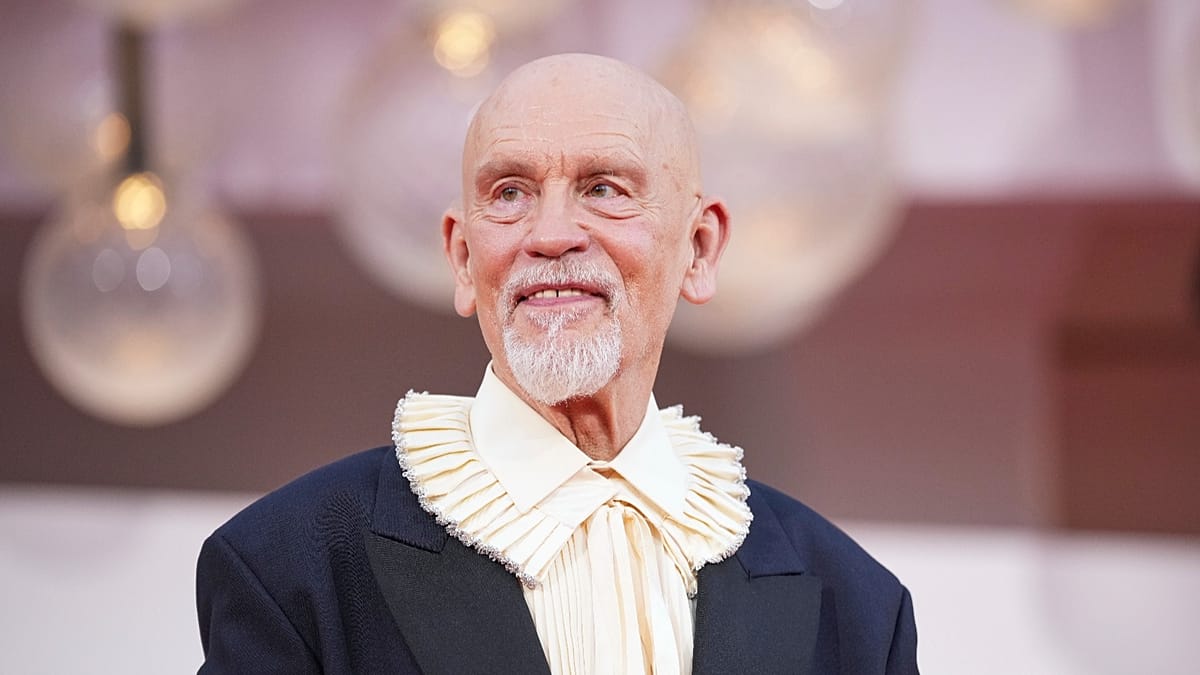
John Malkovich, fresh from winning the Best Actor prize at the Venice Film Festival, has pulled out of a scheduled performance in Tel Aviv after a public relations firm fabricated quotes in which he allegedly expressed solidarity with Israel. The controversy has added a political dimension to what was already a career milestone for the veteran actor.
Venice triumph and a sudden cancellation
At the 83rd Venice Film Festival, which concluded over the weekend, Malkovich took home the prestigious Coppa Volpi for his role in Wild Horse Nine, a dark comedy directed by Martin McDonagh. The film, set in 1973, follows two CIA officers dispatched from Santiago to Easter Island on the eve of the Chilean coup that toppled Salvador Allende. It also stars Sam Rockwell, Steve Buscemi, Parker Posey, and Tom Waits.
Unable to attend the ceremony in person due to filming commitments in Montreal, Malkovich accepted the award via video message, saying he was "humbled to be chosen for this award, which has been given to so many wonderful actors." The win positions him as an early frontrunner in the upcoming awards season, with many pundits already speculating about a possible Oscar nomination.
The fabricated quotes and the fallout
Malkovich was due to appear in The Music Critic, a theatrical-musical satire composed by Jewish violinist Aleksey Igudesman, at the Charles Bronfman Auditorium in Tel Aviv next April. However, an unauthorized press release, published in The Jerusalem Post, quoted him as saying he was "thrilled to return to Israel" and looked "forward to meeting the warm Israeli audience once again, to whom I feel a strong closeness and solidarity."
Upon learning of these quotes via The Hollywood Reporter, Malkovich issued a statement denying he had ever made such remarks. He explained that a "PR company hired by the Israeli promoter drafted a quote for the article that was attributed to me, though I never made the statements that were quoted, nor was I consulted before they were printed." He added: "I did not utter these phrases, and they most certainly are not approved by me, nor do they reflect my feelings. The fact that they were printed as direct quotes from me is unacceptable and untenable. For this reason, I have decided I cannot participate in the Tel Aviv performance."
Distancing from political endorsement
Malkovich went further, clarifying that his decision was not a political statement against Israel per se, but a refusal to have his name used to imply support for any government's actions. He noted that throughout his career he has performed in countries with governments whose values he does not share, and that such travel has allowed him to "observe and to listen and learn." He stressed: "My appearance in any country, even my own, does not constitute approval of said country's policies, nor actions, nor its elected or unelected leaders. My appearances would also not condone nor mean that I am in supposed 'solidarity' with any particular political cause, nor with the killing of innocents, nor with any acts of terrorism, nor any other kind of barbarity."
The Israeli PR firm behind the release later apologized, stating that Malkovich "did not make, provide, authorise or approve this statement, nor was it approved by his representatives." They expressed sincere regret for the "incorrect attribution."
Context and reactions
The cancellation comes amid heightened scrutiny of cultural figures' engagements with Israel, particularly in light of the ongoing conflict in Gaza and the West Bank. International bodies, including Amnesty International, Human Rights Watch, and the United Nations, have described Israel's military actions as "genocide," and a UN commission in June found that Israeli authorities had "deliberately targeted Palestinian children." These developments have led to a wave of boycotts and protests across Europe, such as the Portuguese artists' boycott of a Lisbon festival over Jerry Seinfeld's stance, and have intensified debates about the role of art in political conflicts.
Malkovich last performed in Israel in 2013, appearing in The Infernal Comedy: Confessions Of A Serial Killer. His decision to cancel this time, while framed as a principled objection to false attribution, is likely to be interpreted by many as a tacit alignment with the cultural boycott movement. However, his statement carefully avoids endorsing any specific political cause, instead emphasizing the integrity of his own words and the importance of not being manipulated.
As the awards season progresses, Malkovich's Venice win will keep him in the spotlight, but this episode adds a layer of complexity to his public profile. Whether it affects his Oscar prospects remains to be seen, but it certainly underscores the delicate intersection of art, politics, and personal conscience in today's Europe.