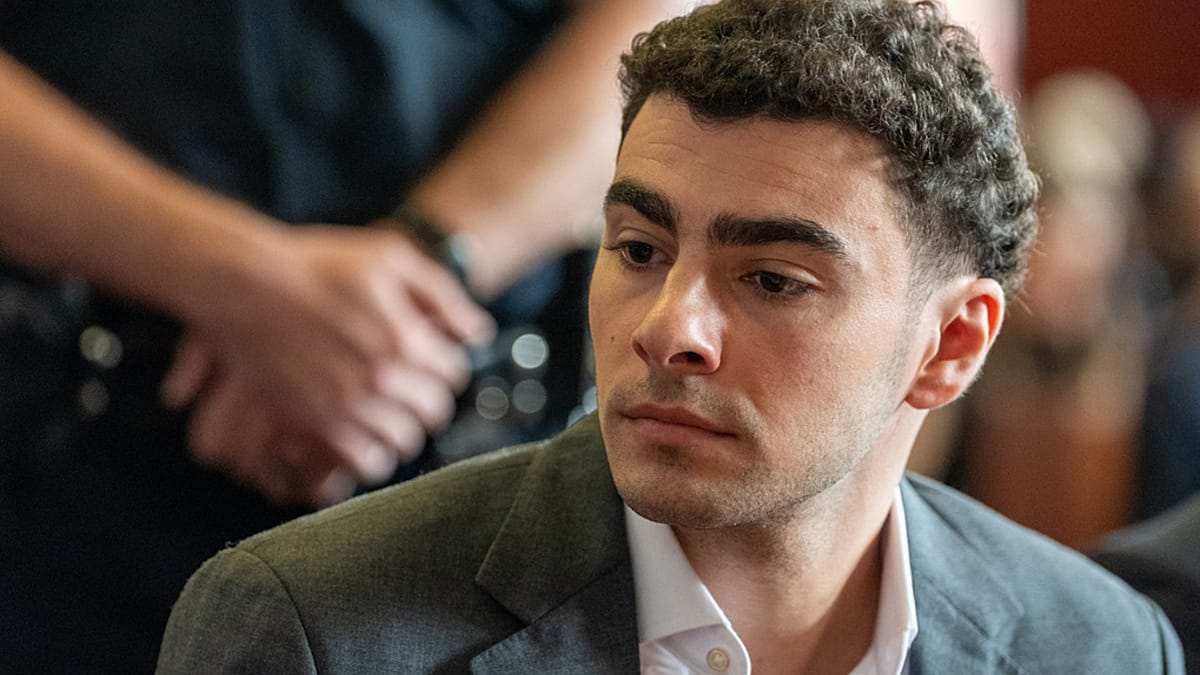
The state murder trial of Luigi Mangione, accused of killing UnitedHealthcare CEO Brian Thompson in Manhattan in December 2024, has been postponed indefinitely. Judge Gregory Carro of the New York State Supreme Court issued an order on Monday cancelling the trial, which had been scheduled to begin on 8 September, and gave the Manhattan District Attorney's office until 9 October to respond to the defence's double jeopardy motion.
Mangione, 28, pleaded guilty last Friday in Manhattan federal court to two stalking charges, admitting he followed Thompson to an investor conference and shot him dead outside a Midtown hotel. Federal prosecutors have said they will seek a life sentence at his 18 December sentencing, although federal guidelines suggest a term of 24 to 30 years. In a statement read in court, Mangione said: “On the morning of 4 December, 2024, I shot Mr. Thompson in Manhattan, and he died.”
Immediately after the plea, his lawyers filed a motion to dismiss the state case, arguing that the federal conviction bars a second prosecution under New York's double jeopardy protections. They described Mangione as a “pawn in parallel prosecutions” and accused state and federal authorities of “trying to punish him twice for the exact conduct.” Mangione has pleaded not guilty in the state case, which also carries a potential life sentence.
Double jeopardy under New York law
New York has some of the strongest legal safeguards in the United States against multiple prosecutions for the same conduct. Under state law, a subsequent prosecution can be barred if a federal case involving the same criminal transaction ends in a guilty plea or a jury is sworn. Judge Carro will now decide whether that principle applies to Mangione, and his ruling is expected to be appealed regardless of the outcome.
The Manhattan District Attorney's office, led by Alvin Bragg, has signalled it will fight the dismissal. In a statement, the office said it would oppose the motion, in part because Mangione's federal sentence is not yet known. Assistant District Attorney Joel Seidemann had earlier objected to the possibility that a federal plea could wipe out the state charges, writing that any plea “must account for the seriousness of defendant's offenses” and for the state's interest in prosecuting “the sanctity of life principle that underpins the state homicide charges.”
Mangione's federal charges centred on his interstate travel by bus from Pennsylvania to New York, and his use of a mobile phone, the internet, and a hostel that serves out-of-state customers to plan and carry out the attack. His lawyers argue that the stalking and the murder are inseparable. “The full range of conduct that comprises the stalking offence is coterminous with the conduct committed as part of the murder offense,” they wrote. They added that his out-of-state travel “does nothing to eliminate the stalking of Mr. Thompson from the acts constituting his murder. They are all part of the same criminal incident or criminal transaction.”
The case has drawn intense international attention, not least because Thompson's killing sparked a broader debate about corporate power and health insurance in the United States. For European readers, the legal questions at stake—double jeopardy, parallel prosecutions, and the limits of state and federal authority—resonate with similar debates in the EU, where the European Arrest Warrant and the principle of ne bis in idem (the right not to be tried twice for the same offence) are central to cross-border justice. The outcome of Mangione's case could offer a transatlantic contrast to how European courts handle overlapping charges.
Judge Carro has scheduled a hearing for 10 December, about a week before Mangione's federal sentencing. Until then, the state case remains in limbo, and the legal wrangling is likely to continue. For now, the trial that was set to begin in September has been effectively postponed, leaving the families of both Thompson and Mangione—and the public—waiting for clarity.