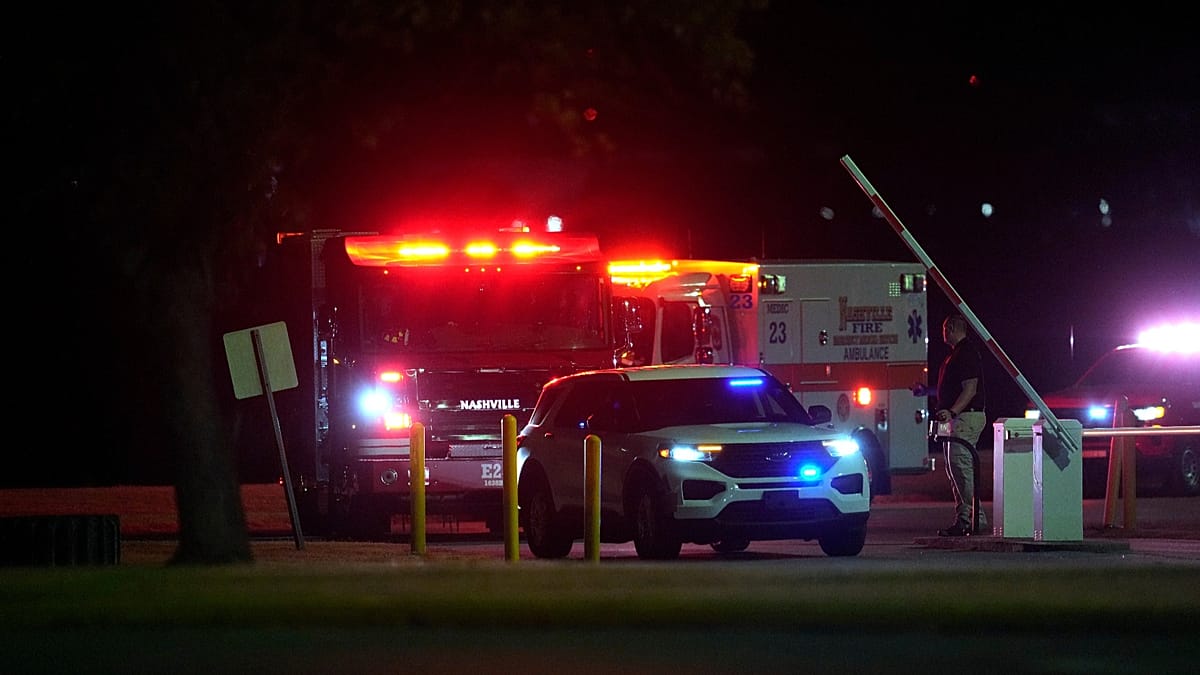
Christa Pike, the 50-year-old woman who was scheduled to become the first female executed in Tennessee in more than two centuries, remains in critical condition after surviving two lethal injections of pentobarbital at Riverbend Maximum Security Institution in Nashville. Her lawyer, Randy Spivey, said on Thursday that she was receiving “life-saving care” at an off-site medical facility and declined to give further details.
The failed execution, which unfolded late on Wednesday, has no clear precedent in the modern American death penalty. According to the Death Penalty Information Centre, seven inmates have escaped execution in recent decades because medical staff could not establish intravenous lines, but Pike is the first person known to have survived after being injected with lethal doses of execution drugs.
A chaotic night in the death chamber
Media witnesses described a scene that bore little resemblance to a routine execution. Kim Chandler of the Associated Press told CBS News that Pike “appeared notably awake as the execution began” and at one point asked prison officials whether the procedure was supposed to feel the way it did. She later began snoring loudly, and journalists watched from the viewing area for about an hour before being escorted out. Chandler said Pike was “loudly snoring, clearly very alive” as they left.
Spivey said he counted at least seven needles used in Pike’s left arm alone, one of which appeared bent when it was removed after an unsuccessful attempt to start an IV line. Lawyer Stephen Ferrell said medical experts had warned that needles could become dislodged or pierce through the vein, causing the lethal drugs to flow into surrounding tissue rather than the bloodstream. “It sounds like that is likely to have occurred,” he said.
Witnesses said Pike told staff her arm felt as though it would “burst open,” and Spivey said he saw her right arm turn purple, particularly after the second injection. Ferrell said Pike had not been afraid of dying. “It was a fear of a prolonged, painful, traumatic death, and that’s what happened, minus the death,” he said.
Calls for clemency and review
Spivey urged Governor Bill Lee, who had denied a clemency request earlier in the week, to commute Pike’s sentence. “After having endured solitary confinement for more than 20 years and a full attempt to kill her by lethal injection, Christa has endured punishment greater than any other person in the history of the American death penalty,” he said. “The governor must commute Christa’s sentence now.”
Lee has called for a “comprehensive, third-party review” of the failed execution, and the Tennessee Department of Correction said it “followed every step of the state’s lawful, established execution protocol.” The governor also said the state’s next scheduled execution, that of Gary Wayne Sutton on 3 December, would not go ahead this year.
The case has drawn international attention. Volker Türk, the United Nations human rights chief, urged Tennessee not to make another attempt to execute Pike, saying on X that her case “lays bare multiple reasons why the death penalty should be abolished.” In Washington, President Donald Trump questioned how an execution could fail, telling reporters it “shouldn’t be very difficult.”
A case rooted in a 1990s killing
Pike was 18 when she and her boyfriend beat and killed 19-year-old Colleen Slemmer at a job training camp for young people. The killing gained national attention after Slemmer’s body was found with a pentagram carved into her chest. Slemmer’s mother, May Martinez, told NBC News that the botched execution was “a mess.”
Pike’s legal team had argued for clemency on the grounds of her youth and mental health at the time of the killing, citing a history of childhood sexual assault and post-traumatic stress disorder. They also objected to the execution IV protocol, warning that her small veins and a blood condition would cause needless suffering. After a flurry of legal filings delayed the procedure by several hours, the US Supreme Court cleared the way for it to proceed on Wednesday night.
Only 18 women have been executed in the United States since 1976, according to the Death Penalty Information Centre. Pike’s survival is likely to intensify debate over lethal injection protocols, the treatment of prisoners with complex medical needs, and the wider future of capital punishment in the United States.