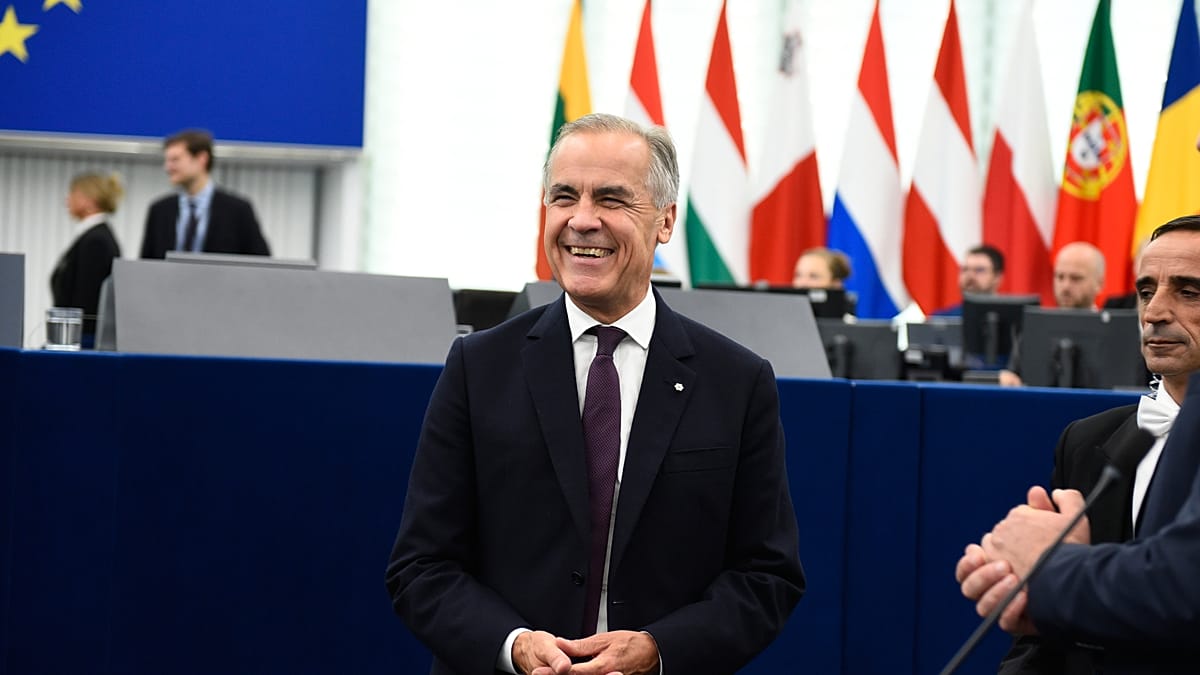
Strasbourg, France — Canadian Prime Minister Mark Carney received a standing ovation from members of the European Parliament on Tuesday, a gesture that underscored the deepening bond between Ottawa and Brussels at a time of transatlantic uncertainty.
Carney, who took office last month, addressed the plenary in the French city of Strasbourg, the parliament's official seat. His speech focused on shared democratic values, economic resilience, and the need for reliable partnerships in a volatile global landscape.
The ovation was notable not only for its warmth but for its symbolism. European lawmakers from across the political spectrum rose to their feet, a rare display of unity in a chamber often divided over migration, climate policy, and the rule of law. The gesture was widely interpreted as a signal of support for Canada's pivot toward Europe as trade friction with the United States intensifies.
A strategic embrace
Carney's visit comes as Ottawa and Brussels explore ways to formalize their relationship beyond the existing Comprehensive Economic and Trade Agreement (CETA). Reports suggest Canada is in talks to join the Erasmus+ student exchange program, a move that would deepen people-to-people ties. The European Parliament has also floated the idea of granting Canada a new "associate member" status, which would be a first for a non-European country.
In his address, Carney emphasized the importance of "trusted partners" in an era of geopolitical rivalry. He praised the EU's commitment to multilateralism and its role in upholding international norms, while also calling for closer cooperation on critical minerals, clean technology, and supply chain security.
The Canadian leader's reception was in stark contrast to the frosty tone often directed at other foreign leaders. Earlier this year, the parliament hosted debates on internal divisions within its centrist alliance, but on Tuesday, lawmakers appeared eager to project unity on the international stage.
Carney's trip to Europe is part of a broader diplomatic push. He has already met with EU officials in Brussels and is scheduled to hold talks with leaders in Paris and Berlin. The visit follows his recent reassurances to Washington that Canada remains a reliable partner, even as the two countries navigate disputes over tariffs and trade practices.
The standing ovation also reflects a mutual interest in diversifying partnerships. For the EU, Canada offers access to critical minerals and a stable, democratic ally in North America. For Canada, Europe represents a counterweight to U.S. dominance and a market for its energy and agricultural exports.
Analysts note that the enthusiasm in Strasbourg is not without limits. Some lawmakers have raised questions about the feasibility of associate membership, which would require treaty changes and unanimous approval from member states. Others have pointed to potential friction over agricultural standards and data privacy.
Still, the symbolism of the moment was not lost on observers. As one EU official put it, "This is more than a photo opportunity. It's a statement about who we want to work with in the years ahead."
Carney's address was part of a broader effort to position Canada as a bridge between Europe and North America. With the United States increasingly unpredictable, both Brussels and Ottawa see value in strengthening their ties. The question now is how quickly they can translate goodwill into concrete agreements.