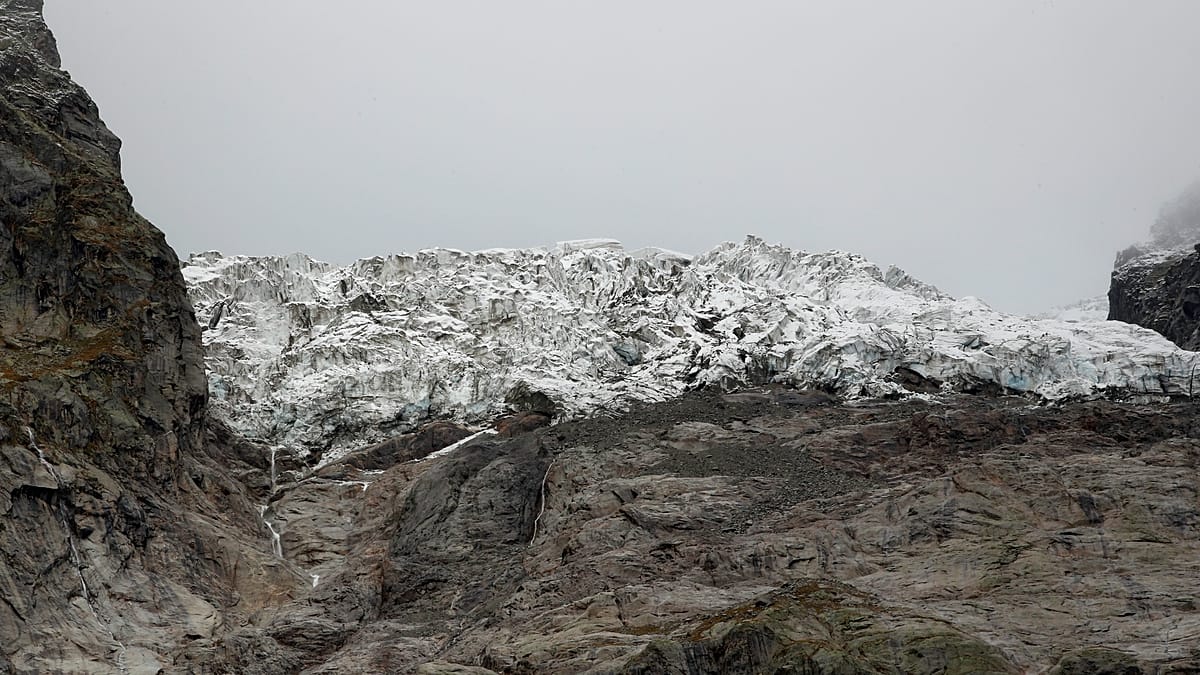
The Marmolada glacier is shrinking, the surrounding peaks are becoming less stable, and water at high elevations can no longer be taken for granted. That is the stark assessment from Legambiente Veneto, presented during the seventh edition of the Glacier Caravan, an international campaign that began in France and is drawing attention to the accelerating transformation of the Alps.
Climate change in the Dolomites is no longer just a matter of changing scenery. The real concern lies in the knock-on effects: retreating ice, degrading permafrost, increased slope instability, and reduced summer water reserves. These changes are not abstract; they are already affecting the lives of those who live, work, and travel in the mountains.
Marmolada: a glacier under pressure
Legambiente identifies Marmolada, along with Adamello and Mont Blanc, as emblematic of the Alpine arc's fragility. Driven by recent heatwaves, the glacier continues to lose mass at an alarming rate. Its surface now appears grey and deeply scored by meltwater streams, while its perimeter steadily shrinks—a visual testament to a transformation that is reshaping the mountains year after year.
Climate data paint a particularly critical picture. In Veneto, June 2026 temperatures were more than 3°C above the 1991–2020 average. July brought exceptional heat at altitude, with the freezing level rising above 4,000 metres. Such conditions accelerate ice melt and put additional stress on high-mountain ecosystems.
Permafrost thaw and slope instability
It is not only the loss of ice that worries experts. Warming at high elevations is also affecting permafrost—the ground that remains frozen for extended periods and helps bind slopes together. On Piz Boè, according to the Arpav report updated to 31 July, the active layer has exceeded 7.4 metres in depth. While this measurement does not directly reflect conditions in the Belluno Dolomites, Legambiente sees it as a significant indicator of a phenomenon that warrants much broader monitoring.
The association is calling for monitoring to be extended to the Pelmo, Antelao, Sorapiss, Civetta, and Tofane massifs, especially in light of recent rockfalls on Pelmo's north-west face. The province of Belluno already contends with 150–200 collapses and landslides every year—a number that underscores the pressure these slopes are under.
Water: a hidden casualty
The glacier crisis does not stop at the mountains themselves. Retreating ice is likely to impact water availability during the summer months, affecting aquifers and reservoirs that many communities depend on. Alpine huts are feeling the effects too. High-altitude water, Legambiente explains, can no longer be considered a given. To address this, the province of Belluno and CAI Veneto have launched a protocol specifically aimed at tackling water supply issues in mountain refuges.
This is one of the less visible but more concrete consequences of a changing Alpine climate. The mountain is changing, and with it, the conditions for those who visit, live, and work there are shifting as well.
“The Dolomites are not just a postcard backdrop, but a living system that is changing faster than public planning can keep up with,” says Fabio Tullio, spokesperson for the Glacier Caravan in Veneto.
Legambiente Veneto is urging the regional government to accelerate approval of the Regional Strategy for Adaptation to Climate Change, which has been in development since 2021 but has yet to be adopted. The message is clear: it is not enough to watch the ice disappear. Slopes need to be monitored, the impact on water availability anticipated, and the mountains prepared for a climate that is already changing.
In this sense, Marmolada is far more than a retreating glacier—it is one of the clearest signs of how fast the Alpine environment is changing. For those who care about the future of Europe's mountains, the time to act is now.