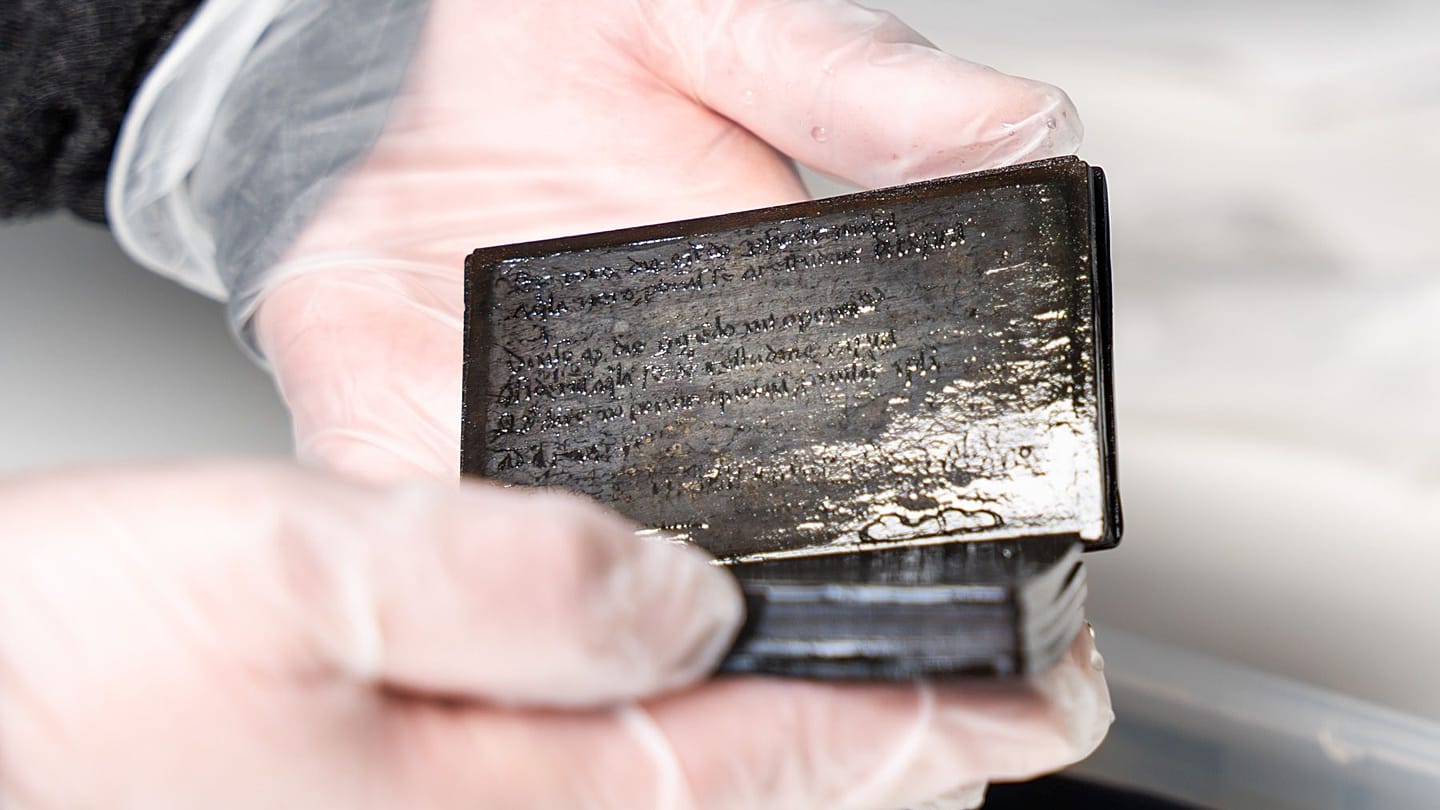
Archaeologists working in the eastern German city of Paderborn have uncovered a rare medieval notebook in what was once a latrine. The find, made of leather, wood, and wax, is exceptionally well-preserved and could provide fresh perspectives on everyday existence during the 13th and 14th centuries.
The discovery was made during excavations in the city centre, where researchers from the LWL-Archäologie für Westfalen were investigating medieval settlement layers. The notebook, known as a Wachstafelbuch (wax tablet book), consists of several wooden leaves coated with a thin layer of dark wax, bound together with leather straps. Such objects were used for temporary notes, accounts, or school exercises, with the wax surface being reusable after smoothing.
A Window into Medieval Daily Life
According to Dr. Sven Spiong, head of the excavation team, the find is significant because organic materials like wood and leather rarely survive in the archaeological record. The latrine's anaerobic conditions—low oxygen and high moisture—helped preserve the notebook for centuries. 'This is an extraordinary stroke of luck,' Spiong said. 'We can now study not just the object itself, but also any traces of writing or drawings that may remain on the wax.'
Paderborn, a city in North Rhine-Westphalia with a history dating back to the 8th century, was an important ecclesiastical and trading centre in the Middle Ages. The latrine likely belonged to a wealthy merchant or a clerical household, given the cost of such notebooks at the time. The team hopes that microscopic analysis of the wax might reveal faint impressions left by a stylus, potentially offering clues about literacy, commerce, or education in medieval Westphalia.
The find has drawn comparisons to other medieval wax tablets discovered across Europe, such as those from the 5,000-year-old wooden structure near Stonehenge, though that site is far older. In the context of the 13th and 14th centuries, wax notebooks were common in monasteries and universities, but examples from secular urban settings are far rarer.
This discovery also underscores the importance of urban archaeology in Germany, where rapid redevelopment often uncovers hidden layers of history. Similar excavations in cities like Cologne, Lübeck, and Regensburg have yielded medieval shoes, textiles, and even entire wooden buildings preserved in waterlogged soil.
The notebook will now undergo conservation at the LWL laboratories in Münster. Researchers will use multispectral imaging to try to recover any text or images. If successful, the find could join the ranks of other rare medieval manuscripts that have reshaped our understanding of the period, such as the former NASA astronaut Daniel Tani's reflections on space cooperation, though in a very different context.
For now, the people of Paderborn can take pride in a humble latrine that has yielded a treasure of historical significance. As Spiong noted, 'Sometimes the most unglamorous places hold the most remarkable stories.'