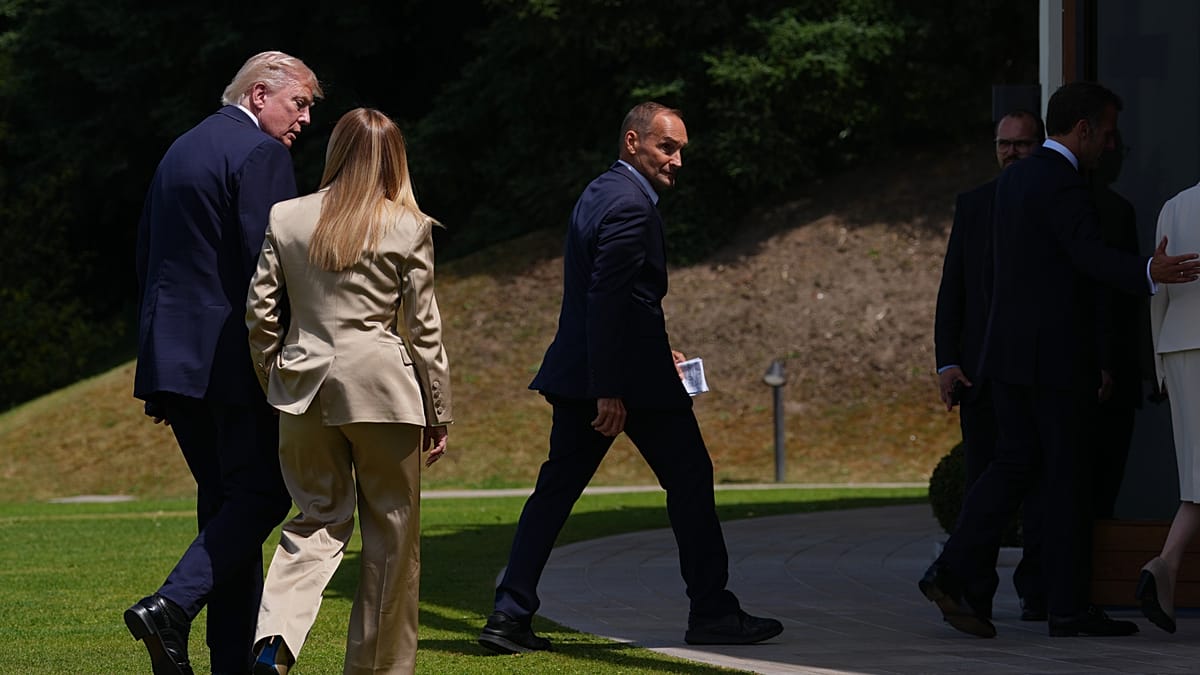
Italian Prime Minister Giorgia Meloni and US President Donald Trump appeared to reset their relationship on the sidelines of the G7 summit in Évian on Tuesday, exchanging jokes after weeks of public sparring that had threatened to fracture one of Trump's closest European alliances.
European Council President António Costa was overheard teasing the two leaders as they gathered with German Chancellor Friedrich Merz. 'You're friends again,' Costa remarked. Meloni replied, 'We have always been friends.' Trump shot back, 'I was abandoned,' to which Meloni responded with a smile, 'No, you were not.'
The exchange marked a sharp contrast to the tensions that had built up since April, when Trump told Italy's Corriere della Sera that he was 'shocked' by Meloni, adding, 'I thought she had courage, but I was wrong.' Meloni fired back in an interview, asserting that 'courage is saying what you think, even when you don't agree.'
From Allies to Adversaries
Meloni had long been considered one of Trump's most reliable partners in Europe. She was the only European leader invited to his inauguration in January 2025, a gesture that underscored their ideological alignment. However, the economic fallout from the US-Israeli war against Iran—which drove up energy prices across the continent and hit Italy particularly hard—increased the domestic political cost of her association with Trump.
Israel's continued military operations against Palestinians and in southern Lebanon, tacitly backed by Washington, also proved increasingly unpopular with Italian voters. With national elections looming next year, Rome began to shift its tone toward the Israeli government. Tensions peaked when Italy refused to allow US aircraft bound for the Middle East to use its air base at Sigonella, Sicily.
The public bickering escalated further after Trump attacked Pope Leo XIV over his criticism of the war in Iran, a move Meloni branded 'unacceptable.' The Italian leader's response highlighted the growing divergence between Rome and Washington on Middle East policy.
The G7 meeting in Évian was the first in-person opportunity for Meloni and Trump to clear the air since the spats began. The summit also saw Trump urge Israeli Prime Minister Benjamin Netanyahu to curb strikes in Lebanon and let Syria handle Hezbollah, as reported in separate discussions.
For Meloni, the reconciliation comes at a critical juncture. Italy's economy remains vulnerable to energy price volatility, and her government faces pressure from both domestic voters and EU partners to maintain a balanced stance on transatlantic relations. The G7 agenda also included discussions on the Iran deal, Ukraine, and energy security—issues that directly affect Italian interests.
Whether the renewed friendship will withstand future strains remains uncertain. But for now, the smiles in Évian suggest that both leaders see value in keeping the relationship intact.