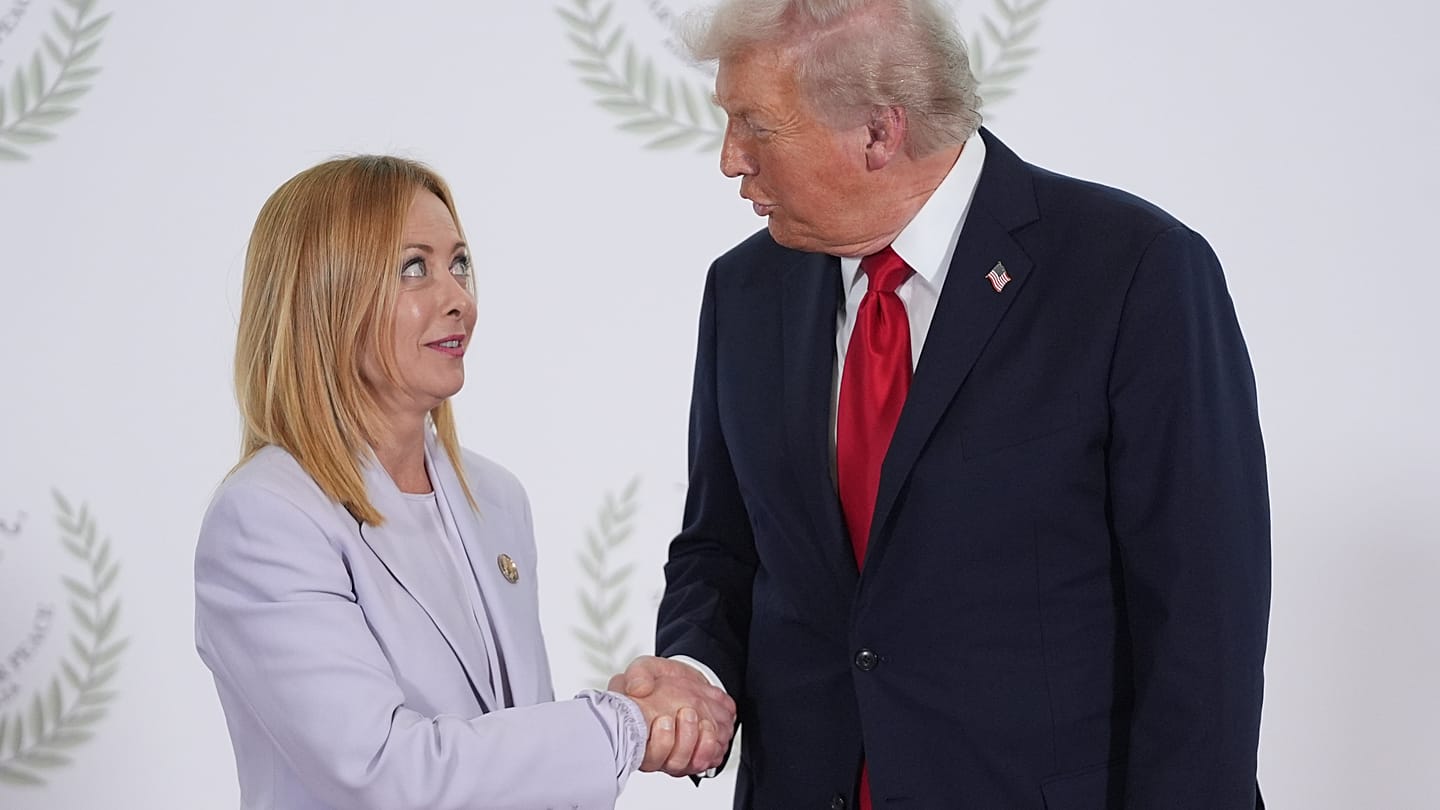
A recent public spat between Italian Prime Minister Giorgia Meloni and US President Donald Trump has sparked debate about her standing with voters, but polling data suggests the controversy has had little impact on her domestic approval ratings. The dispute, which erupted over Trump's claims about a G7 photo encounter, has been dismissed by Meloni as 'completely made-up,' yet it has not shifted the political calculus in Rome.
Polling Data Shows Resilience
According to a survey conducted by the Italian polling firm SWG in late June, Meloni's approval rating stands at 44%, virtually unchanged from the previous month. The poll, which surveyed 1,500 voters across Italy, found that 52% of respondents viewed the prime minister's handling of the dispute favorably, while only 28% disapproved. This suggests that the electorate is largely unfazed by the transatlantic tension, focusing instead on domestic issues such as inflation and migration.
Another poll by the Demopolis Institute, released on July 2, showed Meloni's party, Fratelli d'Italia, maintaining a lead over its coalition partners, with 28% support among likely voters. The center-left Partito Democratico trails at 21%, while the populist Movimento 5 Stelle stands at 15%. These numbers indicate that the Trump spat has not eroded Meloni's base, which remains loyal to her nationalist and conservative agenda.
Political analysts attribute this resilience to Meloni's careful management of the dispute. Rather than escalating the feud, she has sought to downplay it, emphasizing Italy's commitment to NATO and the transatlantic alliance. This approach has resonated with voters who value stability in foreign policy, even as Trump's rhetoric has become more confrontational. As one analyst at the Istituto Affari Internazionali in Rome noted, 'Meloni is playing a long game, balancing her domestic base with the need to maintain good relations with Washington.'
Context of the Spat
The dispute began when Trump claimed that Meloni had sought him out for a photo at the G7 summit in June, a claim she vehemently denied. In a statement to Italian media, Meloni called the allegations 'completely made-up' and accused Trump of trying to undermine her credibility. The exchange quickly became a talking point in both Italian and international media, with some commentators suggesting it could weaken Meloni's position ahead of the European Parliament elections.
However, the polls suggest otherwise. The spat has not only failed to hurt Meloni's popularity but may have actually reinforced her image as a strong leader willing to stand up to foreign pressure. This is particularly significant given the broader context of Trump's influence on European politics. As Trump escalates his feud with Meloni, the Italian prime minister's ability to maintain her domestic standing could serve as a model for other European leaders facing similar challenges.
The episode also highlights the delicate balance that European leaders must strike in their relations with the United States. While Trump remains a polarizing figure in Europe, his support among some right-wing parties in Italy and elsewhere complicates the political landscape. Meloni's handling of the dispute suggests that she is aware of these dynamics, seeking to avoid alienating either her base or her international partners.
Broader Implications for Europe
The spat between Meloni and Trump is part of a larger pattern of transatlantic tensions that have emerged since Trump's return to the political stage. From trade disputes to security commitments, European leaders are increasingly forced to navigate a more unpredictable US foreign policy. This has led to a renewed focus on European strategic autonomy, with some leaders calling for greater coordination among EU member states.
In this context, Meloni's resilience in the polls may offer lessons for other European leaders. As NATO Chief Rutte meets Trump to ease tensions before the July summit, the ability to maintain domestic support while managing transatlantic relations will be crucial. Similarly, the Czech president's decision to take a NATO summit dispute to the Constitutional Court underscores the broader challenges facing European leaders in balancing national interests with alliance commitments.
For now, Meloni appears to have weathered the storm. Her approval ratings remain stable, and her party continues to lead in the polls. Whether this will hold in the long term depends on how she navigates the complex interplay of domestic and international pressures. But for the moment, the data suggests that the Trump spat has done little to shake her position.