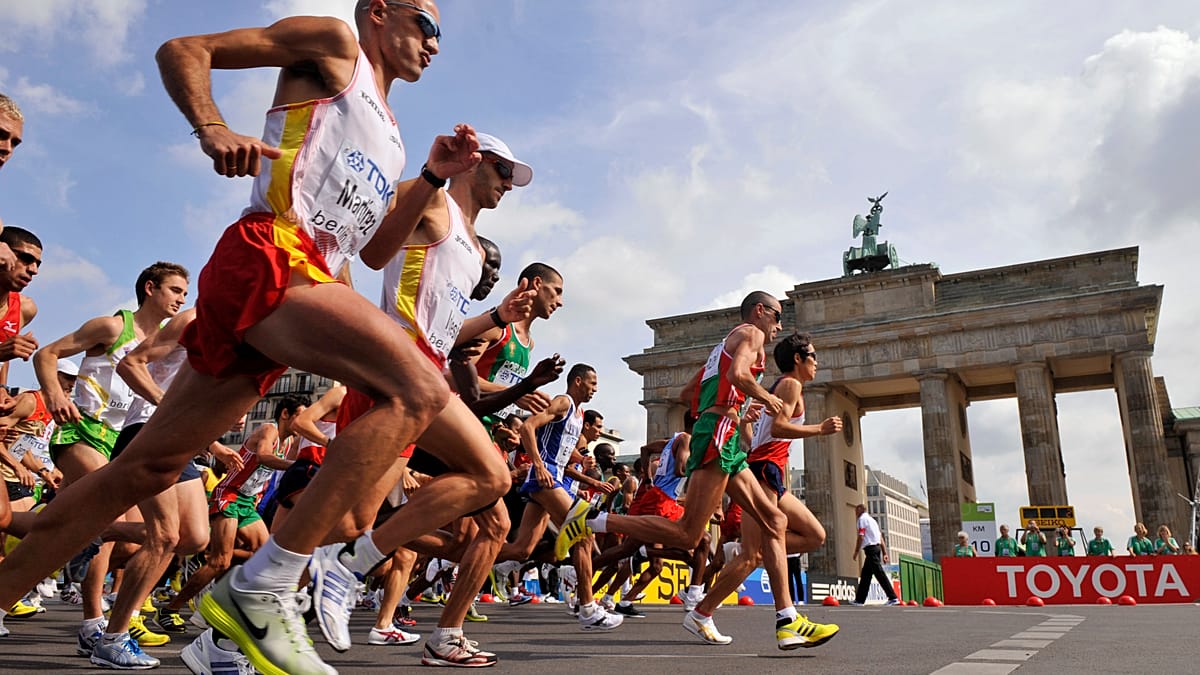
A comprehensive study of more than 870,000 marathon finishers in Berlin has found that men are up to six times more likely than women to experience the phenomenon known as 'hitting the wall' — a sudden, severe slowdown in the second half of the race. Published in Scientific Reports, the research analyzed data from the Berlin Marathon between 1999 and 2025, offering one of the largest-ever examinations of pacing behavior in endurance events.
While men are, on average, faster over the 42.195-kilometer distance — finishing in a median time of four hours and two minutes compared with four hours and 29 minutes for women — they adopt what the researchers describe as 'significantly less stable pacing strategies.' Overall, men were nearly twice as likely to suffer a catastrophic deceleration, defined as slowing by 20 percent or more in the second half compared with the first.
Among elite runners who finished in under three hours, the gender gap widened dramatically: men were roughly six times more likely to hit the wall than women. The authors suggest this stems from behavioral differences rather than physiological ones. 'Men, regardless of performance level, are more prone to aggressive pacing and catastrophic deceleration,' they wrote, pointing to risk-taking and overconfidence as key factors.
Why pacing matters more than speed
The study underscores that marathon success depends not only on raw speed but on the ability to manage energy efficiently. The researchers described pacing as 'the most critical tactical determinant of performance.' Women, by contrast, demonstrated 'superior self-pacing abilities and greater resistance to decision-making fatigue,' which helped them avoid the dramatic slowdowns that plagued many male runners.
Physiologically, men possess advantages such as greater muscle mass, lower body fat percentages, higher cardiac mass, and elevated haemoglobin concentrations — traits that contribute to faster average times. Yet these same advantages may encourage overly ambitious starts. 'They may be behaviorally less efficient,' the researchers noted, suggesting that psychological factors like overconfidence override physiological cues.
The findings have practical implications for runners and coaches across Europe, where marathons in cities like Berlin, London, Paris, and Amsterdam draw hundreds of thousands of participants each year. For instance, the Berlin Marathon alone — one of the Abbott World Marathon Majors — attracts tens of thousands of international runners annually. Understanding pacing strategies could help athletes of all levels improve their race outcomes.
Interestingly, the study's results align with broader research on gender differences in decision-making under fatigue. A separate investigation into coffee consumption and liver disease also highlighted how lifestyle choices affect long-term health outcomes, though the mechanisms differ. Similarly, the marathon study suggests that behavioral adjustments — such as starting more conservatively — could narrow the performance gap between men and women.
The researchers recommend that male runners, in particular, adopt more disciplined pacing strategies, perhaps using pacemakers or real-time feedback devices. 'Aggressive pacing may yield short-term gains but often leads to catastrophic failure,' they warned. For women, the study reinforces the value of their natural pacing instincts, which could be further honed through targeted training.
As marathon participation continues to grow across Europe — with events in cities like Vienna, Prague, and Barcelona seeing record numbers — the insights from this Berlin-based study could help reshape coaching and race preparation. The authors call for further research into the psychological and neurological underpinnings of pacing behavior, particularly in high-stakes endurance events.