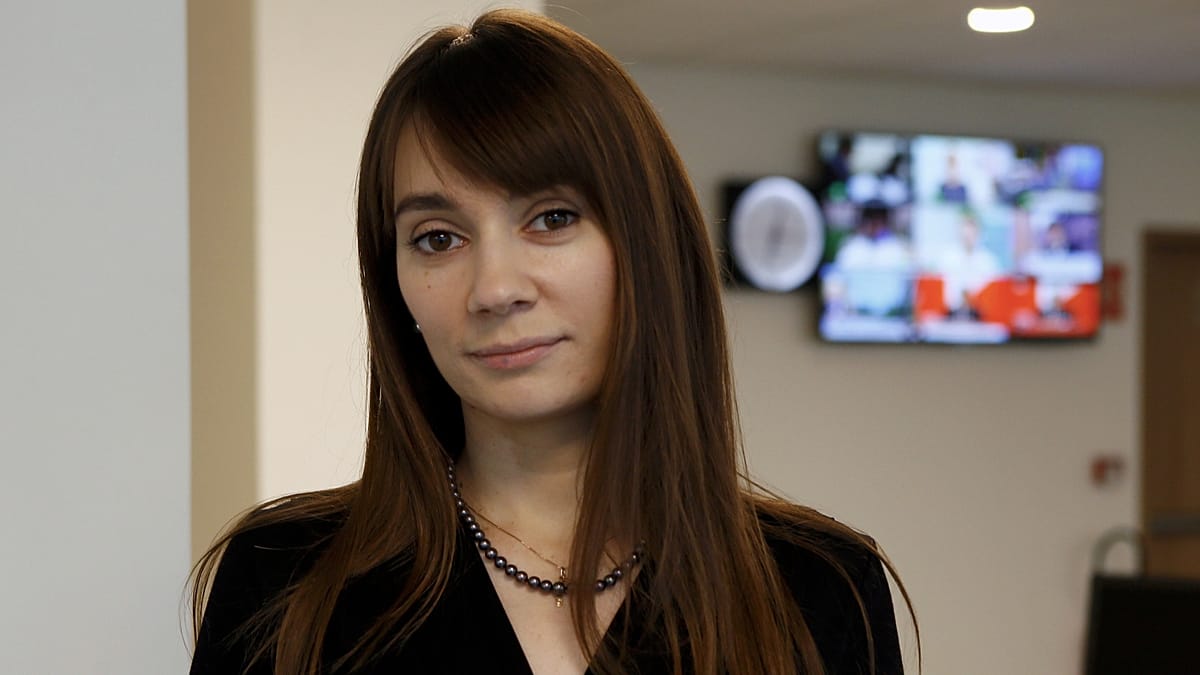
More than a third of the Renew Europe group in the European Parliament has signed a letter urging the European Union to impose individual sanctions on Xenia Fedorova, the former director of RT France. The initiative, led by French MEP Nathalie Loiseau, was addressed to European Council President Antonio Costa and European Commission President Ursula von der Leyen, according to Agence France-Presse.
The letter accuses Fedorova of systematically spreading Kremlin-aligned narratives about the war in Ukraine and the European Union. Since RT France was shut down in March 2022—a month after Russia launched its full-scale invasion of Ukraine—Fedorova has found a platform within the media empire of French billionaire Vincent Bolloré.
A Platform for Propaganda?
Fedorova now appears regularly on Bolloré-owned outlets. She co-hosts the programme L’Heure Inter on CNews every Wednesday and Sunday, presents a weekly segment on JDNews, and hosts Lumières orthodoxes on CNews and CStar. In 2025, she published a book titled Bannie under the Bolloré group’s Fayard publishing house, in which she claims French authorities are trying to silence her and disputes the characterisation of the war in Ukraine as Russian aggression.
Speaking to France Inter in May, French Foreign Minister Jean-Noël Barrot did not mince words: “Ms Fedorova is a fully fledged propagandist who relays the Kremlin’s disinformation.” He added, “Everyone is free to choose their editorial line, but giving this woman airtime and column inches is simply serving Vladimir Putin’s propaganda.”
The controversy comes at a sensitive time for Paris, which has been positioning itself as a champion of countering disinformation. The Quai d’Orsay has reportedly compiled an internal note detailing how Fedorova’s statements align with official Russian positions on NATO, Ukraine, and Europe. France’s broadcasting regulator, the Audiovisual and Digital Communications Regulatory Authority (Arcom), has also opened a file on her after receiving two complaints in May.
The first complaint concerns remarks Fedorova made on 9 May, in which she “falsely accused Latvia of glorifying Nazism.” The second relates to a statement on 10 May: “We now know that it is the West which decided to prolong these conflicts. That also explains why the European Union continues with this narrative.” Government spokesperson Maud Bregeon condemned these comments as “very serious,” saying they “completely turn the burden of proof on its head regarding who is responsible, Russia or Ukraine.”
The push for EU sanctions reflects growing unease in Brussels and national capitals about the reach of Russian propaganda within the bloc. While individual sanctions have been imposed on numerous Russian officials and oligarchs since 2022, targeting a media personality working for a private European broadcaster raises complex legal and political questions.
For now, the letter from Renew Europe adds pressure on EU institutions to act. Whether the European Council will adopt the proposed measures remains uncertain, but the debate underscores the ongoing struggle to balance free expression with the fight against disinformation in a continent where media landscapes remain deeply national.



