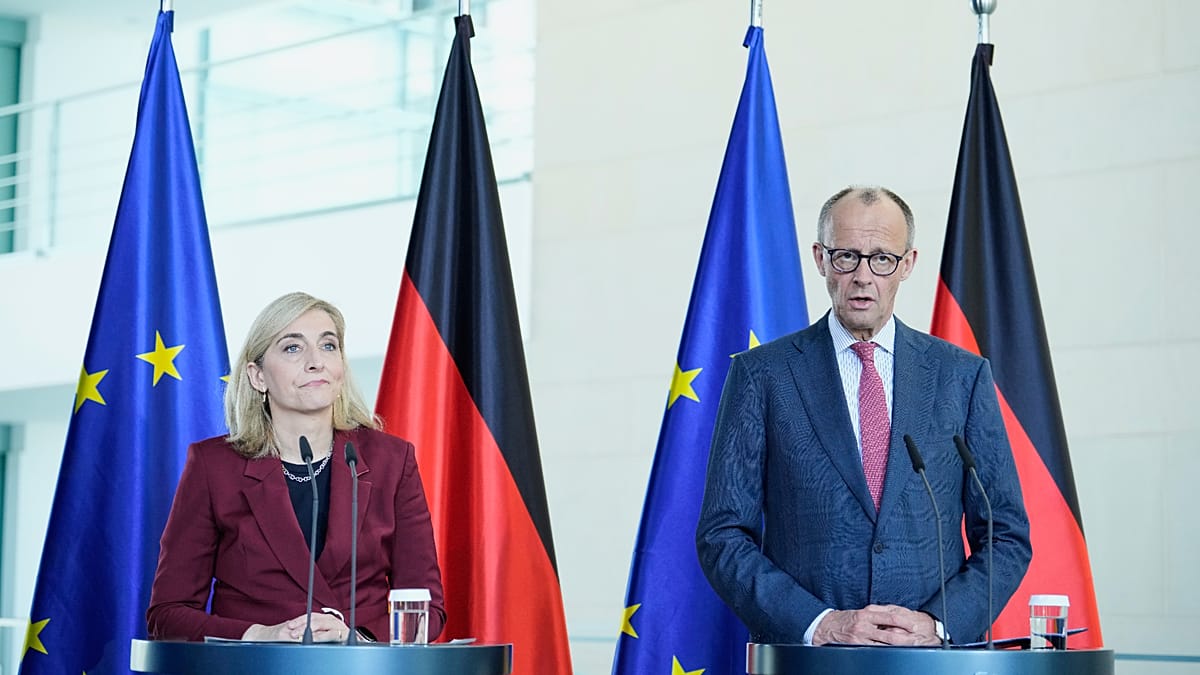
German Chancellor Friedrich Merz announced a significant cabinet reshuffle on Friday, aiming to revive his government's flagging popularity ahead of a series of crucial regional elections. The move follows months of declining approval ratings and growing support for the far-right Alternative for Germany (AfD) party.
The changes come as Merz's coalition faces mounting pressure to deliver on its economic promises. Opinion polls show the CDU losing ground in key states, with the AfD gaining traction in eastern Germany. The upcoming state elections in Berlin, Saxony-Anhalt, and Mecklenburg-Vorpommern are seen as a critical test for the chancellor's leadership.
Key Appointments and Departures
Carsten Linnemann, who served as general secretary of Merz's Christian Democratic Union (CDU), is set to take over as health minister from Nina Warken. Warken, in turn, will succeed Thorsten Frei as head of the chancellery. Frei had already been appointed as the next leader of the Union's parliamentary group following the resignation of Jens Spahn last week.
Spahn's resignation came after a surrogacy scandal: he and his husband announced they had become parents through a surrogate mother in the United States. Surrogacy is banned in Germany, and the CDU has consistently opposed it, making the revelation politically damaging.
Transport Minister Patrick Schnieder is also reportedly leaving his post, according to Germany's Bild newspaper. Bundestag member Fritz Güntzler is being considered as his successor, though no official confirmation has been made.
In a weekend interview, Merz hinted that Spahn's resignation could provide an opportunity for a broader cabinet overhaul. The reshuffle is seen as an attempt to inject new energy into a government that has struggled to fulfill its pledges to ignite the German economy.
The changes come amid broader European challenges, including debates over EU budget constraints as enlargement pushes forward. Germany's Europe Minister recently noted that EU budget options are limited, highlighting the fiscal pressures facing Berlin.
Meanwhile, international dynamics continue to shape German policy. Recent reports of a secret meeting in Baku involving ex-Russian and German officials on Ukraine, confirmed by Azerbaijani President Aliyev, underscore the complex geopolitical landscape. Aliyev's visit to Berlin also resulted in a strategic energy and trade pact between Germany and Azerbaijan.
The reshuffle is unlikely to immediately reverse the CDU's fortunes, but it signals Merz's determination to regain momentum. With state elections looming, the coming weeks will test whether these changes can stem the tide of public discontent.