Mexico's government has formally protested to the United States over a new Drug Enforcement Administration (DEA) hotline that encourages Mexican citizens to anonymously report drug cartel activity and corrupt officials. President Claudia Sheinbaum described the initiative as foreign interference, deepening a rift over how to tackle organised crime along the shared border.
The DEA announced on Wednesday that it would open channels for Mexicans to tip off US authorities about individuals, public officials, and money-laundering networks linked to the Sinaloa cartel, which Washington has designated a terrorist organisation. The move has reignited a long-simmering dispute over whether the US has the right to act against cartels on Mexican soil.
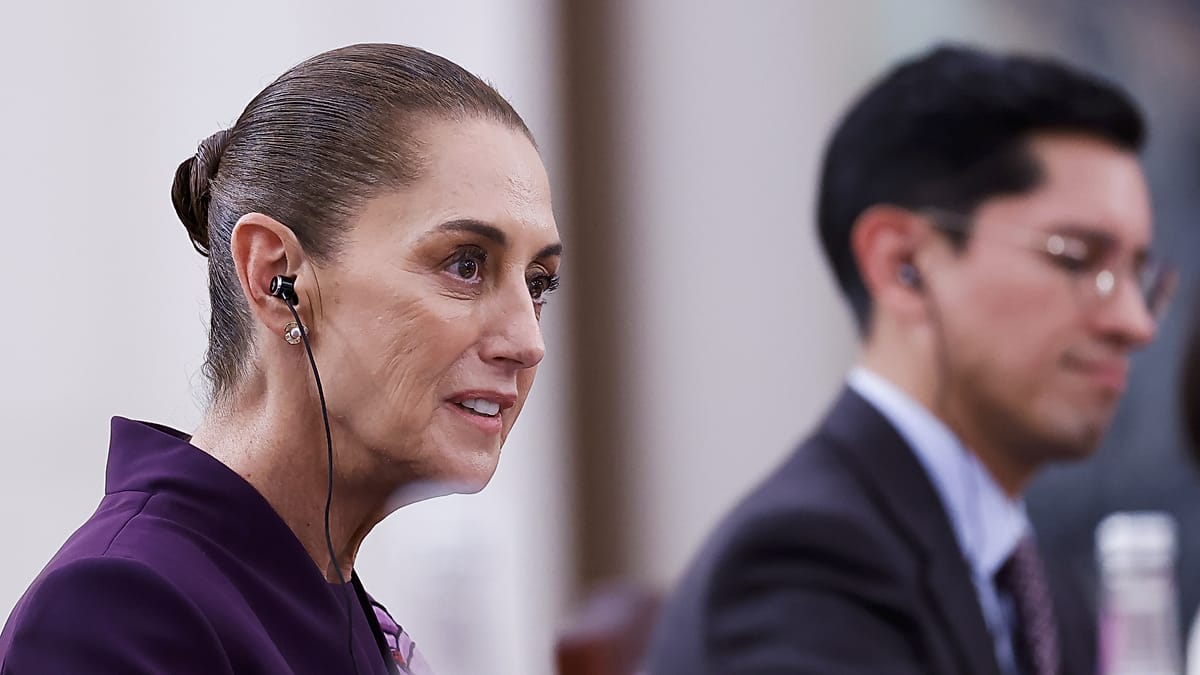
Speaking at a news conference on Friday, Sheinbaum said she had lodged a complaint with US Ambassador Ron Johnson. "We have made it very clear that our relationship with the United States is one of coordination, not subordination," she said. "We have to say what we are thinking, and furthermore it is an obligation to do so because we have to defend our sovereignty."
A hotline that divides Mexicans
While the government sees the hotline as an infringement on national sovereignty, some Mexicans have embraced it. Juan Manuel Partida Valdez, president of the Sinaloa Journalists Association, was among the first to use the tip line on Thursday. He said he sent information about alleged ties between regional politicians and criminal groups, and received a quick response.
Partida Valdez, 67, said his decision was driven by frustration with authorities who have failed to end violence and corruption in northern Mexico. "I talk to so many people — in the streets, on social media, on WhatsApp and in chats — and you realise what people think: We're all fed up," he said. "We're fed up with narco-governments."
He pointed to the case of Sinaloa Governor Rubén Rocha Moya, a powerful figure in Sheinbaum's party, who was indicted by the US on drug-trafficking charges in May. Rocha Moya briefly stepped down, returned in August, and resigned again a day later. For Partida Valdez, that episode is a "very clear example of what we're suffering because of these governments that do absolutely nothing but protect criminals."
He dismissed the sovereignty argument as a shield for corruption: "This whole song and dance about sovereignty is just collusion with the politicians tied to drug trafficking who are being protected in our country."
Some politicians and academics have also welcomed the hotline. Lilly Téllez, a senator for the opposition National Action Party from the border state of Sonora, wrote on X that it was "a good way to cooperate against the common enemy of both countries" and would strengthen efforts to combat cartels.
Sheinbaum's balancing act
The dispute comes amid intense pressure from the Trump administration for Mexico to crack down on drug gangs. Washington has repeatedly threatened unilateral action if Mexico does not step up its efforts. Sheinbaum, who wants to preserve the free-trade agreement with the US and Canada, must balance that economic imperative with her pledge to defend Mexico's sovereignty.
Last week, Mexican security forces captured Fausto Isidro Meza, alias "Chapo Isidro," one of the FBI's most-wanted fugitives. The government has insisted on trying him in Mexico before considering any extradition to the US.
The hotline controversy highlights the broader tensions in US-Mexico relations, which have been further strained by migrant caravans moving north through Mexico despite US tariff threats. For Sheinbaum, the challenge is to maintain a firm stance on sovereignty while cooperating with Washington on security and trade.
As the debate continues, the hotline has become a symbol of the deep mistrust between the two governments — and of the frustration felt by many Mexicans who see their own institutions as unwilling or unable to confront the cartels.