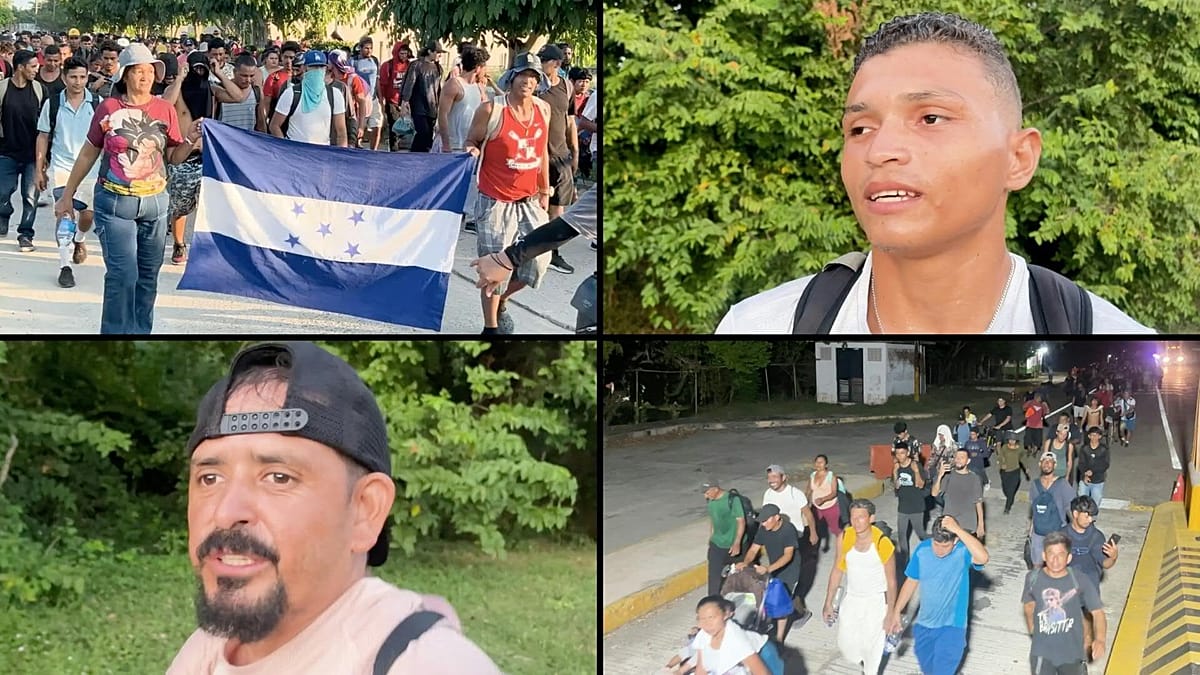
Migrants from several Central American countries are advancing through southern Mexico in a caravan, hoping to reach the United States despite renewed pressure from President Donald Trump to halt the flow. The group was filmed walking through Pijijiapan, in the state of Chiapas, on 19 November, with some carrying a Honduran flag.
The movement comes as the Trump administration continues to push Mexico to take a harder line on migration. In recent weeks, the president has again threatened to impose tariffs on Mexican goods unless the government acts to stop migrants crossing its territory. Such measures would have significant economic consequences for both countries, given the deep integration of their supply chains.
European parallels and policy debates
While this is a story rooted in the Americas, it resonates strongly with European debates over migration management. The European Union has faced its own challenges with arrivals via the Mediterranean and the Western Balkans, and has often looked to external partners to stem flows. The situation in Mexico mirrors, in some ways, the EU's reliance on countries like Turkey and Libya to manage migration before it reaches European shores.
In Europe, the issue has also sparked legal and political battles. The European Court of Human Rights recently ruled that Poland and Latvia violated migrants' rights in pushbacks at the Belarus border, a decision that has reverberated across EU border policy. Meanwhile, the EU is exploring external processing hubs, with some MEPs demanding a rights check before any deal with Rwanda is pursued.
The Mexican caravan also highlights the human cost of restrictive migration policies. Many of those walking through Chiapas are fleeing violence, poverty, and political instability in Honduras, Guatemala, and El Salvador. Their journey north is fraught with danger, from cartel-controlled routes to the risk of deportation.
In Europe, similar journeys are undertaken by migrants from sub-Saharan Africa and the Middle East, often crossing the Mediterranean in overcrowded boats. The Canary Islands, for instance, have seen a record number of arrivals this November, with nearly 300 more migrants reaching El Hierro in a single day. The Atlantic route, though less visible than the central Mediterranean, has become a critical entry point.
The Mexican government, under President Andrés Manuel López Obrador, has sought to balance US demands with its own humanitarian obligations. While it has deployed National Guard troops to deter caravans, it has also offered temporary visas and job opportunities to some migrants. This approach has drawn criticism from both Washington and human rights groups.
For Europe, the Mexican experience offers lessons in the complexities of migration diplomacy. The EU's own external border management, from the Croatian pressure on Montenegro to Estonia's closure of its border with Russia, shows the delicate balance between security and rights.
As the caravan continues north, its fate will depend on Mexican enforcement, US policy, and the resilience of the migrants themselves. For now, they press on, carrying flags and hopes, while political leaders on both sides of the Atlantic grapple with how to respond.