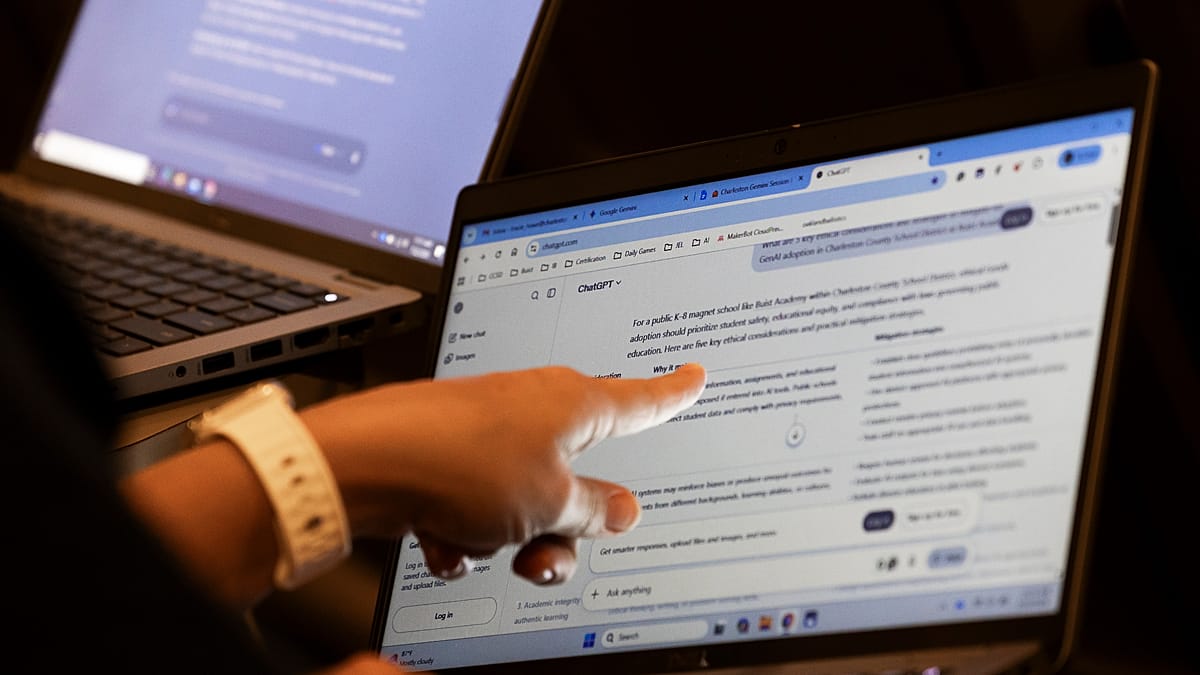
Microsoft has introduced binding guardrails and privacy standards for its artificial intelligence tools in American schools, following negotiations with the country's second-largest teachers' union. The agreement, signed last week, comes amid mounting concern over the impact of AI and screen time on young people.
The standards prohibit AI companions or features "designed to foster emotional attachment or dependency" and any functions that aim to keep students engaged longer than a learning task requires. The terms are legally enforceable and require independent third-party audits to verify compliance.
Under the wide-ranging pact, Microsoft will not use student or educator data to train its AI systems, except in narrow cases where data could help protect students. The company also commits not to sell the data it collects, use it for advertising, or deploy it for product development. Additional transparency measures oblige Microsoft to explain to families in plain language how its tools work and what data they gather.
"This standard sets a high bar for child privacy and AI safety, and we'll extend this agreement to every school district across the country," said Brad Smith, Microsoft's vice chair and president, in a statement. The standards will apply to all Microsoft school contracts across the US from November 1.
Is an AI brake needed in European classrooms?
AI is already making inroads into European classrooms, and young people are increasingly turning to chatbots beyond schoolwork. A European Commission study of early adopters in secondary schools in Finland, Germany, Ireland, Luxembourg, and Spain found students using generative AI to explain difficult topics, practise skills, and prepare for exams.
Separately, a 2026 Austrian study found that 60% of 11- to 17-year-olds surveyed had sought advice from AI chatbots on issues such as stress, conflicts, or heartbreak, while 30% had discussed worries or feelings with them. These figures have prompted some European governments to draw limits around younger pupils' use.
Norway said this year that children aged roughly six to 12 should generally not use generative AI themselves for schoolwork, while those aged around 13 to 15 can begin experimenting with it cautiously. France allows pupils to learn about AI at primary-school age but says they should not directly use generative AI; supervised classroom use can begin from around age 13 or 14.
A document seen by Euronews suggests that the European Commission will propose barring under-15s from risky online services like AI chatbots in a legislative proposal due on Thursday. This would align the EU with the stricter approaches already emerging in member states.
OpenAI and Anthropic in talks over similar safeguards
While experts say the safety provisions in the US agreement are meaningful, some warn that stronger safeguards should not automatically be interpreted as an endorsement of greater AI use in schools.
"I worry that a high-profile framework like this will be misunderstood and schools will think, 'If they're doing a good job on data privacy and safety, then that means we should be using the tool,'" said Josh Golin, executive director of US online safety nonprofit Fairplay. Golin added that the standards will only be effective if other major AI companies also sign on. "Is Google going to embrace this framework? That is a huge question," he said.
Google faced criticism in the US after expanding Gemini-powered tools in Google Classroom in August to school-issued accounts used by students under 18. Critics describe the expansion as another step in the competition between tech giants to establish their AI products in schools and reach younger users. Google says Classroom is used by more than 150 million teachers and students worldwide.
The US teachers' union is also in talks with OpenAI and Anthropic, both of which publicly welcomed the Microsoft agreement. OpenAI, maker of ChatGPT, called it an "important milestone for AI safety and privacy in schools," and said it expected to finalise its own agreement. Anthropic, maker of Claude, said it supported efforts to promote responsible AI use in education and was working with the union on safety and privacy standards.
The developments in the US come as European policymakers and educators grapple with similar questions. The European Commission's upcoming proposal on under-15s would be a significant step, but some argue that a more coordinated approach across the continent is needed. As Anthropic's CEO has urged AI labs to slow development, the debate over how to protect young people while harnessing AI's potential is far from settled.