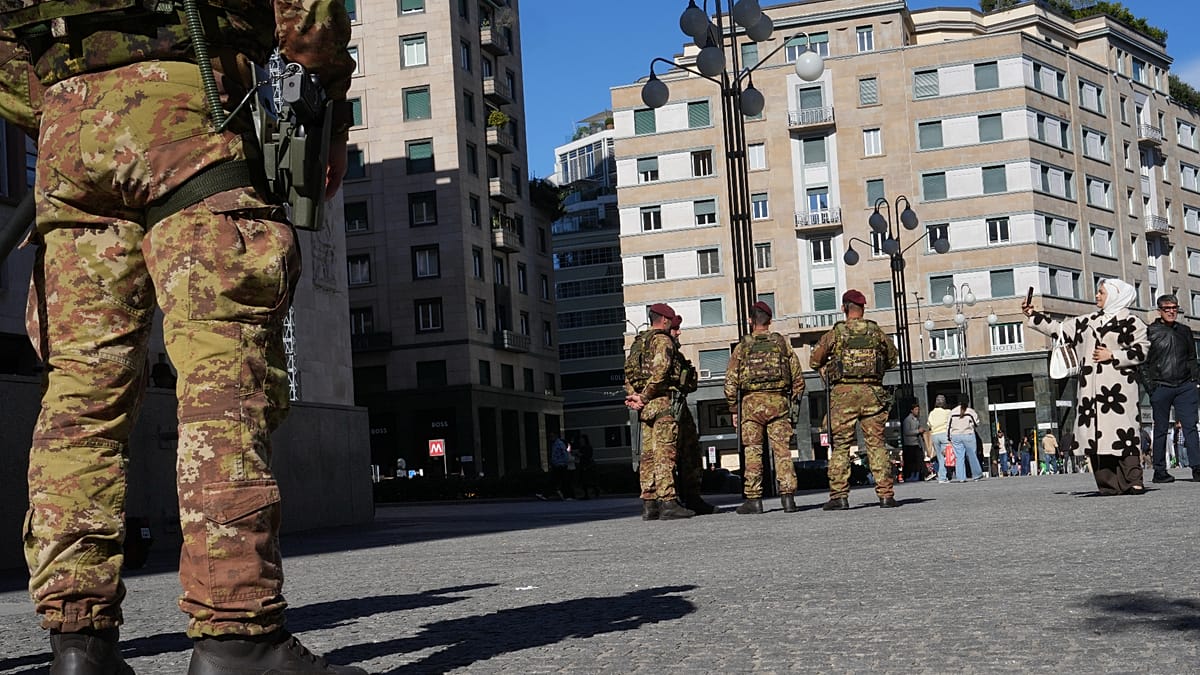
Milan is bracing for another wave of unrest this weekend, a week after violent clashes and looting shook Italy's financial and fashion capital. In response, the authorities have deployed an additional 500 soldiers to reinforce existing security forces, as shopkeepers from luxury boutiques to major retailers board up their windows in anticipation of further trouble.
The heightened security posture reflects growing concern among officials that Saturday's protests could spiral into the kind of violence seen last weekend, when demonstrators clashed with police and several stores were ransacked. The city's iconic shopping streets, including Via Montenapoleone and the Galleria Vittorio Emanuele II, are now lined with plywood and metal shutters, a stark contrast to their usual polished appearance.
Security measures and contingency plans
Authorities have rolled out a comprehensive security package that includes surveillance drones, checks at railway stations, and rapid-response units positioned at key intersections. The aim is to prevent a repeat of the looting that occurred last Saturday, when groups of masked individuals took advantage of the chaos to break into shops and steal high-value goods.
Officials are also wary that protesters might shift their activities to less heavily policed neighbourhoods, making it harder for security forces to maintain control. "We are prepared for any scenario," said a spokesperson for the Milan prefecture, speaking on condition of anonymity. "Our priority is to protect both the safety of citizens and the integrity of the city's commercial district."
The protests are part of a broader wave of discontent across Italy over the rising cost of living, which has already seen tensions flare in several cities. In Rome, clashes broke out earlier this month as youth protesters demanded more affordable housing and better wages. The movement has drawn comparisons to similar demonstrations elsewhere in Europe, from pension protests in Madrid to cost-of-living rallies in Lyon.
Milan, as Italy's economic powerhouse, has become a focal point for these grievances. The city's gleaming skyscrapers and high-end boutiques stand in sharp contrast to the struggles of many young Italians, who face precarious employment and soaring rents. "The anger is not just about prices," said Marco Bianchi, a political analyst at the University of Milan. "It's about a system that seems to reward the wealthy while leaving the next generation behind."
The deployment of soldiers is a significant step, reflecting the seriousness with which the government views the situation. Under Italian law, the military can be called in to support police in maintaining public order, but such deployments are rare and often controversial. Critics argue that the heavy-handed approach could inflame tensions, while supporters insist it is necessary to protect businesses and residents.
Local businesses are taking no chances. Many have hired private security guards, while others have moved valuable stock to secure warehouses. "We've never seen anything like this," said Elena Rossi, who manages a boutique in the Brera district. "We're hoping for the best, but we have to prepare for the worst."
The protests in Milan are part of a wider European phenomenon, with demonstrations over pensions, housing, and corruption taking place in multiple countries. In Brussels, retailers have also boarded up their windows ahead of potential unrest, while in Albania, opposition activists have staged dramatic protests outside the prime minister's office. The common thread is a growing public frustration with economic insecurity and a perceived lack of political responsiveness.
As Saturday approaches, Milan's streets are quieter than usual, with many residents choosing to stay home or leave the city for the weekend. The authorities have urged calm and warned that any violence will be met with the full force of the law. Yet the underlying issues that have fuelled the protests remain unresolved, and many fear that this weekend's demonstrations could be just the beginning of a long, hot summer of discontent.
For now, the city waits. The soldiers patrol, the shutters stay down, and the drones hover overhead. Whether Saturday passes peacefully or erupts into chaos will depend on the choices of both the protesters and the security forces. But one thing is clear: Milan, and indeed much of Europe, is on edge.