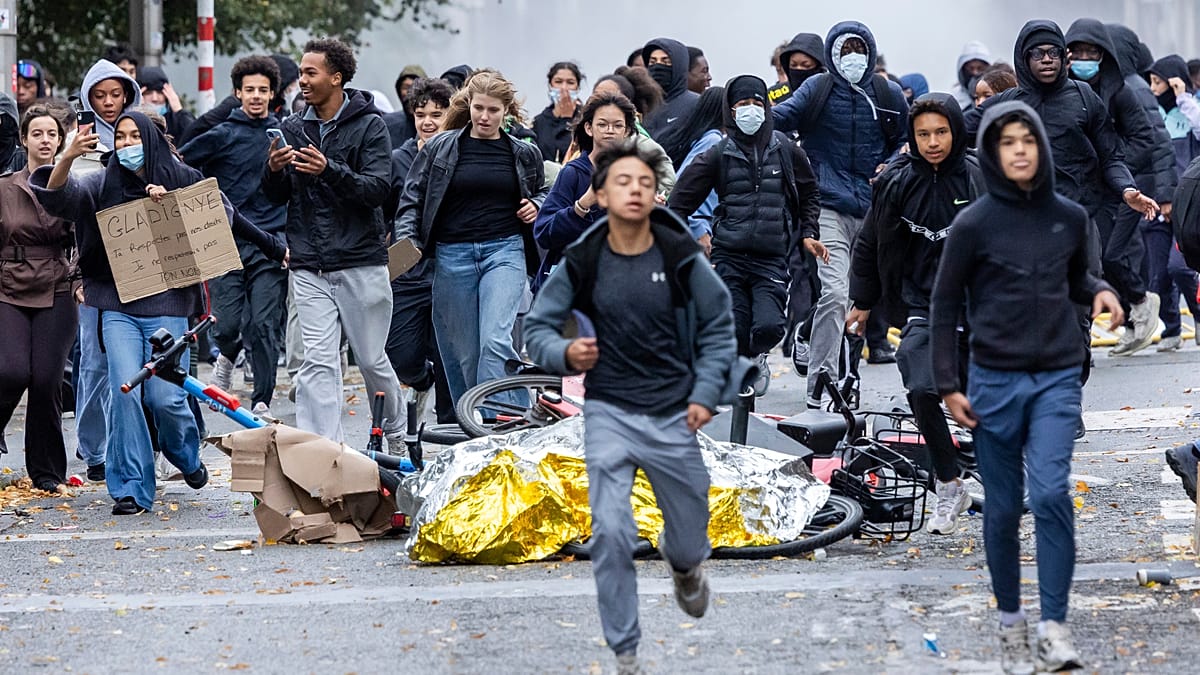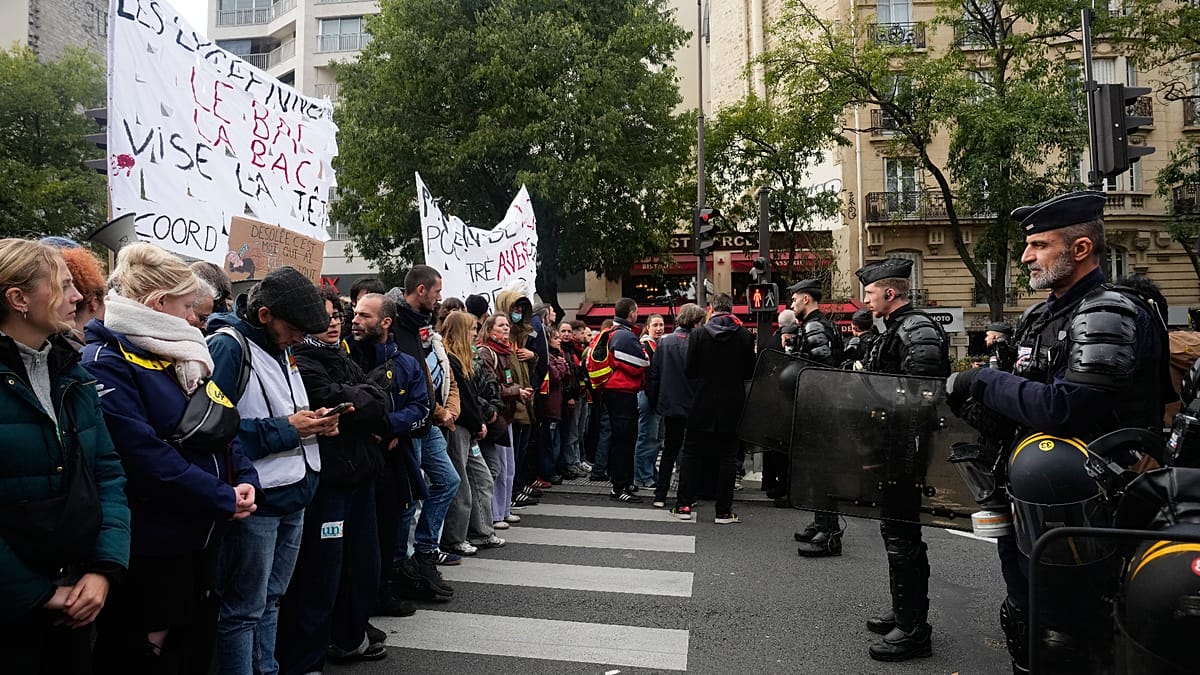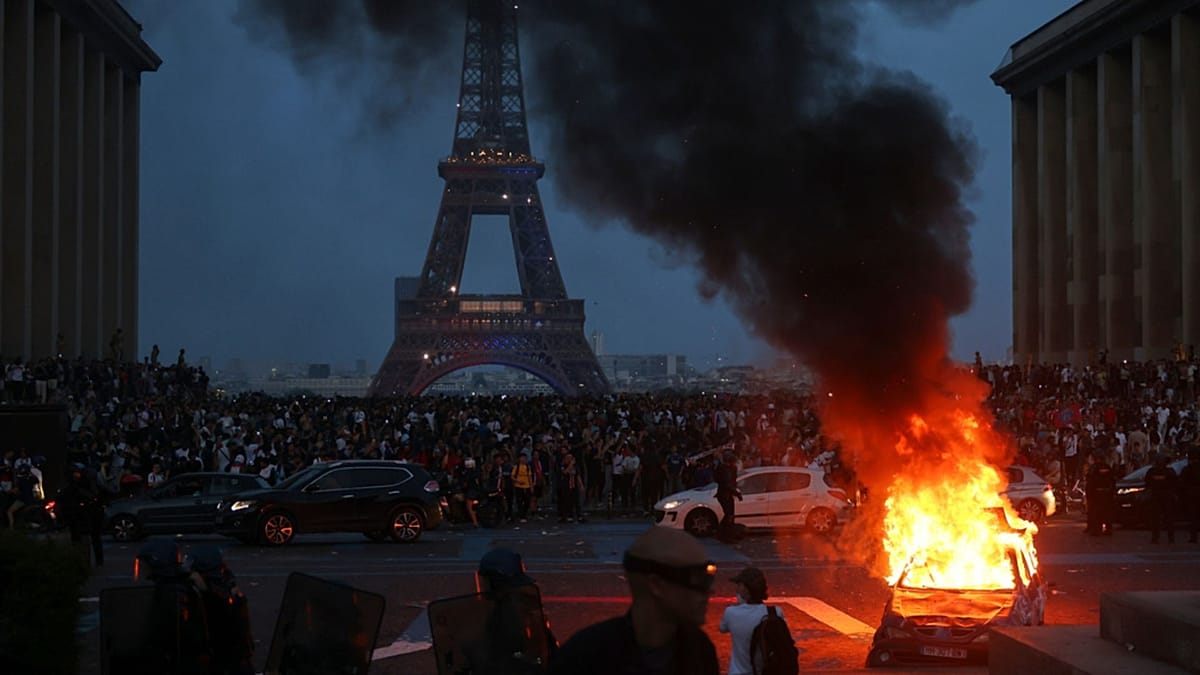
In the aftermath of Paris Saint-Germain's dramatic penalty shootout victory over Arsenal in the Champions League final held in Budapest on 30 May, the French capital witnessed genuine scenes of disorder. According to Interior Minister Laurent Nunez, more than 890 people were arrested in connection with the celebrations. The Paris Public Prosecutor's Office reported that 225 adults and 87 minors were taken into police custody overnight from Saturday to Sunday. Three people died: two men who fell into the River Seine and a third killed in a motorcycle accident. Scores more were injured, including police officers struck by shrapnel.
Authentic footage circulating online shows flares being set off, vehicles and bicycles burning on streets, and shopfronts smashed. Police can be seen firing tear gas to disperse crowds. Yet amid this real documentation, a wave of fabricated or miscaptioned videos has surfaced, deliberately inflating the scale of the violence and framing it as the fault of immigrants.
Old Clips Recycled with False Narratives
One widely shared clip purports to show the Eiffel Tower on fire, with captions blaming immigrants for the destruction. However, the original poster of the video clarified that the tower was merely shrouded in smoke from a fire on the banks of the Seine nearby—not the monument itself. No official police reports confirm any fire at the Eiffel Tower.
Another video, showing overturned cars, street fires, and people smashing a bus stop, uses xenophobic language to allege that immigrants have destroyed Paris over a football match. But this footage is not new. Euronews' fact-checking team, The Cube, previously debunked it: the clip dates back to 2022, when protests erupted after a racially motivated shooting against Paris' Kurdish community that left three dead. It has been recycled multiple times under false captions.
A third video, captioned as showing “shirtless Sri Lankan men” smashing coconuts in the streets and blaming “open borders,” actually depicts the annual Ganesh festival celebrated by Paris' Tamil community for around 30 years. The festival typically falls in August or September, not May.
These deliberate misrepresentations aim to stoke anti-immigrant sentiment and distort the reality of the unrest. For context, similar patterns of misinformation have emerged in other European cities after major events, such as the violence in Southampton following a controversial conviction, where false narratives also spread online.
The real violence in Paris, while serious, was largely confined to specific areas and involved a mix of football fans and opportunistic troublemakers. The three deaths, though tragic, were not directly linked to the celebrations but to separate incidents. The police response, including mass arrests and tear gas, was typical for large-scale public disorder.
As social media platforms struggle to curb the spread of misleading content, the incident underscores the need for critical media literacy. For a deeper look at how misinformation can shape public perception, see our coverage of Germany's railway crime surge, where similar tactics have been used to exaggerate safety concerns.