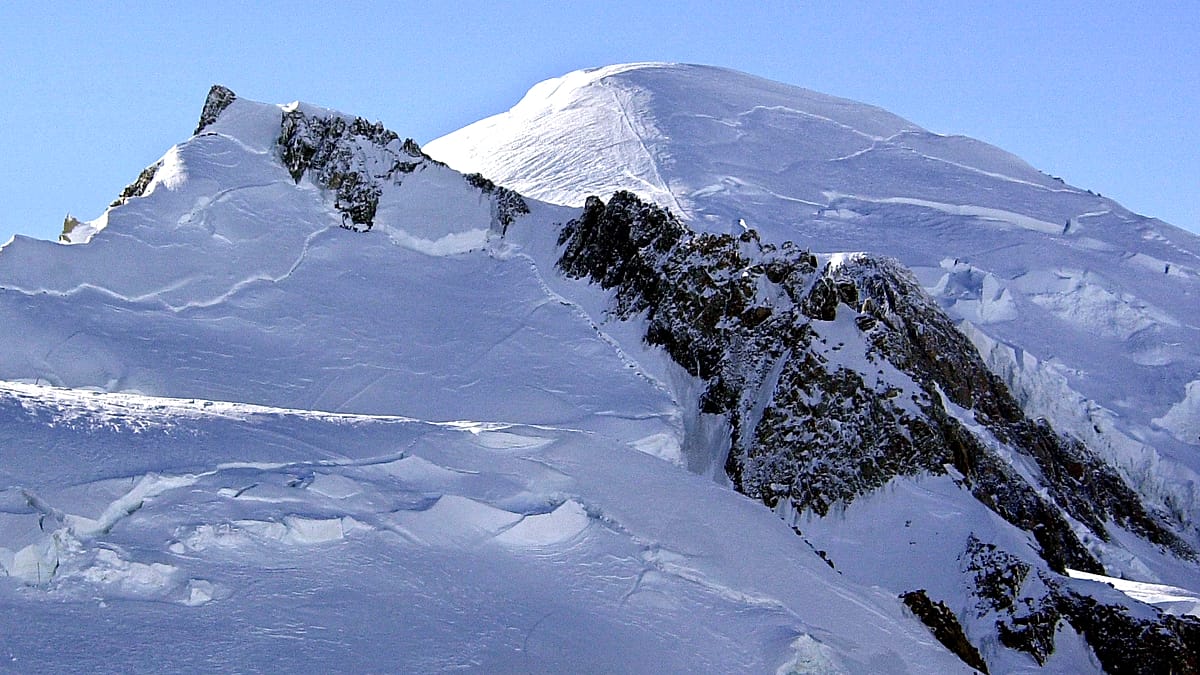
Mont Blanc, the highest peak in Western Europe, has grown taller. According to the latest survey by expert surveyors in Haute-Savoie, the summit now stands at 4,807.47 metres — almost two metres higher than the 2023 measurement.
The figure, released after a meticulous measurement campaign, is described as “close to the historical value” recorded at the end of the 19th century. Since 2001, a team of chartered surveyors has been regularly measuring the mountain to track its changing elevation.
However, the experts urge caution. This year's reading is a “one-off” and does not provide enough evidence to draw conclusions about the effects of global warming. The mountain's height fluctuates significantly with weather conditions, particularly precipitation and winds that shift and redistribute snow at the summit.
“Today, the summit is really shaped by the force of the winds and by precipitation, even though this year has been particularly dry,” explains Mathieu Dragon, a chartered surveyor in Haute-Savoie.
A new technique to study the summit
This year, the surveyors employed ground-penetrating radar to map the ice cap and the rocky peak beneath it. This new technique allows them to distinguish between the snow layer and the actual bedrock, providing a more precise understanding of the mountain's structure.
The data collected will help refine future measurements and offer a clearer picture of how the roof of Western Europe changes over time. The team plans to continue their regular surveys, which are crucial for monitoring the long-term evolution of the mountain.
Mont Blanc's elevation has varied considerably over the past two decades. In 2021, it was measured at 4,807.81 metres, while in 2023 it dropped to 4,805.59 metres. These fluctuations are largely driven by weather patterns, making it difficult to attribute any single change to climate change.
“We are not in a position to say whether this is a trend or just a natural variation,” Dragon adds. “Only long-term data will allow us to understand the underlying processes.”
The survey is part of a broader effort to monitor the Alps, which are particularly sensitive to climate change. Glaciers across the region have been retreating, and scientists are closely watching the impact on water resources, tourism, and ecosystems.
While the new measurement is notable, it does not alter the fundamental challenges facing the mountain. The surveyors' work is essential for providing accurate data to researchers and policymakers, helping them make informed decisions about the future of the Alps.
For now, Mont Blanc remains a symbol of natural grandeur, its height a reminder of the dynamic forces that shape our planet.