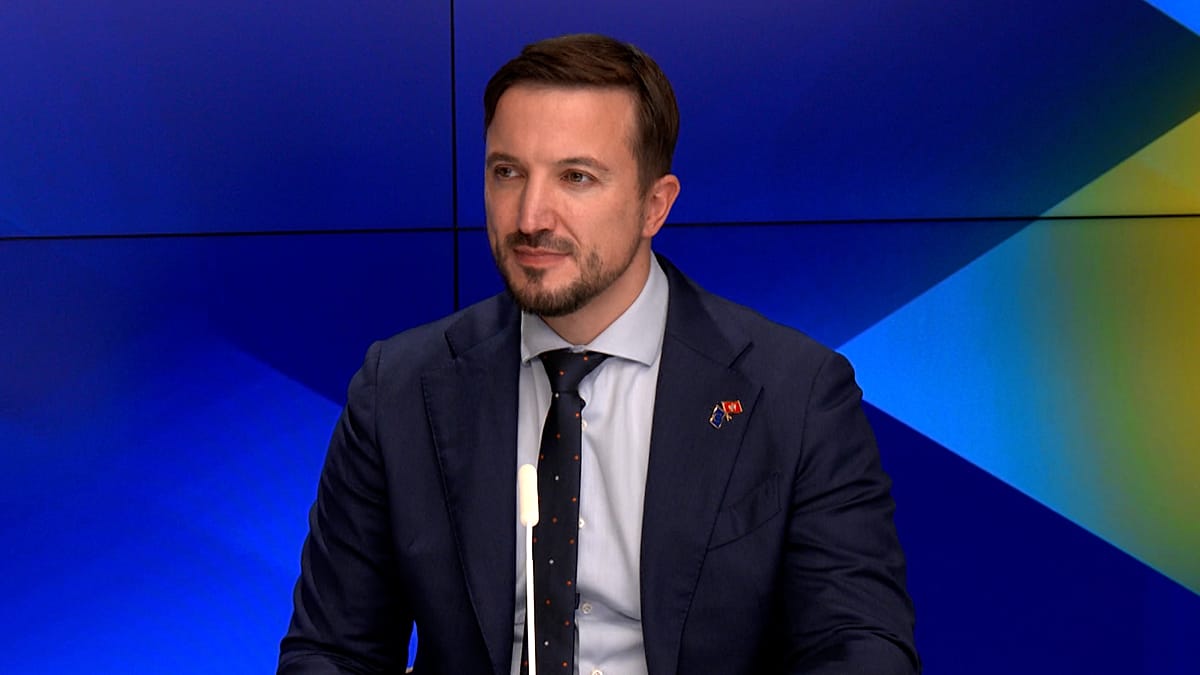
Montenegro's ambassador to the European Union, Petar Marković, has expressed confidence that his country can become the bloc's 28th member by the end of 2028. In an interview, Marković described Podgorica as the "frontrunner" among EU candidate countries, a status he says is recognized both by the European Commission and by the 27 member states.
"It is a very realistic goal," Marković said, referring to the 2028 timeline. He stressed that Montenegro meets the criteria set by both its own government and Brussels, and that the political will exists on all sides to complete the accession process within that timeframe.
Two main hurdles remain
Marković identified two principal obstacles on Montenegro's path to membership. The first is amending the country's constitution, a step required to align with EU standards. The second involves settling outstanding disputes with neighbouring Croatia, a fellow EU member, particularly issues that stem from the conflicts in the Balkans during the 1990s.
These disputes have been a recurring point of tension. However, recent diplomatic efforts have aimed at resolving them. As Montenegro moves to resolve Croatia disputes, the EU has been watching closely, with some member states, including Germany, pushing for a swift settlement. The broader context is also significant: the EU is debating stricter membership rules, and Montenegro's progress is seen as a test case for the entire enlargement process, as the bloc debates stricter membership rules.
Montenegro applied for EU membership in 2008, two years after declaring independence from the State Union of Serbia and Montenegro. Accession negotiations formally began in 2012, more than 14 years ago. Since then, the country has made steady, if sometimes slow, progress in aligning its laws and institutions with EU norms.
Marković's optimism is shared by many in Brussels, where enlargement has regained momentum following Russia's invasion of Ukraine. The war has underscored the strategic importance of bringing Western Balkan countries into the EU fold. At a recent Brussels enlargement summit, Montenegro, along with Albania and Ukraine, pressed for faster entry.
Still, challenges remain. The constitutional amendments require a two-thirds majority in Montenegro's parliament, which may necessitate cross-party cooperation. The disputes with Croatia are sensitive, touching on issues of property, borders, and war crimes. Yet Marković expressed confidence that these can be resolved through dialogue and compromise.
If Montenegro succeeds in joining by 2028, it would be the first new member state since Croatia's accession in 2013. That would be a powerful signal for other candidate countries in the region, including Serbia, Albania, North Macedonia, and Bosnia and Herzegovina.
For now, Podgorica is focusing on the immediate tasks: completing the necessary legal reforms and fostering good neighbourly relations. As Marković put it, the goal is not just to join the EU, but to do so as a fully prepared member that can contribute to the union's stability and prosperity.