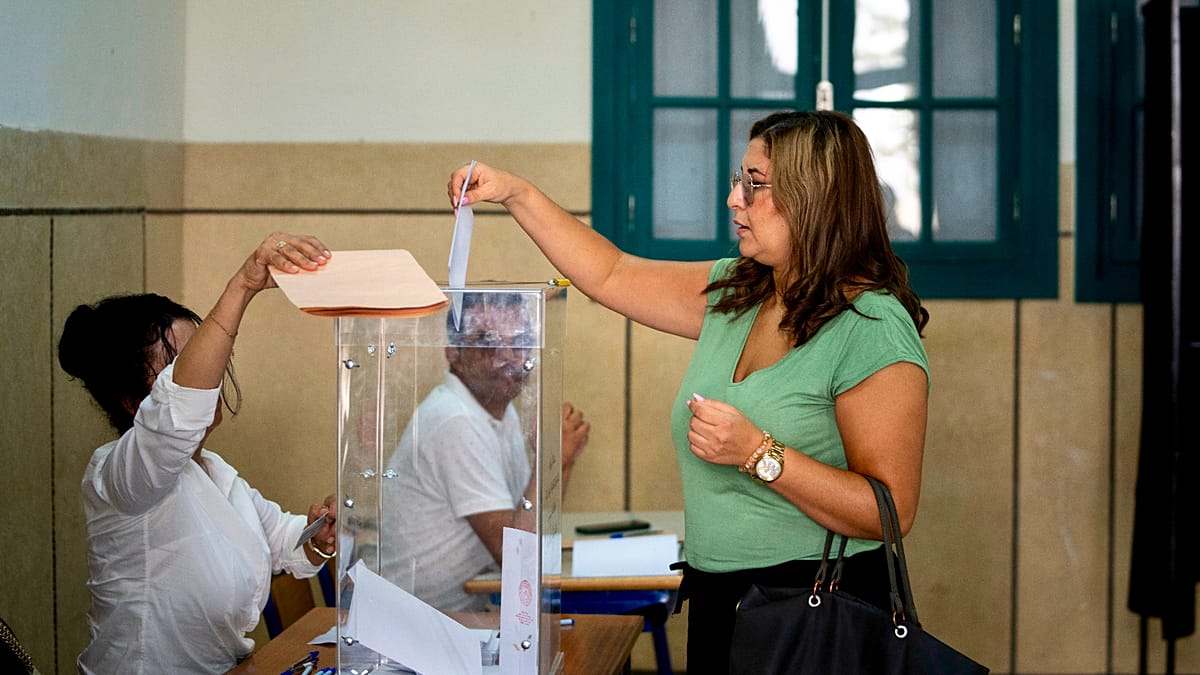
Moroccans went to the polls on Wednesday to elect a new parliament, with the vote shaped by mounting economic anxieties but also hopes for opportunities linked to the country's growing economy. The next government will oversee preparations for the 2030 World Cup, which Morocco will co-host with Spain and Portugal, while facing pressure to address everyday worries about unemployment, low wages, housing, schools and hospitals.
Voting centres across the North African kingdom closed at 7 pm local time (9 pm CEST), allowing nearly 16 million registered voters to cast ballots for the 395-seat House of Representatives. A total of 7,288 candidates are standing, backed by 28 parties and alliances or running on two independent lists.
The vote will determine the next prime minister and the makeup of the government, which will serve alongside a powerful monarchy that retains broad authority over strategic affairs. Under Morocco's 2011 constitution, King Mohammed VI appoints the head of government from the party that wins the most seats. Since no single party is expected to capture an absolute majority, the winner will need to build a coalition government. Portfolios are split among political allies, but the palace traditionally keeps key posts such as defence and foreign affairs under royal control.
Economy strong, jobs scarce
Morocco's economy is growing and attracting foreign investment, and new industries are developing. It has also become Africa's most-visited destination. The kingdom is a close US ally and maintains strong ties with Western capitals, and it is among the few Arab countries that have diplomatic relations with Israel.
Beyond the palaces, seas and mountains that draw tourists from around the world, development remains uneven across the country. Economic growth is not creating enough jobs, and 12.7% of Moroccans live in relative poverty. Politicians have said they have heard these grievances and have proposed solutions in their election manifestos. Many young Moroccans in particular said they have heard such promises before.
The outgoing government is a coalition of the National Rally of Independents (RNI), the Authenticity and Modernity Party (PAM) and the Istiqlal Party. All three are competing to finish first. The liberal, pro-business RNI won the 2021 election and has led the government for the past five years. Prime Minister Aziz Akhannouch stepped down as RNI leader in February and is not standing for a parliamentary seat. Mohamed Chouki now leads the party.
Both the RNI and PAM have promised to create around 1 million jobs over the next five-year term. The RNI has also proposed a guaranteed minimum monthly wage of 5,000 dirhams (€1,200). PAM is the second-largest party in the outgoing parliament. Its main figures in this election include Fatima-Zahra Mansouri, the mayor of Marrakech and urban planning minister, and Fouzi Lekjaa, the budget minister and president of Morocco's football federation. The party has proposed exempting salaries below 15,000 dirhams (€3,600) from income tax and providing 100,000 housing options for young people. If PAM finishes first and Mansouri is chosen to lead the government, she would become the first woman to hold the post.
Istiqlal, Morocco's oldest political party, is led by Water Minister Nizar Baraka. The nationalist, conservative-leaning party has made faster treatment in public hospitals one of its campaign pledges. The Justice and Development Party (PJD), led by former Prime Minister Abdelilah Benkirane, is also trying to make a comeback. The moderate party led the government for a decade before falling from 125 seats to 13 in the 2021 election. It says it wants to reduce the economic gap between Casablanca and other parts of the country.
Other established contenders include the Socialist Union of Popular Forces, the Popular Movement and the left-wing Party of Progress and Socialism, which has campaigned on education and tighter anti-corruption rules.
Voters receive two ballot papers and choose a party list rather than individual candidates. Of the 395 seats, 305 are filled through local constituencies. The remaining 90 come from regional, all-female lists. Seats are allocated under a proportional system. The elected government runs domestic policy and public services, but the king retains broad powers over the country's overall direction, defence and foreign affairs.
The constitution recognises the right to vote for Moroccans living abroad, but there is no voting by mail or ballot boxes at Moroccan consulates. Instead, they must travel to Morocco to vote or authorise a registered family member or acquaintance to vote on their behalf. Counting begins after polls close on Wednesday evening. Preliminary national results are normally announced the following day.
As Morocco prepares for the World Cup, the election's outcome will also shape its relations with European partners. The country's role in migration management and its ties with Spain and Portugal are closely watched in Brussels. For more on the broader context, see our analysis of EU-Morocco migration challenges and the recent Ceuta standoff.