Manfred Weber, the leader of the European People's Party, has warned Morocco that it faces "obvious consequences" if the border with the Spanish exclave of Ceuta cannot be brought under control, raising the prospect of further "uncontrolled situations" after roughly 80,000 irregular arrivals at the end of July.
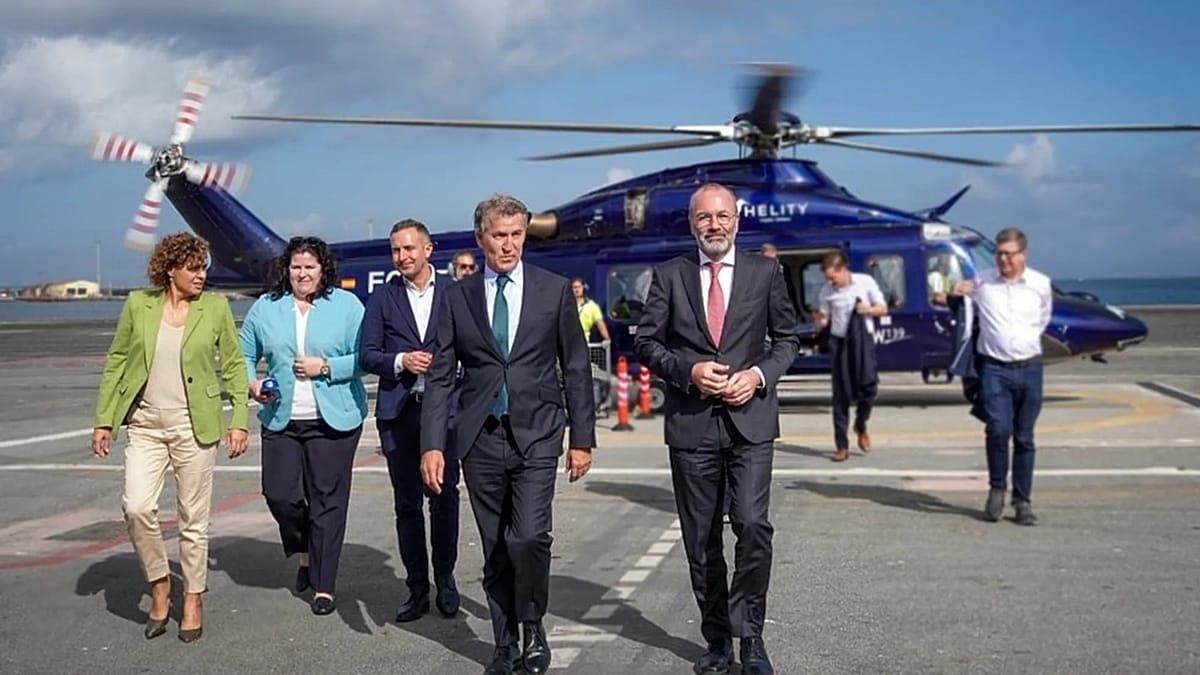
Weber became the first senior EU figure to set foot in Ceuta since the crisis began, travelling with the Spanish opposition leader Alberto Núñez Feijóo and the city's president, Juan Jesús Vivas. The visit underscored how the standoff has become a test of both Madrid's border management and the EU's broader relationship with Rabat.
A warning with few specifics
"If we cannot stabilize our borders, there will be obvious consequences. There is no question about it," Weber said, pointing to trade agreements, security cooperation and "other issues of great importance" in the EU-Morocco relationship. He did not spell out what those consequences would be.
Morocco stands to gain increased funding for border control and migration management under a long-awaited partnership agreement with Brussels. According to EU officials, the finalisation of that deal was put on hold once the crisis erupted, leaving Rabat's expected windfall in limbo.
The EPP leader repeated his demand that everyone who entered illegally be sent back to Morocco, a position the European Commission has also endorsed. But Spain's Youth Minister, Sira Rego, said on Monday that most unaccompanied minors stranded in Ceuta will remain in Spain in line with national law — a decision that has sparked controversy over the minors' fate, with the right-wing opposition insisting that all arrivals be returned.
Pressure mounts on Sánchez
More than 3,000 people remain on the city's streets, and Madrid is struggling to complete the returns. Moroccan authorities have so far stopped short of repatriating all of their nationals, even as Ceuta's new migrant camp overflows and officials scramble to manage the surge.
Weber aimed his sharpest criticism at Prime Minister Pedro Sánchez. "I think that in not so many EU countries this same situation would have lasted for over five weeks," he said, adding that Madrid had received "warnings" before the incident occurred.
A police report leaked in early September suggested that Moroccan forces had helped push migrants towards Ceuta, directly contradicting the government's narrative of "trusted cooperation" with Rabat. Interior Minister Fernando Grande-Marlaska subsequently ordered police to clarify the claims, putting Madrid on the defensive.
Weber also tied the crisis to what he called the "mixed signals" sent by Madrid through its large-scale regularisation plan for undocumented migrants who had lived in Spain continuously for at least five months before 1 January 2026.
The episode has exposed the fragility of the EU's migration arrangements with its southern neighbours, and it leaves Brussels with an awkward choice: press Rabat hard and risk losing a key partner on border control, or absorb the political cost of a border that, for five weeks, has looked anything but stable.