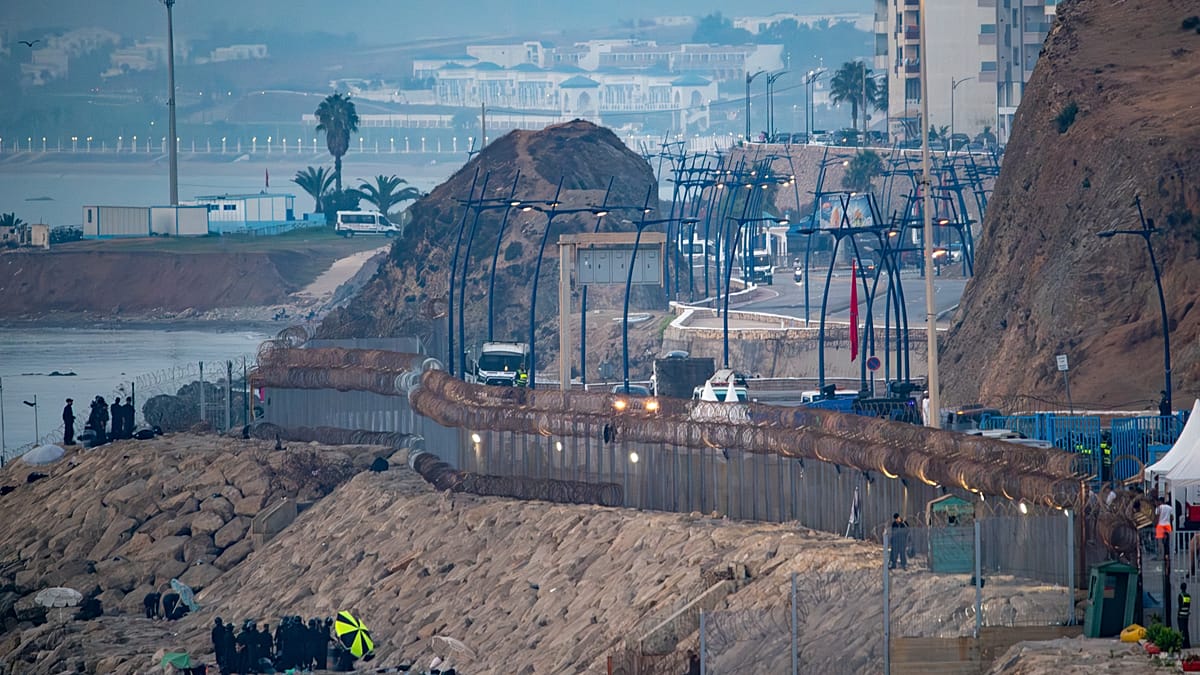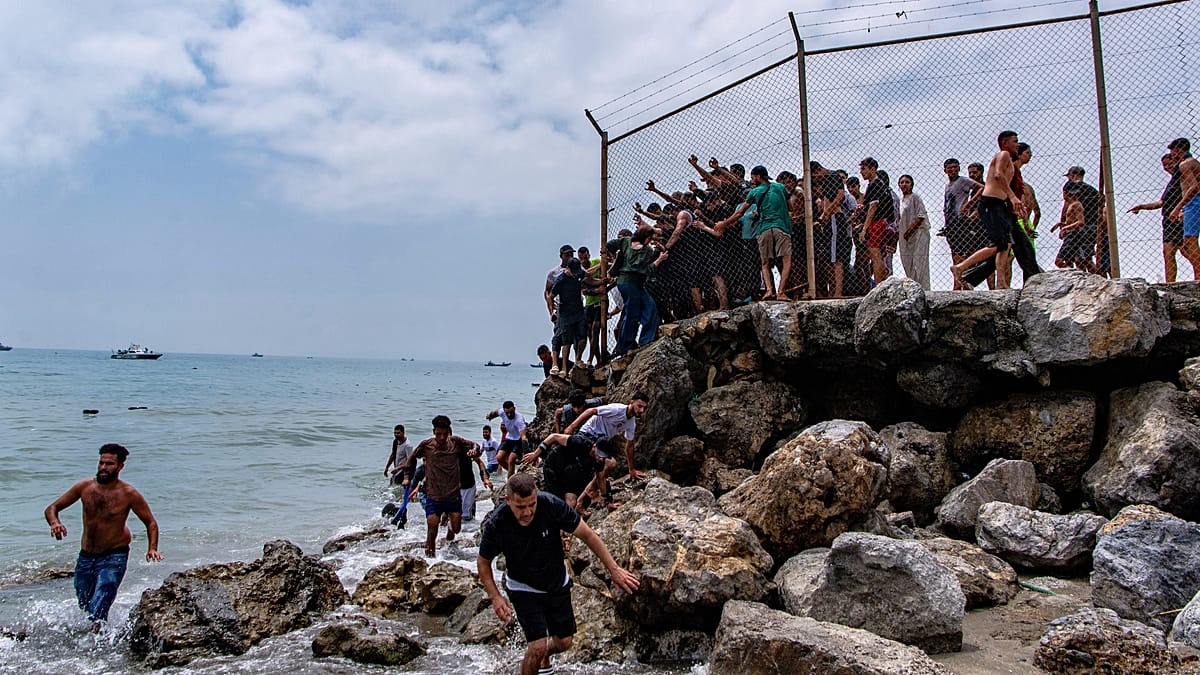
Spain’s Minister for Youth and Children, Sira Rego, has made clear that the majority of unaccompanied minors who crossed into the Spanish enclave of Ceuta will not be returned to Morocco, citing legal protections that shield them from forced repatriation.
In an interview with the Spanish radio network Cadena SER, Rego said: “I think most of them want to stay in Spain and they are going to stay, of course. There is a law that protects them.” Her remarks come after a mass crossing in late July that saw more than 70,000 people enter Ceuta from Moroccan territory, though many were later turned back.
Rego, a former member of the European Parliament for Izquierda Unida, stressed that Spanish legislation applies equally to all minors, regardless of their origin. “Our duty is to protect them,” she said. “I can assure you that many of these children have arrived fleeing violence or extreme situations and our obligation as a society is to protect them.”
Legal framework and political tensions
The minister’s stance sets her apart from other members of the Socialist Party (PSOE), the senior partner in Spain’s coalition government. While some officials have emphasised the need for bilateral agreements with Morocco, Rego acknowledged that cooperation from Rabat is often insufficient. “It is not common for us to receive a smooth response from Morocco and this is usually a problem,” she admitted.
The central government estimates that between 2,500 and 3,000 unaccompanied minors are currently in Ceuta. Of these, around 1,500 arrived during the late-July surge, according to revised police figures, while roughly 500 were already in the territory before the influx. An estimated 500 to 700 remain outside the official protection system, raising concerns about their welfare.
Rego’s comments reflect a broader debate in Spain about how to handle the growing number of migrant children arriving at its southern borders. The country’s child protection laws, which are among the most progressive in Europe, grant unaccompanied minors the right to remain if they refuse family reunion schemes. This legal framework has been challenged by some regional governments, but Rego insisted that politics must be conducted “in compliance with the law and the rule of law, but also from a place of empathy.”
She also condemned the “trivialisation of evil” she sees in public discourse, a remark aimed at critics who have called for stricter border controls. The situation in Ceuta has become a flashpoint in Spanish politics, with opposition parties accusing the government of failing to secure the border.
Meanwhile, the EU has been grappling with similar challenges across the continent. The bloc recently unveiled the Kids Act, a legislative proposal aimed at protecting minors online, but migration policy remains a contentious issue among member states. In Ceuta, the immediate priority is ensuring the safety of the children, many of whom have been sleeping in overcrowded facilities or on the streets.
Local authorities have opened new camps to accommodate the influx, but overcrowding has led to tensions, with some migrants being moved back to the beaches. The Spanish government has pledged to increase resources for child protection services, but NGOs warn that more needs to be done to address the root causes of migration.
Rego’s insistence on legal protections reflects a broader European principle: that children, regardless of their status, are entitled to special safeguards. As the debate continues, the fate of these minors remains uncertain, but Spain’s minister is firm in her conviction that they deserve a chance to build a future in Europe.