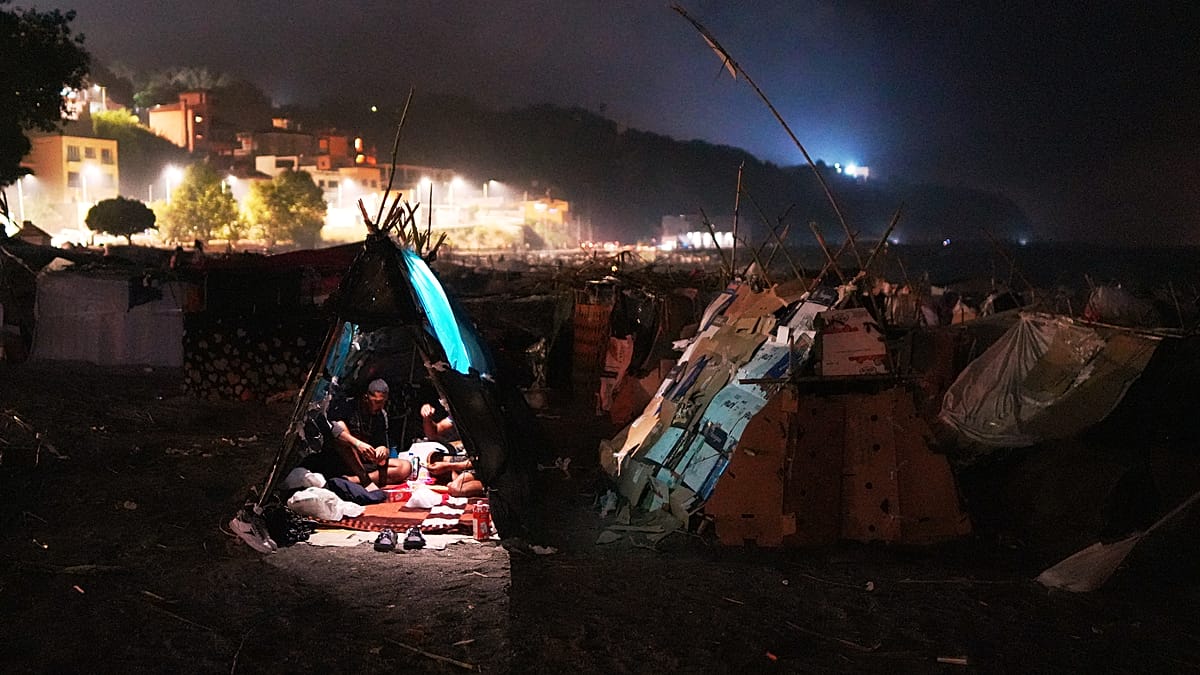
More than two thousand migrants in the Spanish enclave of Ceuta were forced back onto the beaches this week after a newly opened reception facility in the port quickly reached its limit. The transfer, intended to clear the makeshift camps that had dotted the coastline for weeks, instead underscored the scale of the challenge facing Spanish authorities.
On Friday morning, officers from Spain's Civil Guard and National Police escorted thousands of people from the Trampolín and Benítez beaches toward the new temporary centre, which was designed to hold 1,700 individuals. But the number of arrivals from the beaches exceeded 4,000, and once the facility was full, many had to turn back. According to government sources, roughly 3,000 migrants remain on the streets of Ceuta.
A chaotic relocation
The operation quickly descended into disorder. Police struggled to maintain control as people jostled for a place inside the new camp, with officers firing warning shots into the air to disperse the crowd. Local authorities reported no serious injuries, but the scenes were a stark reminder of the pressure on the enclave's limited infrastructure.
The return of migrants to the beaches also forced the postponement of a planned clean-up operation. Trampolín beach still looks much as it has in recent days, with tents and improvised shelters scattered across the sand.
The crisis began in late July, when more than 70,000 people crossed into Ceuta from Morocco, many swimming or using makeshift rafts. The influx overwhelmed local services and reignited debates across Spain about migration policy and border management.
Kissy Chandiramani, a member of Ceuta's autonomous government, described the port transfer as chaotic and said neither the city government nor port authorities had been given advance warning. She called for faster processing of migrant cases, warning that otherwise Ceuta risked becoming “the great CETI of North Africa,” referring to Spain's Temporary Immigrant Reception Centres.
Chandiramani noted that around one hundred cases are being processed each day. With additional resources, she argued, the process could be completed in 15 days. At the current pace, she warned, the situation “is going to drag on forever.”
The episode has drawn attention to the broader challenges facing Spain and the European Union in managing migration across the western Mediterranean. While Ceuta and its sister enclave Melilla have long been flashpoints, the sheer scale of the recent arrivals has tested the limits of local reception capacity.
European officials have called for a coordinated response, but so far, concrete measures remain limited. The situation in Ceuta also resonates beyond Spain, as other Mediterranean member states grapple with similar pressures. For now, the beaches of Ceuta remain a temporary home for thousands, awaiting a more durable solution.