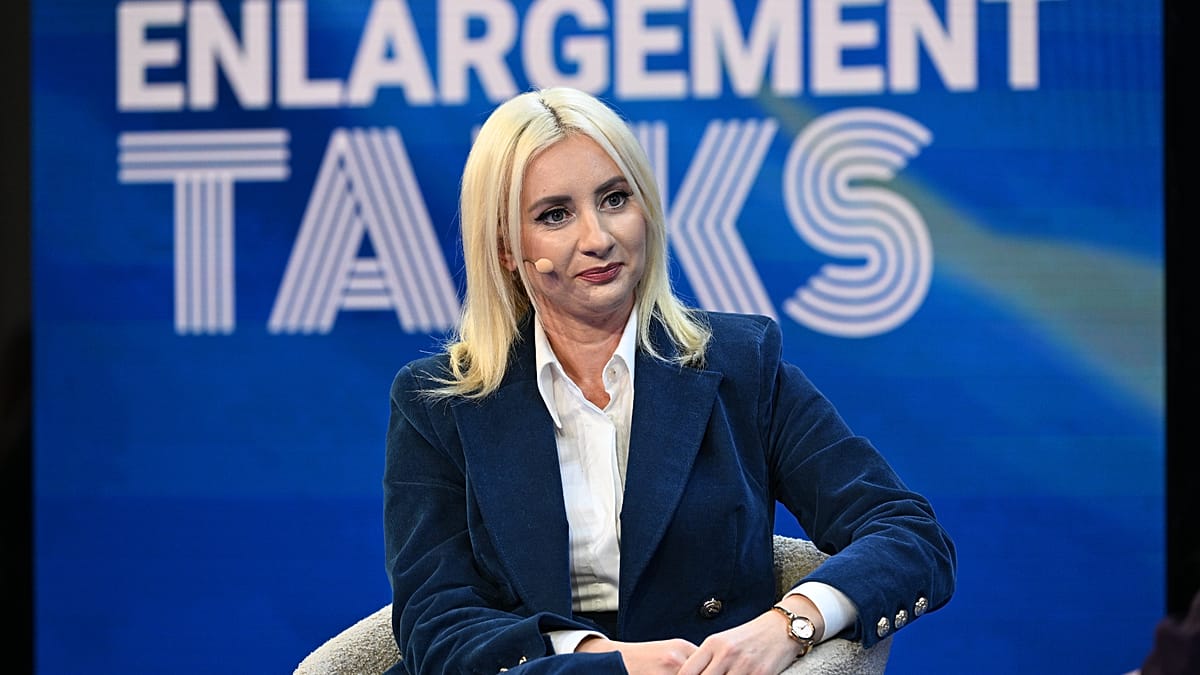
Montenegro's chief negotiator for EU accession, Maida Gorčević, has made clear that her country will not accept anything less than full membership in the European Union. Speaking at the Euronews Enlargement Summit in Brussels, she expressed confidence that all negotiating chapters could be closed by the end of this year, paving the way for accession as early as 2028.
Montenegro is widely seen as the frontrunner in the EU's enlargement process, with many expecting it to become the bloc's 28th member. Gorčević acknowledged the ambition of the timeline, saying, "I'm certain that this goal, 28 by 28, is ambitious. Yes, but it is happening, and we are all witnessing it."
Rejecting second-class membership
When asked about a proposal that would impose a 15-year transition period on new members, tied to rule-of-law safeguards, Gorčević was unequivocal. "We don't want second-grade membership inside the European Union, because that wouldn't be fair and that wouldn't be full membership as well," she said. However, she stressed that Montenegro is not opposed to additional safeguards, adding, "If we are for the safeguards to strengthen the European Union and the future membership, yes, we are for that."
The debate over transition periods reflects broader discussions within the EU about how to manage enlargement while protecting the bloc's standards. Some member states have floated the idea of phased integration, but Montenegro's stance signals that it expects equal treatment from day one.
Regional dynamics and Serbia's elections
Gorčević also touched on the recent elections in Serbia, where the reformist Student List defeated long-time leader Aleksandar Vučić in late October. She expressed hope that this shift could have a positive impact on the Western Balkans' EU aspirations. "This shift can also help a little bit to the region, to have the shift in a good direction," she said. "We will see in the future and let's hope on the next, your enlargement summit that we have some more tangible results coming from the region."
The outcome in Serbia is being watched closely across the Balkans, as it could influence the pace of reforms and regional cooperation. Montenegro, along with other candidate countries like Albania and Ukraine, has been pressing for faster progress in the enlargement process.
Resolving disputes with Croatia
On the bilateral front, Gorčević addressed the ongoing dispute with Croatia, which has raised concerns related to the Balkan wars. In October, Zagreb circulated an eight-point paper to EU member states, outlining issues it wants resolved before Montenegro can join. Gorčević expressed a commitment to finding a solution, saying, "I'm certain that in the future we don't want to argue with Croatia. We want to solve the bilateral disputes."
She noted that a resolution could come either before or after accession, and drew a parallel with the border dispute between Slovenia and Croatia, which has not blocked Croatia's membership. "If we manage to find a solution before joining the European Union, why not? But also, let's be very fair and open. There is still the open dispute to disputes between when it comes to the border between Slovenia and Croatia. I'm certain that the border issue is not going to be an obstacle to Montenegro joining the European Union."
Montenegro's determination to join as a full member is part of a broader push by Western Balkan countries to accelerate their EU integration. The second enlargement summit in Brussels highlighted the bloc's renewed focus on the region, with leaders discussing concrete steps forward.
While challenges remain, including the need for judicial reforms and the resolution of bilateral issues, Montenegro's clear stance against any form of second-class membership sets a firm precedent. As Gorčević put it, the goal is full and equal membership, and anything less would not be acceptable.