As the European Union and Morocco navigate a fraught relationship over migration, one academic argues that the bloc needs a more imaginative strategy than the current focus on border control and readmission deals.
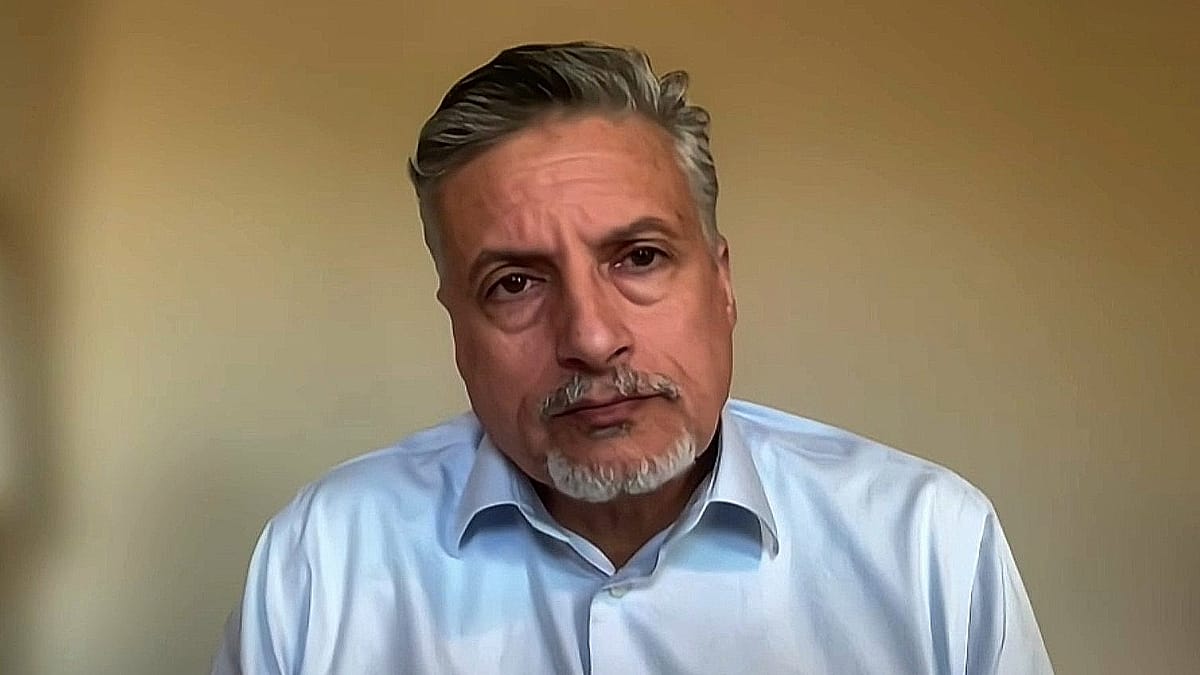
Aboubakr Jamai, dean of the Donna Dillon Manning School of Global Affairs at the American College of the Mediterranean, told European Pulse that the EU's approach to Rabat is too narrow. "The migration dossier is always treated as a security file," he said. "But the root causes are economic and political, and unless Brussels addresses those, we will keep lurching from one crisis to the next."
Jamai's comments come amid recurring standoffs at the Spanish enclaves of Ceuta and Melilla, where migrants have repeatedly tried to cross the heavily fortified borders. The EU has poured hundreds of millions of euros into Moroccan border management, yet the underlying pressures remain unresolved. A recent warning from the European People's Party about "obvious consequences" for Morocco over the Ceuta standoff illustrates the brittle tone of the relationship.
Morocco's economic paradox
Jamai, who was speaking ahead of Morocco's parliamentary elections, is blunt about the country's internal dynamics. "Decision-making lies with the royal cabinet, not with parliament," he said. "The elected institutions are largely decorative when it comes to strategic choices."
That concentration of power, he argues, has produced a development model that looks impressive on paper but fails ordinary Moroccans. The World Bank Group recorded 4.9% growth for Morocco in 2025, a figure Jamai says is misleading. "You need at least 6% to 7% growth to absorb the number of young people entering the labour market," he explained. "At current rates, the country will continue producing new discontent."
The expert points to a trickle-down economic philosophy that has not delivered. "You see these shiny projects — new ports, high-speed trains, solar farms — but they do not translate into money in people's pockets or better jobs," Jamai said. "The gap between the showcase and the lived reality is widening."
That disconnect is a key driver of migration, both to Europe and within the Maghreb. Young Moroccans, particularly those with university degrees, face unemployment rates far above the national average. Many see little future at home, and the EU's offer of temporary work visas or training schemes has been limited and slow.
A creative solution
Jamai suggests the EU should think beyond the traditional toolbox of aid-for-border-control. "What would be creative? Perhaps a large-scale circular migration scheme, or a Marshall Plan for the southern Mediterranean that actually invests in labour-intensive sectors," he said. "Or a serious push to reform the Moroccan economy from outside, using trade leverage to demand better governance."
He also notes that the EU's own internal politics complicate matters. The rise of anti-immigration parties in several member states, including the Netherlands and Germany, has made governments wary of appearing soft on migration. A recent far-right rally in The Hague that turned violent shows how volatile the issue has become.
Yet Jamai insists that a purely repressive approach is unsustainable. "You cannot build a wall high enough to stop desperation," he said. "The EU needs to engage with Morocco as a partner, not just as a gatekeeper. That means being honest about the failures of the current model on both sides of the Mediterranean."
He also points to the broader European dimension: migration from Morocco is not just a Spanish or French issue. It affects the entire Schengen area, and the EU's external border management is a shared responsibility. "If we want a durable solution, we need a European strategy that goes beyond crisis management," Jamai said.
For now, the EU and Morocco continue their uneasy dance, with periodic flare-ups at the borders and occasional breakthroughs in diplomatic talks. But Jamai warns that without a more creative approach, the cycle will repeat. "The status quo is not a solution," he said. "It is just a postponement of the inevitable."