Russia has issued an evacuation order for foreign citizens and diplomats in Kyiv, warning that its armed forces will intensify strikes on the Ukrainian capital and what it calls “decision-making centres.” The directive, published by the Russian foreign ministry, comes just one day after a massive missile and drone barrage hit residential areas of Kyiv, killing two people and wounding more than 90.
“Under the current circumstances, the Russian Armed Forces are starting to launch systematic strikes against Ukrainian military-industrial facilities in Kyiv,” the ministry said in a statement. “The strikes will target both decision-making centres and command posts… We are warning foreign citizens, including personnel of diplomatic missions and international organisations, to leave the city as soon as possible.”
Retaliation Claims and Hypersonic Weapons
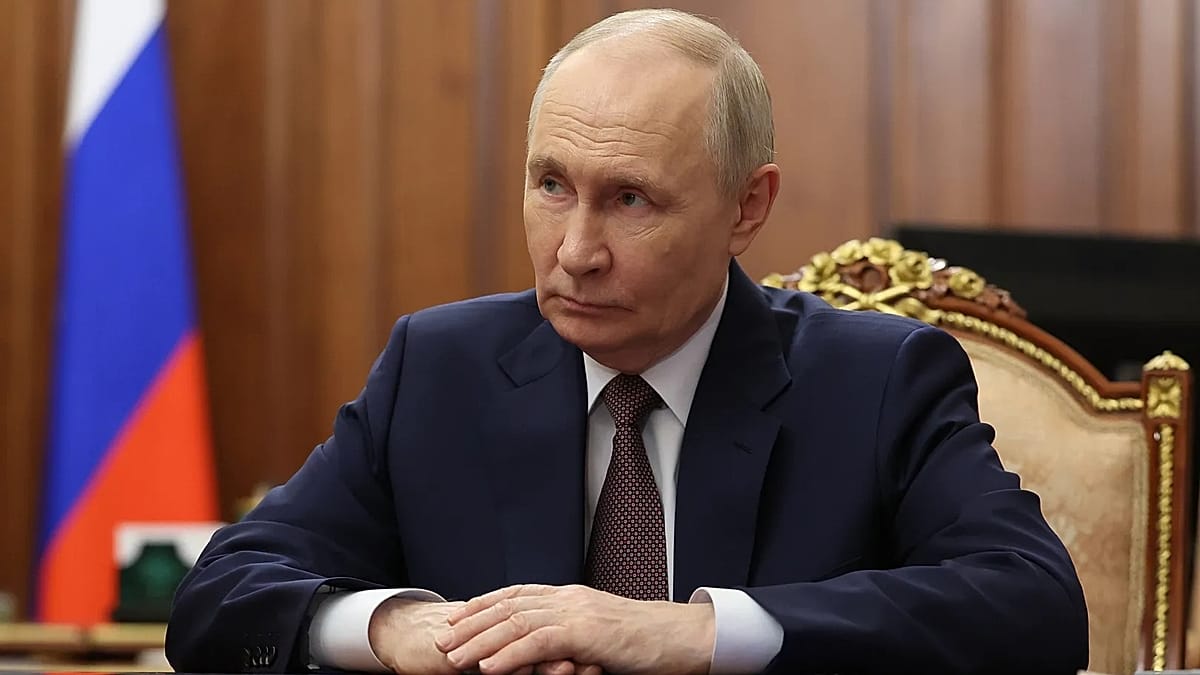
Russian President Vladimir Putin framed the attack as retaliation for a Ukrainian assault on a vocational school in the Russian-occupied Luhansk region days earlier, which killed 21 people. Moscow has also used the Oreshnik hypersonic missile—capable of travelling ten times the speed of sound and carrying nuclear warheads—in the strikes, a weapon that has drawn condemnation from European leaders as a reckless escalation. The European Union and NATO have repeatedly called for restraint, but the Kremlin shows no sign of de-escalation.
This is not the first time Russia has urged foreigners to leave Kyiv. Earlier this month, Moscow issued a similar warning when it threatened massive attacks on the city centre if Ukraine disrupted a military parade on Red Square.
Diplomats Tour Destruction
On Monday, more than 70 ambassadors, led by Ukrainian Foreign Minister Andrii Sybiha, visited sites hit by the latest Russian strikes. They saw homes, residential buildings, and a market reduced to rubble. One vendor, Zhana Kuzmak, who had worked at the market for two decades, returned to find it burnt down. “I am 45 years old. Twenty years of my life and work I have spent here. We have many people here who were left without jobs and houses,” she said.
Another vendor, Vitaly Mykolaevych, added: “We worked hard every year here to earn money. We had customers and friends here, and in one hour everything ended.” The vendors hope local authorities will help them rebuild, but the scale of destruction is immense.
Oleksii Kauleb, Ukraine’s Minister for Communities and Territories Development, reported that in the past 24 hours, 986 applications for compensation for destroyed housing had been submitted through the Diia state-run app. “This shows the scale of the destruction and, at the same time, people's demand for rapid recovery,” he said.
The attacks come amid a broader pattern of Russian escalation. In a separate incident, a Russian drone barrage hit a residential area in Kharkiv, underscoring the sustained threat to civilian infrastructure across Ukraine. Meanwhile, European capitals are watching closely as the war enters its fourth year, with no diplomatic resolution in sight.
The Oreshnik missile’s deployment has particularly alarmed European security officials. European leaders have condemned its use as a reckless escalation, warning that it could further destabilise the region. The missile’s hypersonic speed makes it nearly impossible to intercept with current air defence systems, raising the stakes for Kyiv and its allies.
As cleanup crews work through the debris in Kyiv, the city braces for what Moscow has promised will be more systematic strikes. The evacuation order for foreign nationals adds a new layer of urgency, signalling that Russia intends to sustain its campaign against the capital. For now, the international community can only watch and prepare for the next phase of a conflict that shows no signs of abating.