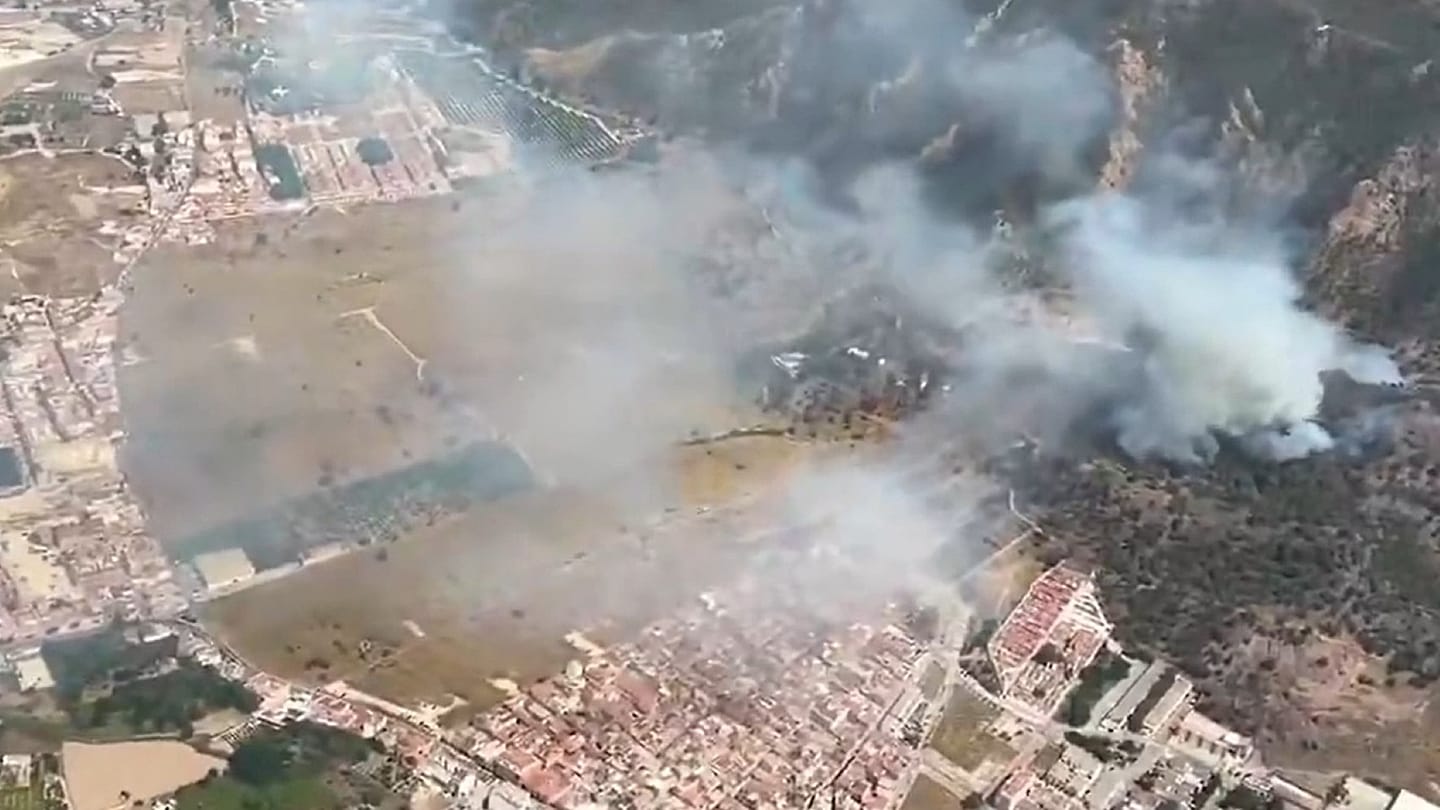
The government of the Region of Murcia has activated Spain's Military Emergencies Unit (UME) to battle a wildfire in the Sierra Espuña natural park, while simultaneously calling for improved coordination between regional and central authorities. The blaze, which broke out in the mountainous area known for its biodiversity, has prompted the regional administration to raise the Infomur fire response plan to level 2, a designation that allows for the involvement of national resources.
Regional president Fernando López Miras confirmed the deployment of the UME, a specialized branch of the Spanish armed forces trained to handle natural disasters and large-scale emergencies. The move comes as firefighters on the ground struggle to contain the flames amid dry conditions and gusty winds that have complicated efforts in the rugged terrain of the Sierra Espuña, a protected area that is home to rare flora and fauna.
Coordination Gaps Highlighted
In a statement issued from the regional capital, Murcia, López Miras stressed the need for a more streamlined command structure during such emergencies. "We have the resources, but we need better coordination between the regional government and the central administration in Madrid to ensure a rapid and effective response," he said. The remarks reflect a broader tension that has simmered between Spain's autonomous communities and the national government over disaster management protocols, particularly during wildfire seasons that have grown more intense across the Iberian Peninsula.
The Infomur plan, which governs wildfire response in Murcia, was elevated to level 2 after the fire's intensity exceeded the capacity of local brigades. This escalation automatically triggers the involvement of the UME, which has been deployed to similar blazes in recent years, including the catastrophic fires in the Valencian Community and Andalusia. The unit's arrival is expected to bolster containment efforts, but officials warn that the fire's location in a steep, forested area poses logistical challenges.
Environmental groups have expressed concern about the impact on the Sierra Espuña, a reforested area that was once a barren landscape before a major restoration project in the early 20th century. The park is a key habitat for species such as the Bonelli's eagle and the European wildcat, and its loss would be a significant blow to regional biodiversity. The regional government has not yet released an estimate of the area burned, but satellite imagery suggests the fire has already consumed several hundred hectares.
The call for better coordination echoes similar appeals from other Spanish regions. In recent years, the Canary Islands, Catalonia, and Galicia have all faced devastating wildfires that exposed gaps in communication and resource allocation between regional and national bodies. The issue has become a political flashpoint, with some regional leaders accusing Madrid of being slow to respond to requests for assistance. In Murcia's case, the timing of the fire—during a period of heightened political tension over water rights and agricultural subsidies—adds another layer of complexity.
Meanwhile, the Spanish Ministry of Ecological Transition has offered technical support, but the regional government insists that a more formalized coordination mechanism is needed. "We cannot rely on ad hoc arrangements every time a fire breaks out," said a spokesperson for the Murcian emergency services. "We need a permanent framework that allows for seamless cooperation."
The wildfire in the Sierra Espuña is the latest in a series of blazes that have tested Spain's emergency response systems. As climate change increases the frequency and severity of such events, the debate over how to manage them is likely to intensify. For now, the focus remains on containing the flames and protecting the park's unique ecosystem, but the underlying questions about governance and preparedness will not be easily extinguished.