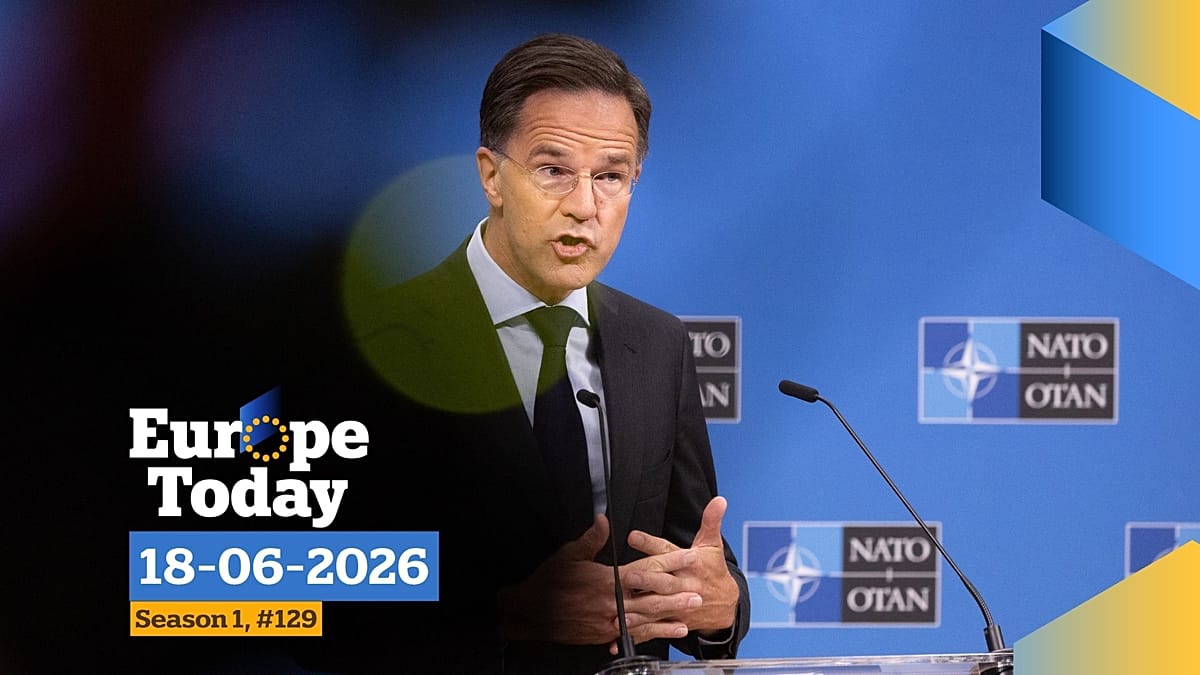
This week marks a critical juncture for European security and fiscal planning as NATO defence ministers convene in Ankara to lay the groundwork for the alliance's upcoming leaders' summit. Among the attendees is US Defense Secretary Pete Hegseth, underscoring Washington's continued commitment to European defence at a time when the war in Ukraine and the future of transatlantic burden-sharing are under intense scrutiny.
NATO's Ankara Preparations
The meeting in Ankara, hosted by Turkish officials, is designed to finalise the agenda for next month's summit. Key topics include increasing defence spending targets, reinforcing NATO's eastern flank, and ensuring sustained military aid to Ukraine. The presence of Secretary Hegseth signals that the United States expects European allies to deliver on their pledge to spend at least 2% of GDP on defence, a benchmark that several member states still struggle to meet.
Meanwhile, the situation on the ground in Ukraine remains dire. Russian strikes in eastern Ukraine have killed three and wounded 22, including children, highlighting the urgent need for continued air defence systems and ammunition. NATO ministers are expected to discuss new packages of military assistance, though internal divisions persist over the pace and scale of deliveries.
EU Leaders Host Zelenskyy in Brussels
Parallel to the NATO talks, EU leaders are gathering in Brussels for a working dinner with Ukrainian President Volodymyr Zelenskyy. The meeting, hosted by European Council President Charles Michel, will focus on three interconnected issues: continued support for Ukraine, the situation in the Middle East, and the bloc's next long-term budget, known as the Multiannual Financial Framework (MFF).
President Zelenskyy is expected to press for faster delivery of pledged military aid and clearer signals on Ukraine's EU accession path. Cyprus, which has just concluded its rotating EU presidency, has vowed to push accession talks for Ukraine and Moldova forward, but several member states remain cautious about setting a firm timeline.
The budget negotiations are shaping up to be particularly contentious. EU leaders are targeting an October draft for a €2 trillion budget deal, but deep divisions persist between net contributors and those who rely on cohesion funds. The budget battle looms as leaders clash over spending priorities and how to handle ties with Russia, with frugal states like the Netherlands and Austria demanding strict conditionality on rule-of-law and reform benchmarks.
Cyprus' Deputy Minister for European Affairs, Marilena Raouna, joined Euronews to reflect on the country's six-month stint at the helm of the EU Council. She highlighted progress on migration and digitalisation but acknowledged that the bloc faces significant challenges, including the need to maintain unity on Ukraine while managing relations with China and the Global South.
Broader Security and Diplomatic Moves
Beyond the immediate NATO and EU meetings, retired US General Ben Hodges offered analysis on the proposed US-Iran framework deal, assessing its implications for regional security and efforts to prevent Tehran from acquiring a nuclear weapon. While not directly a European story, any shift in US-Iran relations affects European energy markets and migration routes through the Mediterranean.
Jakub Janas, a Brussels-based analyst, took a closer look at the high-stakes European Council dinner, where leaders will also tackle enlargement, competition with China, and negotiations over the next seven-year budget. He noted that the EU's ability to absorb new members while maintaining fiscal discipline will be a central test of its political will.
As the week unfolds, the twin tracks of NATO and EU diplomacy underscore a fundamental reality: Europe's security and prosperity are increasingly intertwined. The decisions made in Ankara and Brussels will shape the continent's response to Russian aggression, its fiscal future, and its place in a multipolar world.