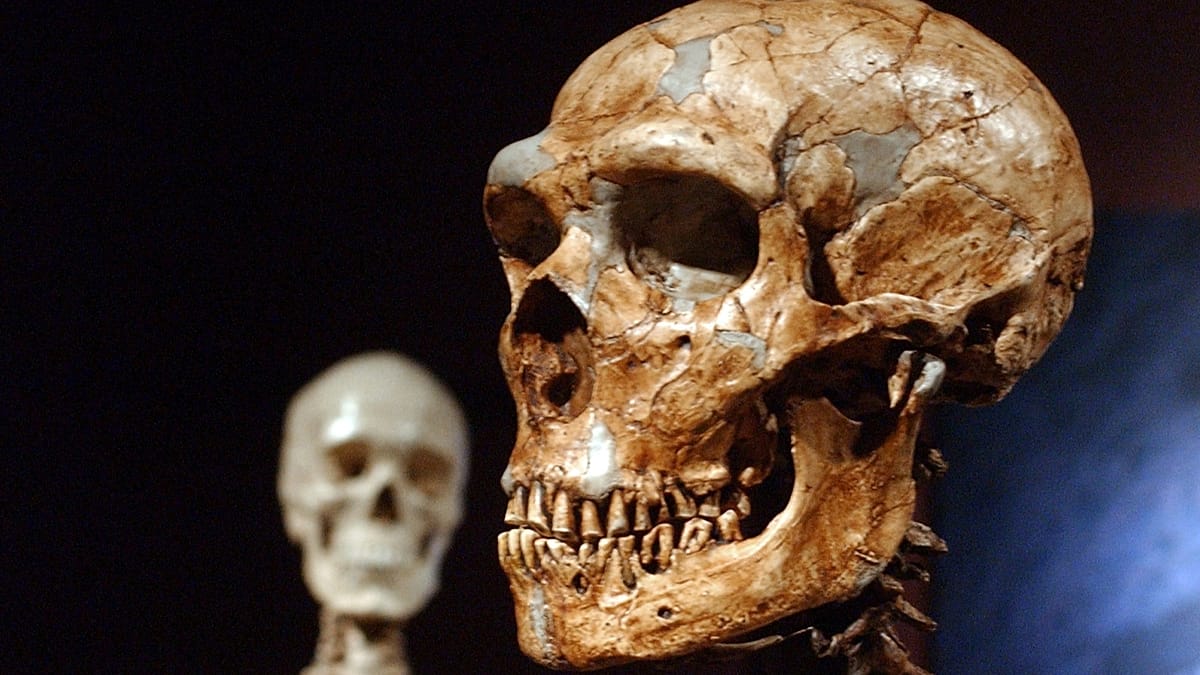
Modern humans outside Africa carry a small but meaningful genetic legacy from Neanderthals, and a new study adds another layer to that inheritance. Researchers in Sweden and Germany have identified a Neanderthal-derived gene variant that appears to lower the risk of schizophrenia by almost 10% while subtly altering the structure of the brain's visual processing center.
The study, published in the Proceedings of the National Academy of Sciences, focused on a variant near the DAAM1 gene, which is involved in brain development. The variant is common in present-day populations, a direct result of interbreeding between early modern humans and Neanderthals before the latter went extinct around 40,000 years ago.
Occipital lobe changes
Neanderthals are thought to have had larger occipital lobes—the region at the back of the brain that houses the visual cortex—than modern humans. Yet the Neanderthal-inherited variant is associated with a smaller occipital lobe in people today, by about 0.85 cubic centimeters per copy. This reduction is modest but measurable.
The researchers, evolutionary geneticists Hugo Zeberg of the Karolinska Institutet in Sweden and Svante Pääbo of the Max Planck Institute for Evolutionary Anthropology in Germany, found that the variant does not appear to affect general intelligence or other major psychiatric conditions. Their findings challenge the assumption that a larger brain region necessarily confers cognitive advantages.
“These findings caution against equating the size of a brain region with cognitive abilities,” the authors wrote.
Zeberg and Pääbo have a track record of uncovering how Neanderthal DNA influences health today. In earlier work, they identified a Neanderthal gene cluster on chromosome 3 that raises the risk of severe COVID-19—a finding that later proved protective against HIV. Their new research extends this line of inquiry into neuropsychiatry.
The study also aligns with a 2021 analysis by another team suggesting that Neanderthal ancestry may shape the gene pool in ways that affect schizophrenia risk. The new paper provides a specific genetic mechanism, though the authors stress that the variant is just one of many factors contributing to the disorder.
Schizophrenia affects roughly 1% of the global population, and its causes are complex, involving both genetic and environmental elements. The Neanderthal variant's protective effect is significant but not absolute, and the researchers note that it has little or no association with cognitive performance.
The findings have implications for understanding how ancient interbreeding continues to shape human health. As genomic data from Neanderthals and modern populations grows, researchers are increasingly able to trace the evolutionary origins of disease risk and resilience.
For now, the study offers a nuanced view of our ancestral inheritance: a genetic gift from a long-vanished cousin species that subtly influences brain structure and may offer some protection against a debilitating psychiatric condition.