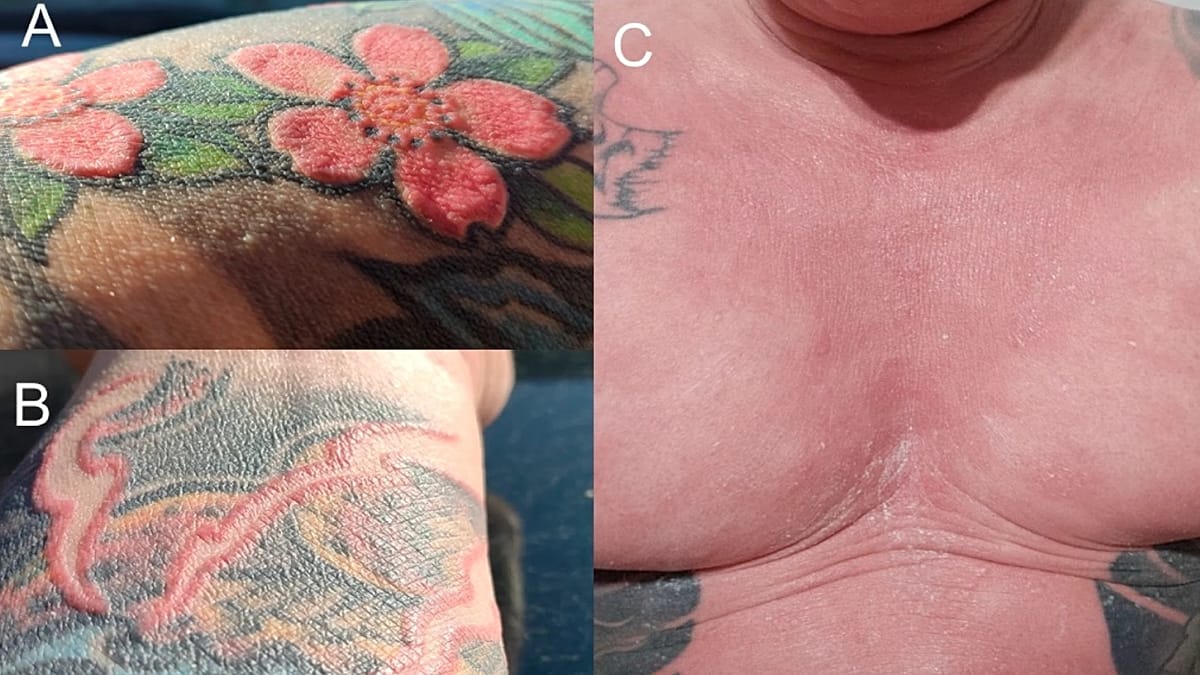
A 36-year-old man in Poland has experienced a rare and severe cascade of health problems after receiving a tattoo with red ink in the summer of 2020. The case, documented by researchers at Wroclaw Medical University, highlights the potential dangers of tattoo pigments and the need for better regulation.
Four months after the tattoo was applied to his forearm, the man developed itchy skin lesions. Over time, these evolved into erythroderma, a widespread inflammatory skin condition characterized by redness and peeling. In the years that followed, he also lost all body hair, developed vitiligo (acquired depigmentation), and lost the ability to sweat—a condition known as anhidrosis.
According to the researchers, this is the first documented case of such extensive complications involving multiple organ systems. "No cases of such an extensive nature, involving multiple organ systems, have been recorded so far," they wrote in their paper.
Allergic reaction to red pigment
Patch tests eventually confirmed that the man was hypersensitive to components of the red ink. An allergy specialist recommended surgical removal of the affected skin. After months of ineffective medical treatment, the man underwent a series of operations—eight in total—to excise the tattooed tissue.
The removal of the red pigment, combined with medication, led to the resolution of the erythroderma and allowed his hair to grow back. The progression of vitiligo also halted. However, the anhidrosis persisted, leaving the man unable to tolerate physical exertion or work due to the risk of heat stroke.
The man also had Hashimoto thyroiditis, an autoimmune condition, which may have predisposed him to such a severe reaction. The researchers noted that adverse reactions to tattoo inks are being recognized more frequently, but serious systemic complications remain rare and poorly understood.
Calls for regulation
In their paper, the researchers stress the link between allergic and autoimmune diseases and adverse reactions to tattoo ink. They call for greater awareness and caution, particularly for individuals prone to such conditions. "Perhaps introducing regulations on licensing tattoo artists and education on safe tattooing will help reduce the number of complications associated with tattoos," they recommend.
The European Union introduced rules in 2022 to restrict hazardous chemicals in tattoo inks, but enforcement and regulation vary across member states. In this case, the chemical composition of the ink could not be analyzed because the tattooist did not provide a sample or packaging.
This incident underscores the importance of understanding the risks associated with tattoos, especially for those with pre-existing autoimmune conditions. It also highlights the need for standardized safety measures across the continent, as Poland and other EU states grapple with public health challenges.
While tattoos are a popular form of self-expression, this case serves as a cautionary tale. As researchers continue to investigate the long-term effects of tattoo pigments, they urge both artists and clients to prioritize safety and informed consent.