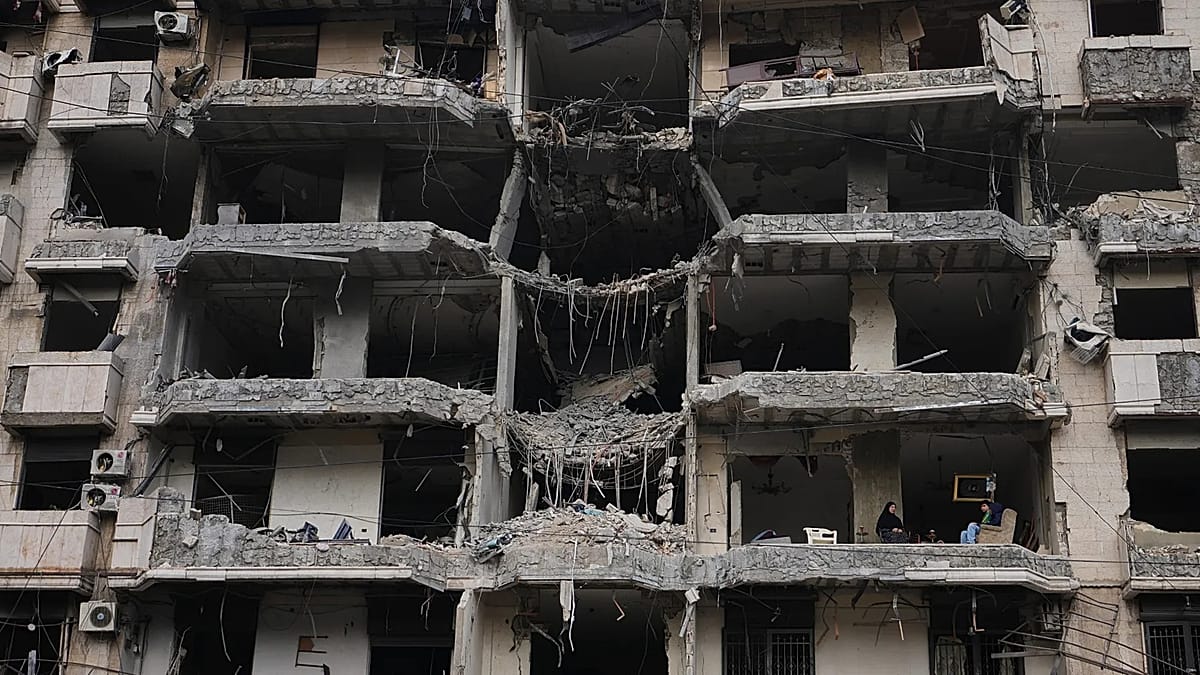
Israeli Prime Minister Benjamin Netanyahu stated on Monday that Hezbollah's rockets and drones continue to pose a significant threat, necessitating ongoing military operations despite a ceasefire. The Israeli military expanded its strikes into Lebanon, targeting what it described as Hezbollah infrastructure in the eastern Bekaa region and the south.
Netanyahu said in a statement that "there are still two central threats from Hezbollah: the 122mm rockets and the drones. This demands a combination of operational and technological activity." Under the terms of the ceasefire, Israel retains the right to act against "planned, imminent or ongoing attacks."
Lebanon's President Pursues Direct Talks
Lebanese President Joseph Aoun said his goal is to reach an end to the state of war with Israel, similar to the armistice agreement of 1949. "I assure you that I will not accept reaching a humiliating agreement," Aoun stated. He described those who dragged Lebanon into the war as committing "treason," a clear jab at Hezbollah, which launched rockets toward Israel after the killing of Iranian supreme leader Ali Khamenei in US-Israeli strikes.
Hezbollah's chief, Naim Qassem, sharply criticized the government, calling direct negotiations with Israel a "grave sin." In a statement aired by the group's Al-Manar TV, Qassem said: "We categorically reject direct negotiations with Israel and those in power should know that their actions will not benefit Lebanon or themselves." He urged authorities to "back down from their grave sin that is putting Lebanon in a spiral of instability."
Qassem also warned that the government "cannot continue while it is neglecting Lebanon's rights, giving up land, and confronting" those resisting Israel. He added: "We will not give up our weapons... and the Israeli enemy will not remain on a single inch of our occupied land."
Israeli Defence Minister Israel Katz responded by saying Qassem was "playing with fire and the fire will burn Hezbollah and all of Lebanon."
Lebanese state media reported Israeli air strikes in several southern towns, along with artillery shelling and demolition operations. Hezbollah claimed its fighters launched attacks on Israeli troops in the south, including on an Israeli army bulldozer that it said was demolishing homes in the border town of Bint Jbeil.
Israeli troops who invaded south Lebanon after the war erupted on 2 March are operating inside an Israeli-announced "yellow line," a ribbon of Lebanese territory around 10 kilometres deep along the border, where Lebanese have been warned not to return.
Lebanon and Israel's US ambassadors met twice in Washington in recent weeks, the first such meetings in decades, for discussions that Hezbollah has categorically rejected. After the first talks, US President Donald Trump announced a 10-day ceasefire that began on 17 April, announcing a three-week extension after the second round.
Aoun has faced intense criticism from Hezbollah and its supporters. They say his push for direct talks with Israel lacks consensus among Lebanon's various communities, the latest point of contention after the government decided to disarm the group last year and outlawed its military activities in March. "Some want to hold us accountable over the decision to go to negotiations on the grounds that there is no national consensus" over the talks, Aoun said.
The situation remains volatile, with the ceasefire fragile and both sides accusing each other of violations. The European Union has called for restraint and a return to diplomacy, but the deep divisions within Lebanon and the ongoing military operations suggest a lasting resolution remains distant.