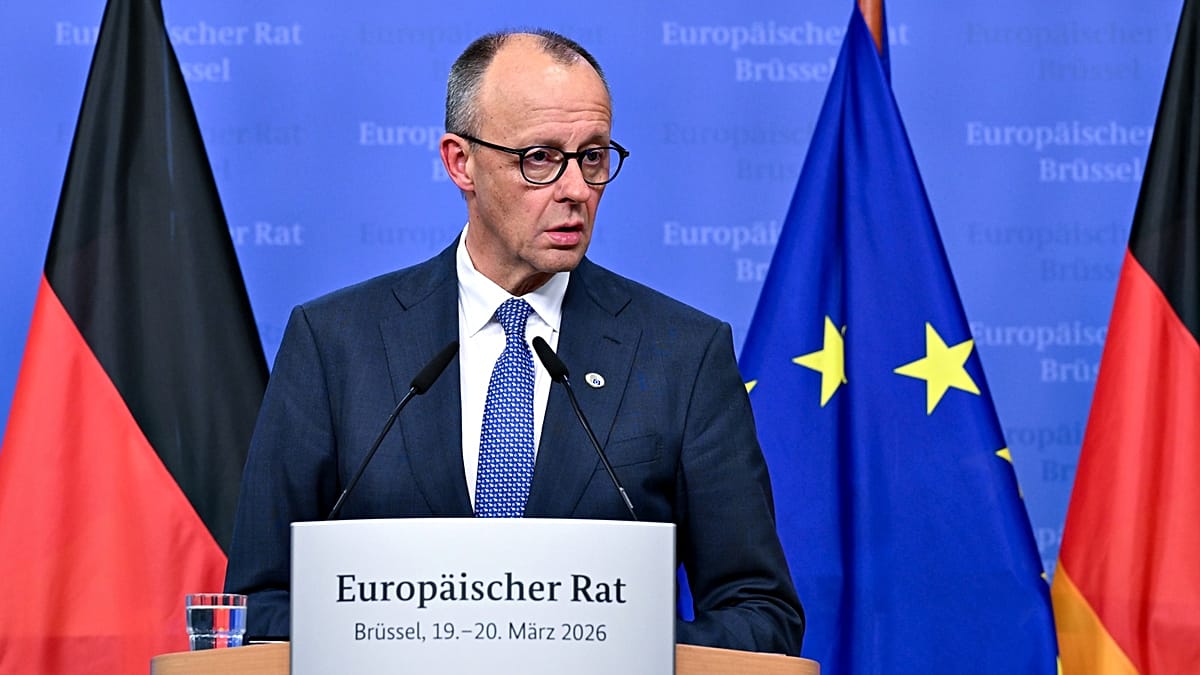
German Chancellor Friedrich Merz has injected a new dimension into the debate over Ukraine's European Union membership, suggesting that Kyiv may need to accept territorial concessions as part of its accession process. Speaking to students in North Rhine-Westphalia, Merz argued that a ceasefire and eventual peace treaty with Russia could leave parts of Ukraine outside its control, potentially requiring a referendum to secure public backing for such a deal.
“At some point, Ukraine will sign a ceasefire agreement. At some point, hopefully, a peace treaty with Russia. Then it may be that part of Ukraine’s territory is no longer Ukrainian,” Merz said, according to Reuters. He added that Ukrainian President Volodymyr Zelenskyy might need to hold a referendum on any territorial settlement, and at the same time tell the people: “I have opened the way to Europe for you.”
Timelines Dismissed as Unrealistic
Merz explicitly rejected Zelenskyy's proposed target of joining the EU on January 1, 2027, or even 2028, calling them unrealistic while the country remains at war. “Zelenskyy had the idea of joining the EU on January 1, 2027. That will not work. Even January 1, 2028, is not realistic,” he said. Instead, Merz floated the idea of granting Ukraine observer status, allowing participation in EU institutions without voting rights—a concept that has never been tried before but reportedly gained some traction during discussions at an informal EU summit in Cyprus.
The remarks come after Zelenskyy appeared in person at the summit in Cyprus to press for Ukraine's membership bid, which has been effectively blocked by Hungary for nearly two years. Zelenskyy flatly rejected any notion of “symbolic membership,” arguing that his troops were defending Europe with their lives, not symbolically. “We seek the same full membership that every EU nation has – from Cyprus to Poland,” he told EU leaders. “The only thing we ask is speeding up the full membership, with a clear start date for membership.”
Territorial Stakes and International Pressure
Around 20% of Ukrainian territory is currently under Russian occupation. Moscow is pushing for Kyiv to cede the remaining parts of the Donbas region it does not control and lobbying Washington to recognise occupied territories as de facto Russian. Zelenskyy rejects both proposals, arguing that rewarding aggression would violate international law and set a dangerous precedent. The territorial issue remains the main point of contention in US-brokered peace talks.
The European Commission supports Ukraine's reform efforts but has not endorsed a fixed accession date, emphasising that the enlargement process is “merit-based” and depends on progress by each candidate country. European Commission President Ursula von der Leyen said in Cyprus: “It’s a two-way contract if you are a candidate country. It’s hard reforms that the candidate countries have to do.” She added that EU accession is ultimately a political decision requiring unanimous approval from member states.
European Council President António Costa echoed the need for creativity: “We need to be creative to solve problems, especially with a country with a dimension and in the current situation of Ukraine. But we believe in the future of Ukraine, and we believe that the future is in the European Union.”
Political Dynamics and Next Steps
After two years of deadlock, Brussels hopes that the electoral defeat of Hungarian Prime Minister Viktor Orbán, an ardent opponent of Ukraine's membership, will pave the way for the first cluster of negotiations, known as fundamentals, to be opened soon. The debate over enlargement is intensifying across the continent, with some member states wary of fast-tracking a country at war. For more on the broader geopolitical context, see Sánchez Warns EU's Israel Inaction Undermines Ukraine Credibility.
Merz's comments also come amid heightened security concerns, as drone debris hits Romanian town as Russian strikes on Ukraine escalate, underscoring the war's spillover effects. Meanwhile, Montenegro Moves Closer to EU Membership as Accession Treaty Talks Begin, highlighting the varied pace of enlargement across the Western Balkans.
Zelenskyy's push for a clear start date remains a central demand, but Merz's suggestion of territorial concessions as a condition for membership adds a new layer of complexity. The coming months will test whether the EU can balance strategic solidarity with the practical realities of a war-torn candidate.