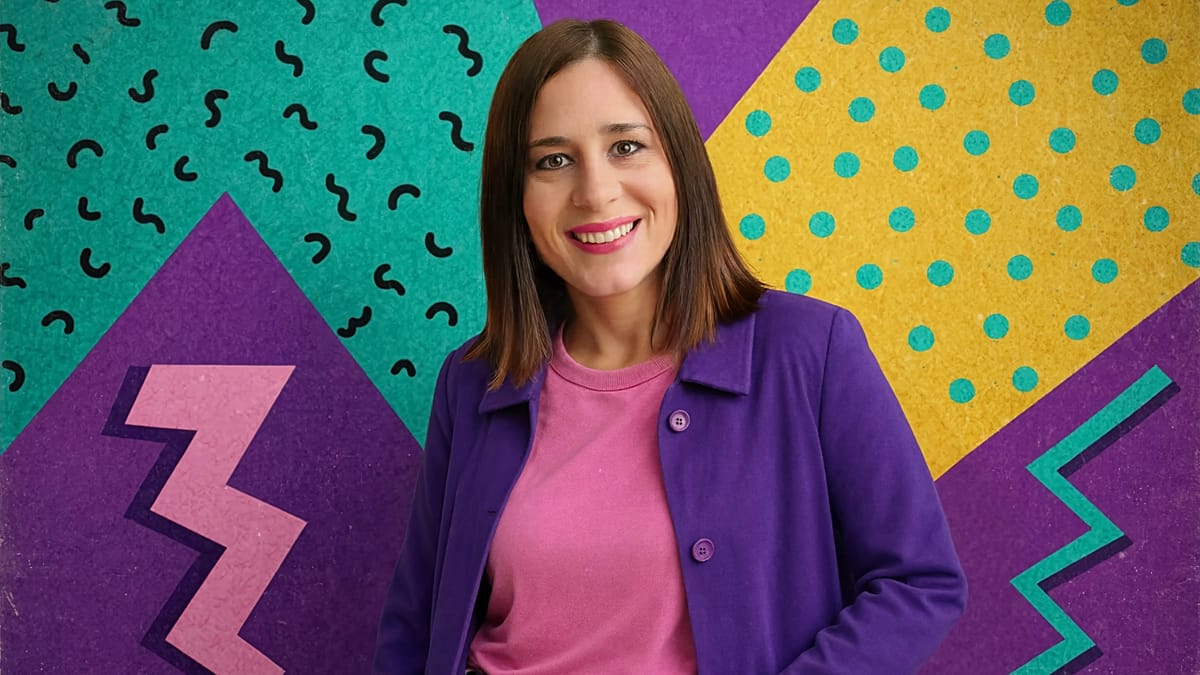
Artificial intelligence is reshaping industries from advertising to medicine, and the art world is no exception. As more creators adopt AI models, a fierce debate has emerged: can a machine-generated image be considered art? Nóra Bereczki, a Hungarian artist working under the alias Digital Umami, is at the centre of this conversation.
Bereczki gained widespread attention earlier this year when her video series animating Hungarian poets and writers went viral on social media. Then, this summer, she won the Reve $100K Contest, an international image-generation competition, beating 52,000 other entrants. Her winning series, Dolce Impossible, consists of ten images inspired by Mediterranean summer holidays. Each scene is recognisable—a beach, a pool, a terrace—but contains a surreal twist, such as a giant lobster facing a small child.
In an interview, Bereczki explained that she sees AI not as a replacement for photography but as another tool in her creative arsenal. “I like mixing different technologies and genres,” she said. “I often combine my own analogue photographs with AI. I always try to decide which tool suits a particular idea best.”
From marketing to machine learning
Bereczki’s path to AI art began in her professional life. She works as a marketing consultant and previously held a role at a robotics and industrial automation company. Her husband also works in AI, and the couple frequently discusses the technology’s evolution. When AI image generators broke into public consciousness in 2022, she started experimenting with them as part of her marketing work. But her passion for photography, which she has pursued for over two decades, soon drew her into using AI for personal projects.
“When I walk down the street, I constantly see frames and think in terms of compositions,” she said. “There are a huge number of such ideas in my head, and many of them I cannot realise through classical photography. AI, however, is perfect for expressing these ideas visually.”
One image from Dolce Impossible illustrates this point: a beach scene with a human-sized lobster standing opposite a three-year-old girl. “The scene itself had already existed in my mind,” Bereczki said. “Of course, it would be possible to try to create it as a traditional photo production, but it would require substantial organisation, post-production and budget.”
Vision over randomness
Bereczki is careful to distinguish between casual AI experimentation and deliberate artistic creation. “It's one thing when someone is just experimenting with image-generating tools, types in something like 'blue dog', the model produces something artistic, and the user likes the result and feels a sense of achievement,” she said. “And it's another thing when someone sits down in front of AI with a specific vision, and the question is whether they can carry that vision through.”
For her, an AI-generated image becomes a human creation when the artist successfully steers the model toward a pre-conceived idea. “When they do not leave the outcome to the random results produced by the model, but really get what they originally wanted,” she explained.
This approach requires a clear mental picture. “I know what elements I want the image to be built from, what the composition, lighting, texture, aspect ratio or even the camera angle should be, and I try to pass all this on to the model as precisely as possible,” she said. The process is iterative: she reviews the model’s output, refines her prompts, and repeats until the result matches her vision. “The crucial thing is not to let the first interesting generated image determine the direction I go in,” she added.
Bereczki’s success has placed her among a growing number of European artists exploring AI’s potential. Her work resonates with broader debates about creativity and technology, and she is often asked about the role of AI in education and the future of work. While she acknowledges the disruptive potential, she remains pragmatic: “AI is a tool, not a partner. It can help us realise ideas, but it cannot replace the human vision behind them.”
As AI continues to evolve, artists like Bereczki are charting a path that embraces the technology while preserving the human element. Her Dolce Impossible series is a testament to that balance, offering a glimpse of what the future of photography—and art—might hold.