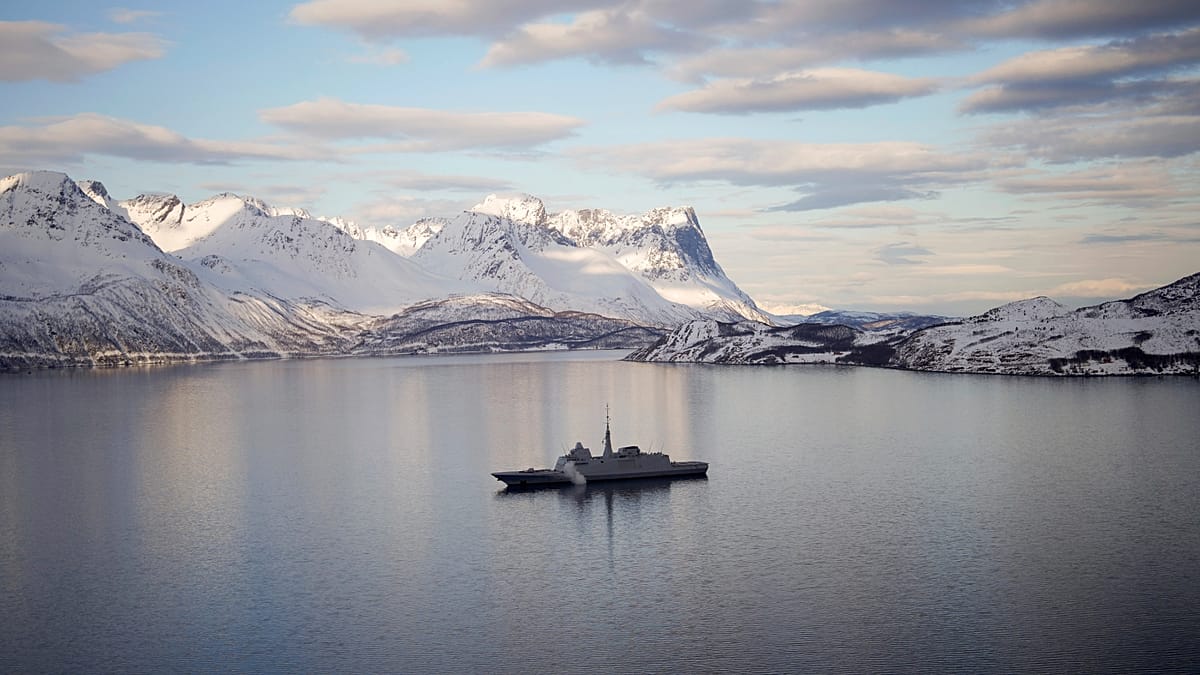
A coalition of financial institutions, trade unions, and climate scientists from across the Nordic region has sent an open letter to the European Commission, urging EU leaders to uphold the existing ban on new oil and gas drilling in the Arctic. The appeal comes as Brussels reviews its Arctic strategy, a process that has raised concerns among environmental and security experts.
The letter, addressed to five European Commissioners, warns against any softening of the EU's stance. Since 2021, the bloc has supported a global moratorium on new Arctic fossil fuel extraction as part of its regional policy. But with the EU currently revising that strategy, the signatories—127 in total, mostly from northern Europe—are pushing back against what they see as a potential policy shift.
Security and Environmental Risks
The coalition's argument rests on two pillars: environmental protection and geopolitical security. The Barents Sea, which borders Russian territory, is already a zone of heightened tension. Moscow frequently conducts nuclear drills in the region, and the letter argues that new oil and gas infrastructure would become attractive targets for hybrid warfare. "If oil and gas flowing from the Norwegian part of the Arctic becomes crucial for Europe's energy security, it would make the infrastructure even more attractive as targets for sabotage and make the EU vulnerable to such attacks," the letter states.
Environmental concerns are equally pressing. The Arctic is warming four times faster than the global average, and the southern Barents Sea hosts globally significant marine ecosystems. The signatories warn that new drilling would increase the risk of oil spills and leakages, causing "irreversible environmental damage." Among the prominent backers are former German Vice Chancellor and Economy Minister Robert Habeck, and former Danish Climate and Energy Minister Connie Hedegaard.
Economic Fallacies
Proponents of Arctic drilling often frame it as a safeguard against Europe's energy volatility, but the coalition dismantles that timeline. New projects on the Norwegian continental shelf take roughly 13 years to develop, meaning any fields approved today would not reach full production until around 2040. Independent assessments from Rystad Energy further undermine the business case, estimating that economically extractable resources in the Barents Sea are 78% lower than official Norwegian government forecasts.
The letter also highlights the long-term lock-in effect of liquefied natural gas (LNG) projects. Any new commercial LNG production would require the EU to sign 20-to-25-year purchase agreements, since existing capacity is fully utilised for decades. That would commit Europe to fossil fuel dependency well past its 2050 net-zero climate deadline.
Instead, the coalition urges the Commission to double down on domestic electrification, grid efficiency, and a rapid rollout of renewable energy. "We believe that the most effective way to continue to strengthen the EU's long-term energy security is to ramp up EU's electrification and domestic renewable energy and efficiency measures, not to deepen dependence on imported fossil fuels," the letter reads.
Industry and Commission Responses
Norwegian energy company Equinor has pushed back against a blanket moratorium. A spokesperson told Euronews that the EU should develop a policy reflecting the importance of northern areas for energy security, preparedness, and stability. "Norwegian activity in the region takes place within strict, knowledge-based, and democratically anchored frameworks," the spokesperson said, adding that Equinor supports updating the EU's Arctic strategy but opposes a general ban.
A European Commission spokesperson acknowledged the review, noting that the EU Arctic strategy from 2021 is being updated to address the evolving situation—including rising energy prices and inflation triggered by the US-led war against Iran, as well as repeated US signals to 'acquire' Greenland, an autonomous territory of the Kingdom of Denmark. "Addressing climate change and environmental degradation and supporting sustainable economic development remain valid objectives," the spokesperson said.
The debate over Arctic drilling comes as Europe grapples with broader energy security questions. The coalition's letter underscores a growing tension between short-term energy needs and long-term climate commitments, with the Nordic bloc pushing for a firm stance that prioritises renewables over fossil fuel expansion.