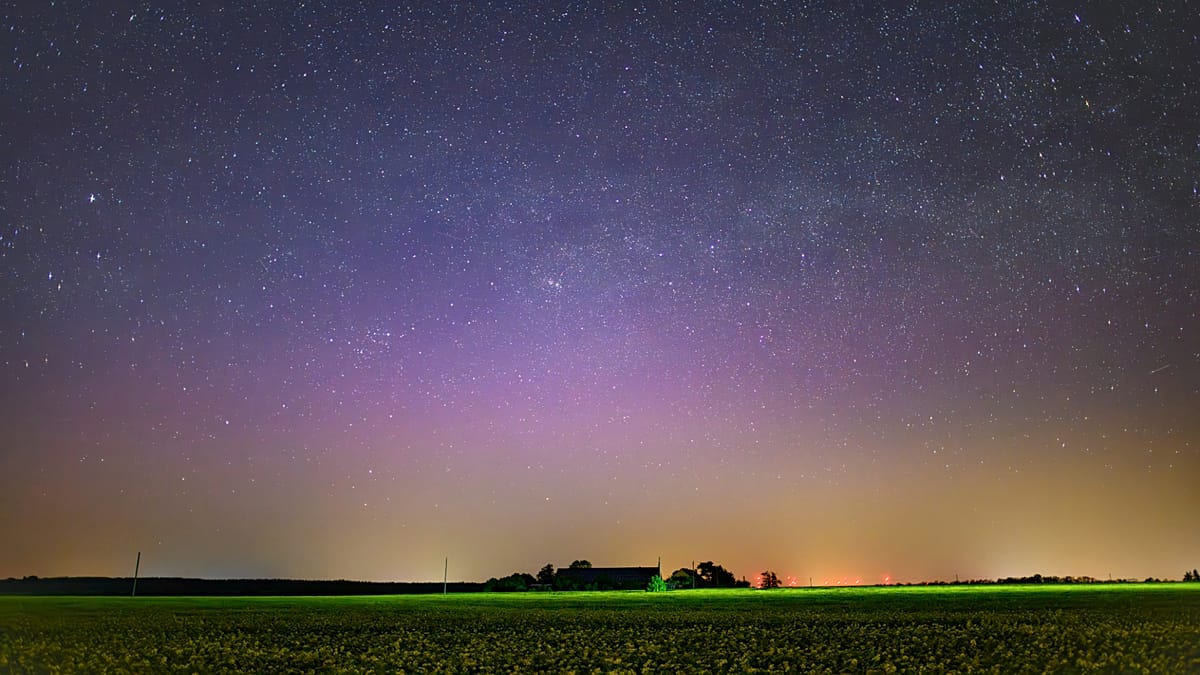
This weekend, skywatchers across northern Europe may be treated to a rare display of the aurora borealis, as the US National Oceanic and Atmospheric Administration (NOAA) has issued a warning for a strong geomagnetic storm. The storm, rated G3 on the five-point scale, could reach G4 intensity in isolated phases, making the northern lights visible as far south as Germany.
In Germany, the best viewing opportunities are expected in the northern regions and along the Baltic and North Sea coasts, particularly during the night from Friday 5 June to Saturday 6 June. Forecasts indicate minimal cloud cover, which should improve the chances of a clear sighting. The last time such a vivid aurora appeared over Germany was in January of this year.
What Causes the Northern Lights?
Geomagnetic storms are disturbances in Earth's magnetic field triggered by solar activity. When charged particles from the Sun interact with the atmosphere, they produce colourful bands of green, red, and violet light. In the northern hemisphere, this phenomenon is known as the aurora borealis, or northern lights.
Numerous online platforms that monitor solar activity currently rate the probability of a visible aurora as high. For those hoping to catch a glimpse, the key is to look northward and find a location with minimal light pollution.
How to See the Aurora
While the human eye can sometimes struggle to perceive the full range of colours, modern smartphones offer a practical solution. Astronomy specialists note that mobile phones equipped with night mode and longer exposure times can capture more image information than the eye can process in real time. This means that even if the display appears faint to the naked eye, a smartphone camera may reveal vivid greens and reds.
For the best results, use a tripod or steady surface, set the camera to night mode, and avoid any artificial light sources. Patience is essential, as the aurora can appear and fade unpredictably.
Risks of Solar Storms
While the aurora is a beautiful natural spectacle, the solar storms that cause it can pose real dangers. In 2022, 40 satellites from Elon Musk's Starlink network were destroyed when a solar storm caused them to burn up in the atmosphere. More broadly, geomagnetic storms can disrupt navigation systems, power grids, and communication networks.
Jens Berdermann, an expert at the German Aerospace Centre (DLR), explained to MDR: "Satellites can be affected, power grids can be affected. And services we depend on every day, such as navigation and communication. They are essential to many professions. There are also indirect effects: software, stock trading, medical devices, the economy."
These risks are a reminder that space weather is a growing concern for modern infrastructure. As Europe becomes more reliant on satellite-based services, monitoring solar activity becomes increasingly important.
For those in Germany hoping to witness the aurora, the weekend offers a rare opportunity. Keep an eye on the northern horizon, bring your smartphone, and enjoy the show—while remembering the powerful forces behind it.