Thousands of Norwegians lined the streets of Oslo on [date] to bid a final farewell to King Harald V, whose funeral brought together European royals, heads of state, and citizens from across the country. The ceremony, held at the Royal Palace and the capital's cathedral, marked the end of a reign that spanned more than three decades and saw Norway navigate profound social and political change.
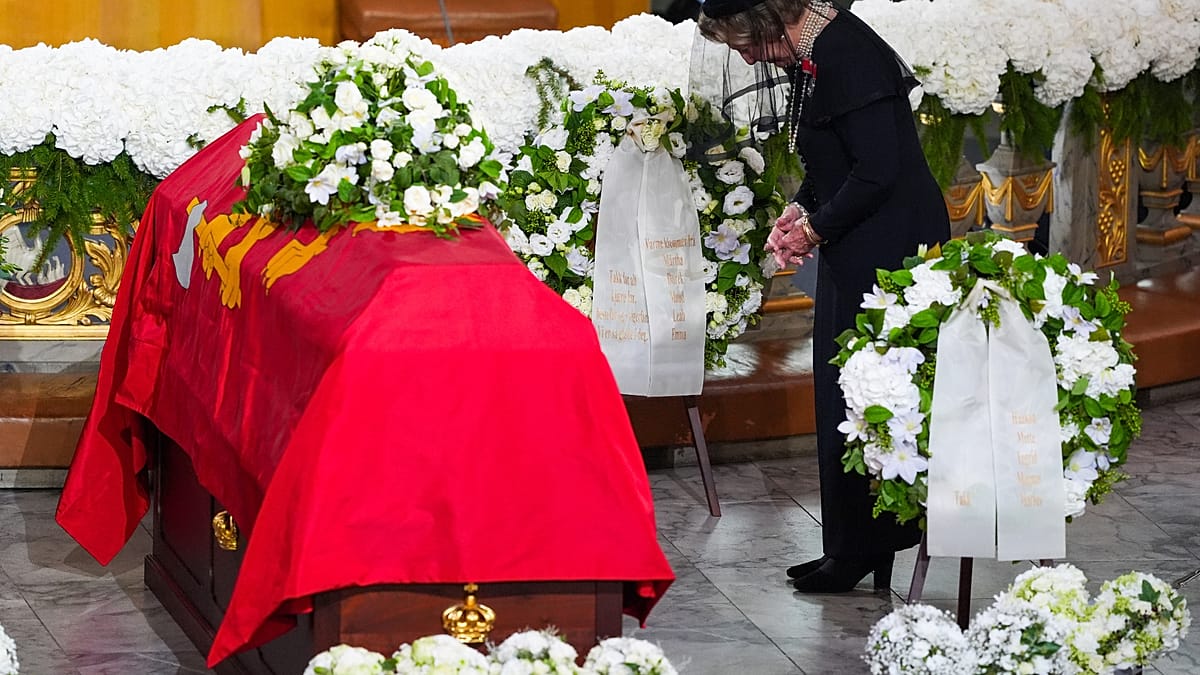
King Harald, who died at the age of [age], was remembered as a unifying figure who modernized the monarchy while preserving its traditions. His coffin, draped in the Norwegian flag, was carried through the capital as mourners threw white flowers and applauded, a gesture that reflected the deep affection many Norwegians held for their sovereign.
A gathering of European royalty
The funeral drew a remarkable assembly of European royal families, including King Carl XVI Gustaf of Sweden, Queen Margrethe II of Denmark, and King Willem-Alexander of the Netherlands. Also present were leaders from across the continent, such as the President of Finland, the Prime Minister of Iceland, and representatives from the Baltic states. The presence of so many dignitaries underscored the respect Harald commanded not only at home but across Europe.
In a poignant moment, the Norwegian royal family, including Crown Prince Haakon and Princess Märtha Louise, stood alongside the coffin during the service. The eulogy, delivered by the Bishop of Oslo, praised Harald's dedication to his people and his ability to bridge generational divides. "He was a king for all Norwegians, in good times and in bad," the bishop said, echoing sentiments expressed by many in the congregation.
Harald's reign was marked by significant milestones, from the country's growing prosperity in the oil era to the tragic 2011 attacks, after which he became a symbol of national resilience. His famous speech following the Utøya massacre, in which he declared that Norwegians "are a people of freedom," was recalled by several speakers as a defining moment of his leadership.
The funeral also highlighted Norway's unique constitutional role, where the monarchy enjoys broad public support despite the country's egalitarian ethos. Political leaders, including Prime Minister Jonas Gahr Støre, attended the service, reflecting the close relationship between the crown and the government. In a statement, Støre described Harald as "a steady anchor in turbulent times," a sentiment that resonated with many Norwegians who had grown up with him as their king.
As the funeral procession made its way to the royal mausoleum at Akershus Fortress, where Harald was laid to rest beside his wife, Queen Sonja, who died earlier this year, the atmosphere was one of solemn gratitude. Many in the crowd expressed a sense of loss, but also appreciation for a monarch who had dedicated his life to public service.
The legacy of King Harald V will likely be studied by historians for years to come. His ability to adapt the monarchy to a changing society, while maintaining its relevance, offers lessons for other European monarchies facing similar challenges. For Norwegians, however, he was more than a constitutional figure; he was a personal presence in their lives, a constant in a rapidly evolving world.
As the last notes of the national anthem faded, the crowds began to disperse, leaving behind a nation in mourning but also a nation united in remembrance. The royal family, now led by Crown Prince Haakon, faces the task of continuing Harald's legacy in an era of uncertainty. Yet, as the outpouring of grief and respect demonstrated, the bonds between the monarchy and the people remain strong.
For those who followed the ceremony from afar, the images of Oslo's streets filled with mourners served as a reminder of the enduring power of tradition and the quiet dignity of a people honoring their sovereign. In a continent where monarchies have often been questioned, Norway's farewell to King Harald V stood as a testament to the institution's ability to evolve and endure.