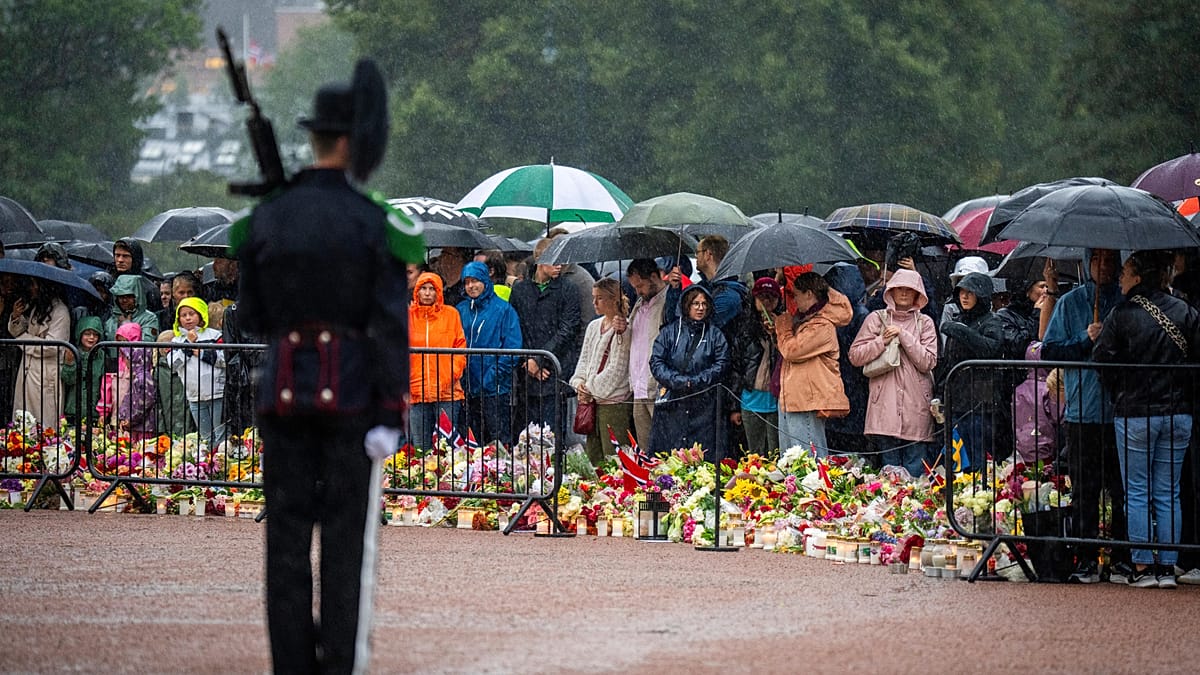
Norway has entered a period of national mourning following the death of King Harald V on Friday at the age of 89. The monarch, who had been Europe's oldest reigning sovereign, passed away peacefully, according to a statement from the Royal Palace in Oslo. Prime Minister Jonas Gahr Støre joined officials and crowds outside the palace to pay tribute, laying flowers and observing a moment of silence.
A reign of quiet transformation
Harald V ascended the throne in January 1991, succeeding his father, Olav V. His reign spanned more than three decades, during which Norway evolved into a prosperous, confident nation, buoyed by its oil wealth and a strong social democratic model. The king was widely respected for his unifying presence, often described as a "people's king" for his approachable manner and deep commitment to public service.
Born in 1937 at Skaugum, the royal estate near Oslo, Harald was the first Norwegian-born prince in over 500 years. He lived through the German occupation of Norway during World War II, spending part of his childhood in exile in the United States. That experience shaped his lifelong dedication to democracy and national unity.
His personal story also included a notable love affair that captured the nation's attention. In 1968, he married Sonja Haraldsen, a commoner, after a nine-year courtship that was initially opposed by his father. The marriage ultimately broadened the monarchy's appeal and modernized its image.
Haakon takes the throne
Crown Prince Haakon, 51, now becomes King Haakon VIII. He has been preparing for this role for years, taking on increasing official duties as his father's health declined. Haakon is known for his progressive views, particularly on climate change and social inclusion, and is expected to continue the monarchy's tradition of political neutrality while engaging with contemporary issues.
Haakon's accession comes at a time when Norway's royal family has faced its share of challenges, including a recent scandal involving his stepson, Marius Borg Høiby, who was charged with assault. The new king will need to navigate these issues while maintaining public trust in the institution.
European leaders have expressed their condolences. King Carl XVI Gustaf of Sweden called Harald "a dear friend and a wise ruler," while Denmark's Queen Margrethe II praised his "warmth and dignity." Ursula von der Leyen, President of the European Commission, noted that Harald's reign "embodied the deep bonds between Norway and Europe."
The funeral is expected to take place in the coming days, with heads of state from across the continent likely to attend. The Norwegian government has announced a period of official mourning, with flags flying at half-mast throughout the country.
As Norway bids farewell to its beloved monarch, the new king faces the task of honoring his father's legacy while steering the monarchy into a new era. The challenges are considerable, but Haakon has shown himself to be a thoughtful and dedicated leader, ready to serve his nation.
For more on this story, see our coverage of the end of a 35-year reign and Haakon's accession amid royal scandals.