On the northern tip of Andøya island, a new cultural landmark is taking shape. The Whale, a museum dedicated to the world's largest mammals, is scheduled to open its doors to the public in June 2027 in the Norwegian village of Andenes. The location is deliberate: this small Arctic community sits on the edge of the deep-sea canyon where sperm whales and humpbacks regularly surface, making it one of Europe's premier whale-watching destinations.
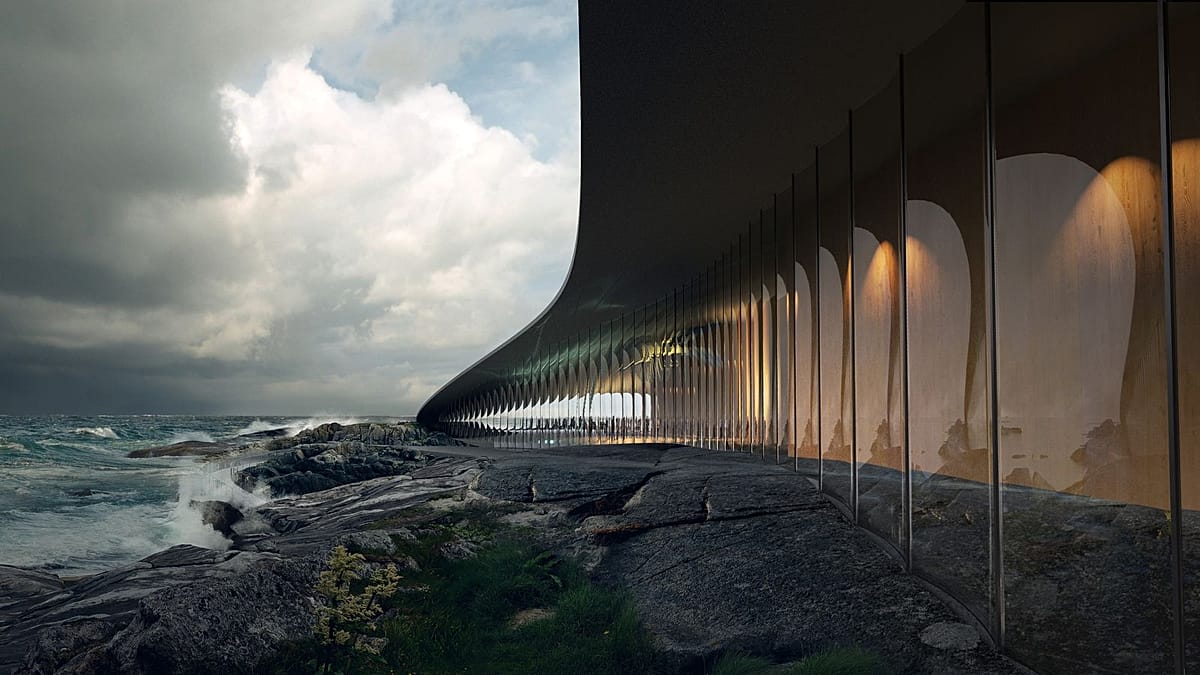
Designed by Danish architect Dorte Mandrup, the building emerges from the rocky coastline with a concave form that echoes the surrounding landscape. Its exterior is clad in stone and concrete in muted tones, blending into the rugged terrain. The most striking feature is the roof, which is fully accessible to visitors. From this elevated vantage point, one can take in sweeping views of the ocean, the mountains, and the historic Andenes Lighthouse, which has guided ships since 1859.
More than a museum
The Whale aims to transcend the traditional natural-history museum. Inside, visitors will move through a series of 'experience areas' that combine science, art, and storytelling. Life-sized wooden sculptures of killer whales appear to break through the surface, while a species gallery showcases all 90 known species of cetaceans. There is also a section devoted to whale anatomy, featuring bones and other biological specimens, described by the museum as 'strange masses and blobs.'
A multisensory room will immerse visitors in whale sounds, with dim lighting that mimics the deep ocean. The museum also addresses the history of industrial whaling and the conservation efforts that have helped some populations recover. At the heart of the space, a full-scale whale sculpture invites reflection on the parallels between whale and human behaviour—communication, cooperation, and care.
Ticket sales are expected to begin this autumn, with adult entry priced at 540 Norwegian kroner (around €49). The opening is still months away, but anticipation is building in this village of roughly 2,600 residents, which already attracts visitors for its year-round whale-watching tours.
Beyond the museum: Arctic adventures
Once The Whale opens, visitors can put their newfound knowledge to the test on the water. Whale-watching excursions from Andenes operate throughout the year, with sperm whales commonly sighted in summer and humpback whales in winter. A three-to-four-hour trip aboard the M/S Reine costs 1,690 kroner (about €155) and offers chances to see dolphins as well.
On land, the village and its surroundings offer hiking routes that showcase the stark beauty of the Arctic. A two-kilometre loop around Røyken takes about 45 minutes and provides views of the lighthouse, as well as opportunities to spot seals and sea eagles. For those seeking a longer trek, the 408-metre Måltinden mountain offers a four-kilometre path with panoramic coastal vistas.
After a day of exploration, the Arresten restaurant serves Arctic seafood, reindeer, and burgers in an unexpected setting: a former jail built more than 150 years ago. The original cell door and iron-barred windows remain, adding a quirky historical touch to the dining experience.
Andenes is part of the Vesterålen archipelago, often overshadowed by the more famous Lofoten islands to the south. But for those willing to venture 300 kilometres north of the Arctic Circle, it offers a quieter, equally dramatic alternative. The region is also a prime spot for viewing the northern lights, especially during the dark winter months—a phenomenon that draws travellers from across Europe and beyond.
The Whale is not just a museum; it is a statement about the relationship between humans and the marine environment. As Norway continues to debate the ethics of whale hunting and the future of its coastal industries, this new institution provides a space for reflection and education. Its rooftop, open to all, symbolises a desire to look outward—toward the sea and the horizon—while grounding the visitor in the realities of the Arctic ecosystem.