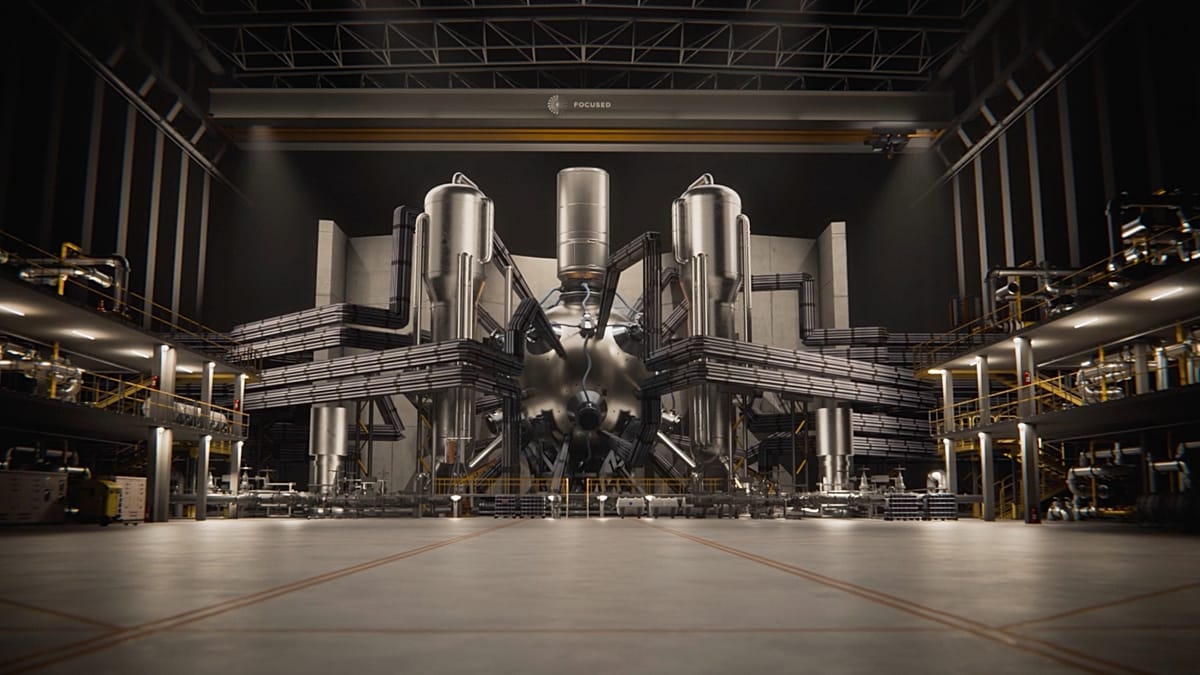
In a sprawling industrial complex in Darmstadt, Germany, engineers in blue protective suits handle fuel pellets barely four millimetres across. This is the headquarters of Focused Energy, a start-up betting that laser-induced fusion can move from laboratory curiosity to commercial reality. The company's goal: switch on its first power plant within 15 years.
Fusion, the process that powers the Sun, has long promised near-limitless, carbon-free energy. But after decades of research and billions in funding, it remains stubbornly out of reach. Now, with renewed political backing and private capital, the debate has resurfaced: can fusion actually save the planet, or is it a costly distraction?
Optimism meets scepticism
Ulrich Sigel, vice president of Focused Energy, is unequivocal. "As humanity, we need carbon-free energy. Renewables alone will not be enough," he says. "If we want to decarbonise transport, aviation, shipping, industry and heating, we need fusion."
His optimism is shared by German Chancellor Friedrich Merz, who has pledged to put "the world's first fusion power plant online," and by Hesse's state premier Boris Rhein, who calls fusion "the game-changer in energy supply." International investors appear convinced too: in a spring funding round, Focused Energy raised $240 million (€207m), the largest Series A in the global fusion sector, with German utility RWE adding €60 million.
But not everyone is convinced. Professor Sven Linow, a member of Hesse's Scientific Climate Advisory Board, argues that pouring more money into fusion is a mistake. "No one has yet demonstrated that it really works," he says, speaking in the shadow of Darmstadt University of Applied Sciences' futuristic tower.
The tritium problem
Linow's core objection is not just technical complexity but fuel supply. Fusion reactors require tritium, a radioactive isotope of hydrogen with a global stock estimated at just 50 kilograms. "In 12.3 years, half of it decays," he explains. "To start a fusion plant you need several kilograms, and then you consume it. You'd have to breed new tritium inside the reactor. Nobody has ever done that. There is no demonstrator, no successful lab test—only ideas."
Sigel concedes that tritium recovery remains "unresolved," but frames it as an engineering challenge rather than a physics dead end. "This is an exciting engineering task, and that's something we're good at in Germany," he says. "I'm optimistic we'll solve it."
Even if the fuel cycle were cracked, scaling up is daunting. For a commercial plant, laser fusion would need to occur ten times per second, around the clock. Focused Energy's own staff admit they are far from that milestone.
Opportunity cost
Linow's deeper concern is opportunity cost. Hesse aims to be climate-neutral by 2045, and he doubts fusion will be grid-connected by then. "The answer is no," he says flatly. Money spent on fusion, he argues, could be invested in proven technologies like solar, wind, and battery storage—solutions that cut emissions today, not in 15 years.
This tension is playing out across Europe. While the EU has backed fusion research through programmes like ITER, some member states are hedging. The UK, for instance, has its own fusion strategy, while Germany's federal government is now courting private ventures. Yet the continent's energy transition is urgent, and every euro spent on speculative technology is a euro not spent on deploying existing clean energy.
Fusion's allure is understandable: it offers the promise of abundant, safe, and clean power, with no long-lived radioactive waste. But as Linow points out, "no one has yet demonstrated that it works" at scale. The gap between a laboratory breakthrough and a commercial power plant is vast, and history is littered with fusion projects that promised more than they delivered.
For now, the debate in Darmstadt mirrors a broader European dilemma: whether to chase a transformative but uncertain prize, or to double down on the incremental gains of renewables. The answer may determine not just the fate of fusion, but the pace of the continent's decarbonisation.