Oil prices climbed on Monday as fresh US military action against Iranian forces in the Strait of Hormuz reignited supply fears, while markets across Europe and Asia digested hawkish signals from the new Federal Reserve chair, Kevin Warsh, who hinted that US interest rates could rise further.
The United States said it had attacked Iranian rocket launchers on a small island in the strategic waterway, its first strikes on Iranian territory in a month. Tehran responded by targeting US military positions in Jordan. Both main crude contracts rose more than 2% in early trading, reversing a recent downward trend that had been driven by hopes of de-escalation.
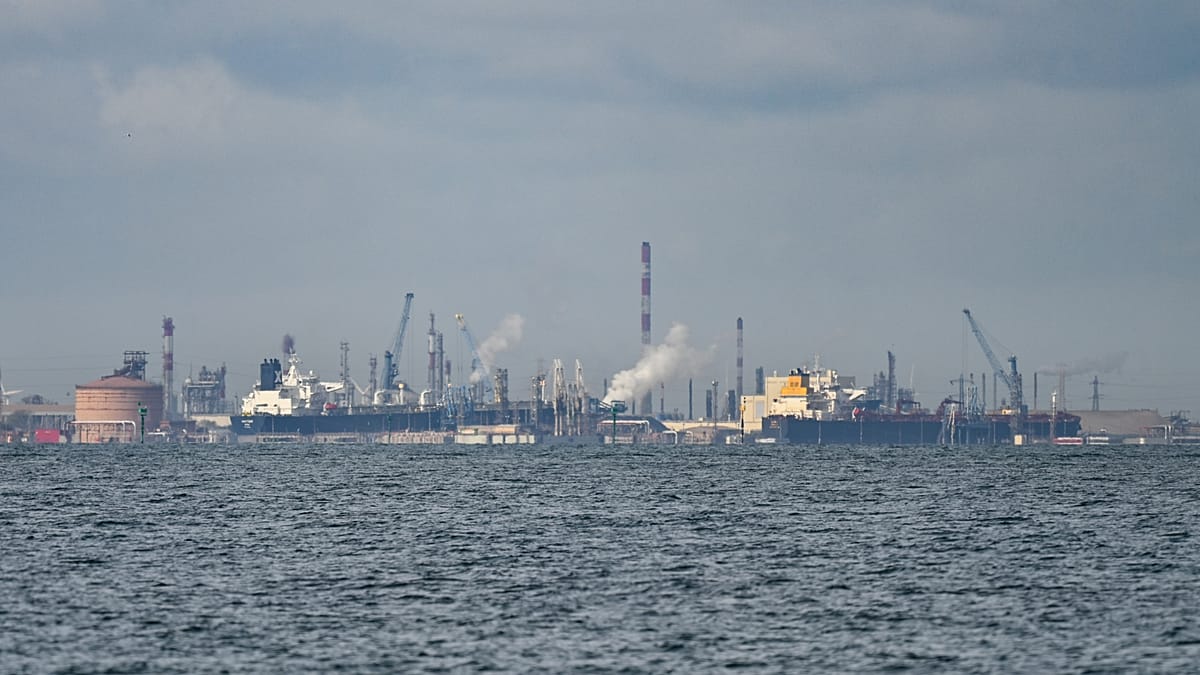
The exchange came just after the US-Iran conflict reached the six-month mark, and at a time when hostilities had appeared to be subsiding. The Strait of Hormuz, through which roughly a fifth of global crude and gas passes, remains largely closed, and US officials have vowed to pursue the "economic asphyxiation" of Iran until it reopens the waterway.
For European consumers and businesses, the renewed spike in oil prices is an unwelcome development. Energy costs have been a key driver of inflation across the continent, and the winter gas crunch has already put pressure on household budgets and industrial competitiveness. Higher crude prices will likely feed through to petrol pumps and heating bills, complicating the European Central Bank's efforts to bring inflation back to its 2% target.
Warsh's Jackson Hole message
In a highly anticipated speech at the Jackson Hole symposium of central bankers and economists in Wyoming, Warsh left little doubt that he is prepared to raise borrowing costs. He described inflation, currently at 3.7% and nearly double the Fed's target, as "concerning" and said he would be "hard-pressed" to describe current financial conditions as "restrictive"—a clear hint that further tightening could be on the horizon.
"We must be confident that underlying inflation is moving to our objective, clearly and at sufficient speed. Otherwise, we have work to do," Warsh said. However, he stopped short of committing to a hike, adding: "I stand here today committed to a discipline, not to a decision."
His refusal to provide forward guidance has stoked uncertainty in markets. Wall Street's three main indexes fell on Friday, yields on short-term US Treasury bonds jumped, and the dollar rallied against its peers. Gold, which typically benefits from lower interest rates, declined.
Asian markets followed suit on Monday, with technology firms—which rely heavily on borrowing to fund massive AI investments—leading the decline. Tokyo, Seoul, Hong Kong, Shanghai, Taipei and Jakarta all fell, though Singapore and Wellington edged up. European indices are expected to open lower as investors digest the twin shocks of higher oil and the prospect of tighter US monetary policy.
"Hormuz is once again threatening to put a floor under oil just as Warsh is putting a ceiling on how much inflation patience markets should assume from the Fed," said Stephen Innes of Quintex Intel.
For European policymakers, the combination of elevated energy prices and a stronger dollar poses a difficult trade-off. A stronger dollar makes imports more expensive in euro terms, adding to inflationary pressures, while higher US rates could attract capital away from European markets, weakening the euro further.
Investors will now focus on a string of crucial data releases over the next two weeks, including US jobs figures this week and the consumer price index next week. "Should we get an inline payrolls print that does not give the Fed too much to work with, next week's core CPI report will become the major decider for the market's Fed belief system," wrote Chris Weston of Pepperstone. "The volatility priced around that outcome across rates, forex and equities could therefore be significant."
For Europe, the stakes are high. The ECB has already raised rates to record highs, and any further tightening by the Fed could force the ECB to follow suit, even as the eurozone economy shows signs of weakness. The recent oil price climb has already complicated the inflation outlook, and the latest US-Iran flare-up only adds to the uncertainty.
"Physical flows through Hormuz have improved materially from their worst levels, which is precisely why crude had started giving back some of the fear premium," Innes noted. "But the latest exchange shows how fragile that progress remains and how quickly the shipping story can be pushed back onto the trading desk."
As the situation develops, European leaders will be watching closely, mindful that a prolonged closure of the strait could have severe consequences for energy security and economic stability across the continent.