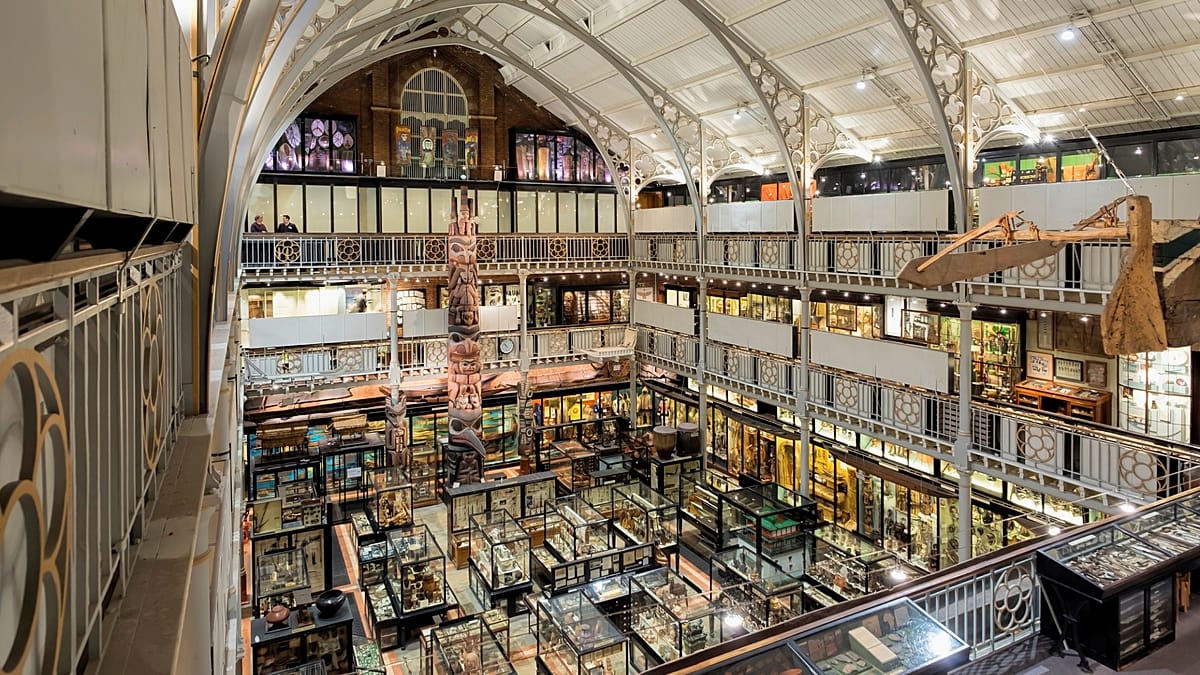
Oxford University's Pitt Rivers Museum has agreed to return the remains of 39 Naga people to their ancestral community in northeast India, ending a decades-long campaign for repatriation. The decision marks a significant step in addressing the legacy of colonial-era collecting, which saw thousands of cultural objects and human remains transported to European institutions.
The museum, which holds the world's largest collection of Naga material, said it had been working closely with Naga representatives to arrange a handover ceremony. After the ceremony, a Naga delegation will accompany the remains home, according to a statement from the museum.
The repatriation follows a formal claim submitted to Oxford University in February 2026 for 40 sets of ancestral remains. In July, the university agreed to return 39 of them, noting that the remaining set lacked clear provenance as Naga. The museum removed all human remains from public display in 2020, a move that acknowledged the ethical concerns surrounding such collections.
Professor Laura Van Broekhoven, director of the Pitt Rivers Museum, described the process as "humbling" and said she felt "honoured that we walked alongside our partners to find the path to return for these 39 Naga ancestors, who have been away from their homeland for far too long."
A colonial legacy under scrutiny
The Pitt Rivers' Naga collection includes thousands of objects, with 219 items listed as human remains: 39 ancestral remains, primarily skulls, and 178 objects that contain or may contain human hair. The current return concerns the 39 ancestors.
Most of the Naga remains were acquired between roughly 1910 and 1940 by John Henry Hutton and James Philip Mills, both anthropologists and colonial administrators in the Indian Civil Service. The museum now acknowledges that their collecting was not neutral scholarship, stating that "remains and objects were frequently confiscated during punitive military expeditions, rather than freely given."
The decision has been welcomed by the Forum for Naga Reconciliation (FNR) and other Naga groups. In a statement to the AFP news agency, they said: "Repatriation, for the Nagas, is not simply about bones and ancestral remains finding their way back to the land but importantly about memory returning to where it belongs."
This repatriation is part of a broader movement across European museums to reassess colonial-era acquisitions. Similar debates have unfolded in Vienna and other cities, where institutions are grappling with the origins of their collections. The Pitt Rivers' decision could set a precedent for other museums holding Naga or other indigenous remains.
For the Naga community, the return is more than a legal transfer; it is a restoration of dignity and history. The handover ceremony, yet to be scheduled, will be a moment of closure for families who have long sought the return of their ancestors.
As European institutions increasingly confront their colonial pasts, this repatriation serves as a reminder that the wounds of empire are still healing. The Pitt Rivers Museum's willingness to engage in dialogue with the Naga people offers a model for others to follow.