Across Europe, from Berlin to Dublin, social media feeds are filling with photos of canned goods, bottled water, and battery packs as citizens respond to a wave of doomsday theories predicting an imminent world war. The trend has been amplified by recent government advice in several countries, including the United Kingdom and Japan, urging households to keep at least three days' worth of essentials—from non-perishable food to baby formula and first-aid kits.
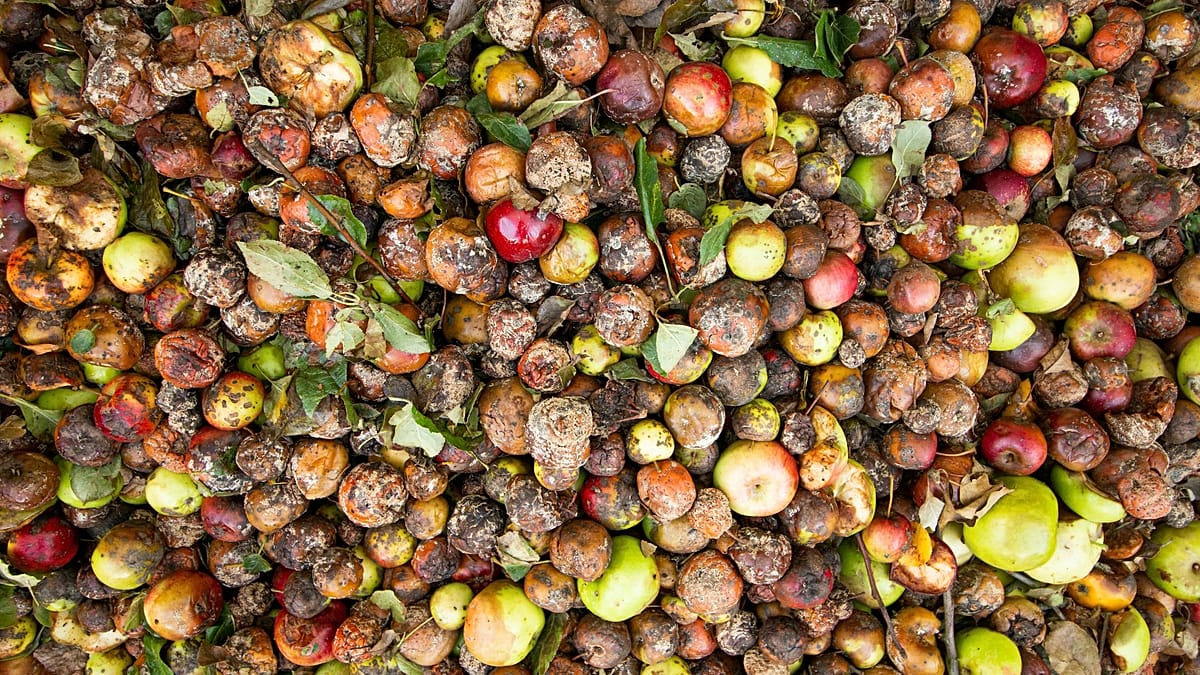
While these guidelines are designed to build resilience against a range of hazards, from extreme weather to cyberattacks, they have been co-opted by online rumor-mongers who link them to military tensions and tech outages, stoking public anxiety and triggering panic-buying. Experts warn that this excessive stockpiling could have a counterproductive effect: it risks creating unnecessary food waste, a problem that already accounts for up to 10 percent of global greenhouse gas emissions.
Misinformation thrives in an information vacuum
The latest wave of false theories circulated shortly after the UK launched its "Be Ready" public information campaign in October, which encourages household self-sufficiency. Similar initiatives have emerged across Europe, including the EU Preparedness Union Strategy adopted in March last year, and guidance issued in France, Ireland, and the Netherlands. These policies aim to ensure people can "put their torch on" during the first 72 hours of a disaster, said Lucy Easthope, a disaster planning expert and visiting professor at the University of Bath.
However, the proximity of these announcements to military speeches and international conflicts has fueled speculation online. "Misinformation prevails in an information vacuum," said Yotam Ophir, an associate professor of communication at the University at Buffalo. When information lacks detail or context, people "fill the gap with their own alternative explanations."
In late October, UK media reported that sales of tinned food at Iceland, a British supermarket chain, had briefly surged by 40 percent. Social media users in the United States, Europe, and Asia have linked government advice to a spate of tech outages that disrupted flights and banking apps, speculating that another global conflict was just around the corner. Professional fact-checkers have debunked several claims spreading in multiple languages, including in Australia, where social media users falsely cited a Red Cross interview as evidence that Canberra had issued a nationwide emergency order.
Why Europe is stepping up preparedness efforts
The recent wave of doomsday theories comes as Europe faces a complex threat landscape. The continent is grappling with the fallout from the war in Ukraine, rising tensions in the Middle East, and an increase in extreme weather events linked to climate change. In this context, governments are urging citizens to be better prepared, but they are also wary of the unintended consequences of their advice.
"We're asking people to step into a mindset that these things could happen," said Easthope, adding that some "don't realise how interconnected international disaster management is." The timing of preparedness announcements, however, has practical explanations, said Sojin Jang, an assistant professor of emergency management and disaster science at the University of Nebraska at Omaha. She pointed to the rising number of severe weather events and cyberattacks as key drivers.
Jang emphasized that the goal of emergency preparedness is not to hoard food and supplies but rather to "strengthen community resilience." People who can meet their basic needs after a disaster allow first responders to prioritise vulnerable populations. She drew a distinction between responsible preparation, which could entail replacing some stored items before they expire, and excessive stockpiling, which risks creating unnecessary waste, shortages, and price hikes that "disproportionately affect older adults, low-income households and people with disabilities."
How to stock up without wasting food
To minimise waste, Germany's Federal Office of Civil Protection and Disaster Assistance recommends buying food that people regularly eat and using up older supplies first. It also recommends storing non-perishable food in airtight packaging in a cool, dry, and dark place. The UK's Be Ready campaign advises building up emergency supplies over several shopping trips and checking your cupboards first to see what you already have. Then, once you have your reserves in place, remember to check expiry dates every six months, eat food before they go off, and replace items as necessary.
These practical steps are crucial in a continent where food waste is already a significant environmental and economic issue. The European Union has set targets to reduce food waste by 50 percent by 2030, but panic-buying could undermine these efforts. As the doomsday narrative continues to spread, experts urge consumers to focus on sensible preparation rather than fear-driven hoarding.
The situation is not unique to Europe. In the United States, similar trends have been observed, with some prepper groups showcasing pantries stuffed with piles of oats and beans. But the European context is distinct, given the continent's high population density and its reliance on cross-border supply chains. A sudden surge in demand for canned goods in one country can quickly ripple across the single market, affecting prices and availability elsewhere.
For now, the advice from disaster experts is clear: prepare, but do not panic. As Jang put it, "The goal is to be ready, not to be scared." By following the guidance of national agencies and avoiding the trap of overstocking, Europeans can ensure they are prepared for emergencies without contributing to the very problems they fear.



